“Nutrition Must Be on the Front Burner”: WOMEC Calls for Dedicated Fund and Stronger Parliamentary Action
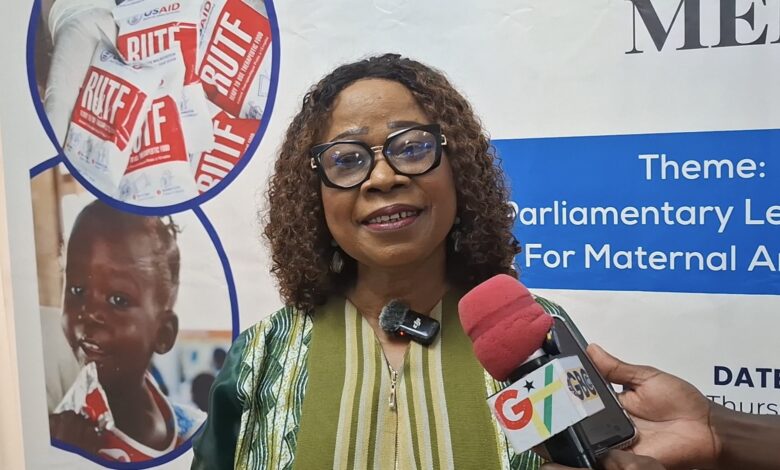
Non-communicable diseases are rising in Ghana, dialysis units are overwhelmed, and too many mothers and children are still dying from preventable nutrition-related causes. The solution, says Women, Media and Change (WOMEC) Executive Director Dr. Charity Binka, is simple: treat nutrition as a national priority and fund it like one.
Speaking at a breakfast meeting on “Strengthening Investment and Coordination for Maternal & Child Nutrition in Ghana,” Dr. Binka told parliamentarians, journalists, and civil society actors that Ghana needs a dedicated fund for nutrition and a more strategic engagement with lawmakers to push the agenda forward.
A gap that’s too wide
“Many people are on dialysis, and most of these diseases are because of our lifestyle and all those kinds of things, so nutrition is always an issue,” Dr. Binka said.
She argued that while interventions exist, funding for nutrition remains fragmented and hard to track.
“Right now, the gap is too wide. When you are looking for money that is allocated for nutrition, you can’t even find a specific one. It’s all over scattered. But we say that we need a dedicated fund for nutrition. We need to make sure that nutrition is on the front burner of this country.”
The meeting, hosted under WOMEC’s _Nourish Ghana_ project, focused specifically on maternal and child nutrition. Dr. Binka noted that 50% of complications in childbirth are linked to anemia and other nutrition-related conditions, and that preventable deaths persist because nutrition is not prioritized in policy and practice.
“No woman should die because of childbirth, and most of the time we heard this morning that 50% of this complication in childbirth is due to anemia and other related causes, and all linked to nutrition, nutrition, nutrition. And we need to act now.”
Bringing parliament to the table
WOMEC brought parliamentarians into the conversation because they hold the power to make and enforce policy, Dr. Binka said.
“They have the power, for instance, to invite the powers that be to the floor of the house to ask them: we are hearing that our children are dying needlessly because mothers are dying of anemia, the children are becoming wasted. What are we doing?”
She said the group first engaged MPs in December 2025 and has since seen growing interest, including calls for a nutrition coalition within parliament to bring together lawmakers committed to the issue.
“If we do not engage the people who are making legislation, we will just be talking to ourselves,” she said.
Building champions in media and youth
Beyond parliament, WOMEC is working to build a network of advocates across media and youth groups. The organization has trained nutrition champions among journalists and young people and recently launched an award scheme to recognize excellence in nutrition reporting.
“We want the media to prioritize it. So even before this engagement with parliamentarians, we engaged them last year, December. So we have been following up on the conversation we started last year, and now they are even calling for other things.”
The award scheme, open until the end of June, invites journalists to submit entries on nutrition. Dr. Binka said the media plays a critical role in shaping public understanding.
“Journalists are very critical, just as the parliamentarians. If journalists do not get the information to the public, communities and individuals will still be in the dark. Health information, most people even get it from the media. So if media people are well informed about the issues of nutrition, then we can push the agenda.”
A project barely a year old
The _Nourish Ghana_ project began less than a year ago with a focus on advocacy and increased financing for nutrition. Dr. Binka said many journalists had never consciously reported on nutrition before, often overlooking it because “people eat every day, so they don’t care.”
“We want nutrition to be on the agenda. What we eat, how we eat, what we are feeding our children, our babies, what pregnant women eat before and after delivery – all these are issues that are not on the radar for people,” she said.
She said WOMEC will continue to work with parliamentarians, media, and youth champions in a coordinated way to ensure nutrition moves from side conversations to national action.
“Our job is to advocate. And we are hoping that we can engage the parliamentarians in a very strategic way to push the nutrition agenda to the level that can make impact, so that our children will grow well.”