Gov’t committed to reliable power, economic stability for industrial growth-Mahama
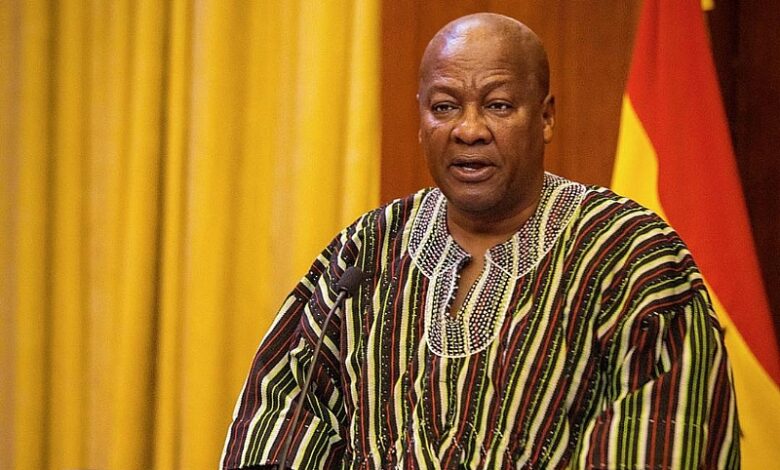
President John Dramani Mahama has stressed that predictable fiscal policies, low inflation, stable exchange rates and a reliable energy supply are critical to building investor confidence and attracting large-scale private investment.
He assured businesses that the government would sustain policies aimed at maintaining macroeconomic stability and improving essential infrastructure to support industrial growth.
President Mahama made the remarks on Thursday, October 8, 2026, when he commissioned Nestlé Ghana’s expanded evaporated milk production line at its factory in Tema.
The GH¢59 million modernisation project is expected to boost production capacity, enhance operational efficiency and strengthen the company’s ability to serve both local and regional markets.
“Capital goes where it is safe, but it stays and expands where there is stability and supporting infrastructure,” the President said.
He added that the government remained committed to ensuring a reliable power supply and maintaining sound economic conditions to accelerate industrial transformation.
Meanwhile, the Governor of the Bank of Ghana, Dr Johnson Pandit Asiama, has highlighted growing challenges in the global economic environment, including persistent geopolitical tensions, rising energy prices and uncertainty surrounding international trade and financing conditions.
Speaking at a meeting with chief executives of banks, Dr Asiama said the global economic outlook had become increasingly uncertain since February 2026.
He noted that although global growth had remained resilient, with the International Monetary Fund (IMF) maintaining its 2026 growth projection at 3.0 per cent, escalating geopolitical tensions and the possibility of a strong El Niño later in the year posed significant risks.
According to him, the developments had prompted several major central banks to adopt more cautious monetary policy positions, with some beginning to increase interest rates. Such measures could push up global borrowing costs and tighten financing conditions for emerging and frontier economies, including Ghana.
On the domestic front, Dr Asiama said Ghana’s economy continued to demonstrate resilience despite the challenging global environment.
He disclosed that real Gross Domestic Product (GDP) grew by 6.0 per cent in the second quarter of 2026, driven largely by the services and industry sectors. Although the growth rate was below the 6.6 per cent recorded during the same period in 2025, he said underlying economic activity remained strong.
Consumer and business confidence also remained positive, reflecting relative macroeconomic stability and optimism about the country’s growth prospects.
Headline inflation, however, rose slightly to 5.0 per cent in August 2026 from 4.6 per cent in July, mainly due to adjustments in utility tariffs and elevated crude oil prices.
Dr Asiama explained that core inflation and inflation expectations continued to ease, while headline inflation remained below the lower boundary of the medium-term inflation target of 8 per cent, plus or minus 2 percentage points.
Against this backdrop, the Monetary Policy Committee (MPC) unanimously maintained the policy rate at 14.0 per cent.
He said the Committee considered the risks to inflation and economic growth to be broadly balanced, while projecting that inflation would gradually return to the target range in the coming quarters.
By Esther Padmore Amonoo