Dr Baako Flags Western Region as Key to Ghana’s National Security
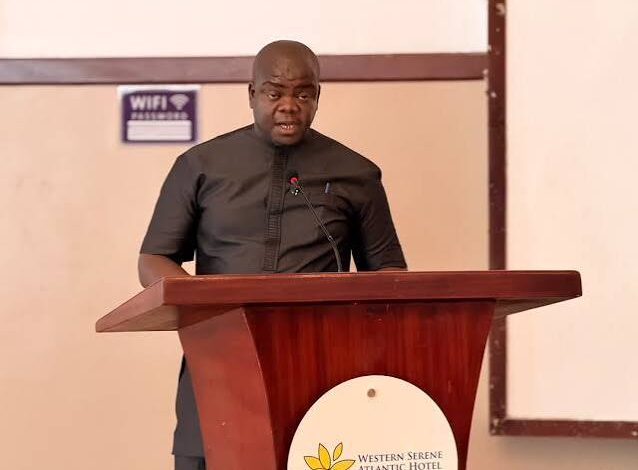
The Western Region’s critical infrastructure, coastline and border with Côte d’Ivoire make it a key area of concern in Ghana’s evolving national security landscape, Technical and Intelligence Advisor to the National Security Coordinator, Dr Muhammad Baako, has said.
According to him, the region’s oil and gas facilities, power plants, Port of Takoradi, railway network, airport and naval installations could expose the country to threats with nationwide consequences if not properly secured.
Dr Baako made the remarks in Takoradi on Thursday, October 8, 2026, during a stakeholder engagement on the review of Ghana’s 2020 National Security Strategy.
The consultations form part of efforts to develop a new National Security Strategy for the 2026–2030 period.
He said the review was being conducted through regional consultations to ensure the new strategy reflects security realities across the country.
“A strategy drafted in Accra can be analytically sound and still be wrong in the particular,” he said.
Dr Baako noted that local communities often possess valuable information on activities at landing beaches, maritime routes and border crossings that may not be captured in national security assessments.
He stressed that critical facilities in the Western Region must be considered part of Ghana’s national security architecture rather than merely commercial assets.
He cited the Aboadze and Atuabo facilities, warning that sabotage, cyberattacks, organised crime or serious unrest could disrupt power supply, national revenue and economic activity.
Dr Baako also identified the Gulf of Guinea as an increasingly important security concern, citing piracy, ransom attacks, illegal boarding of vessels and illegal fishing as threats requiring sustained attention.
He called for greater involvement of fishing communities and other maritime stakeholders in efforts to secure Ghana’s Exclusive Economic Zone.
The Technical and Intelligence Advisor further warned that commercial routes, informal pathways, river crossings and the coastline could be exploited to move money, materials and personnel linked to extremist activities.
“Border security in this region is a maritime question and a land question in the same breath,” he said.
Dr Baako said coastal erosion and changing fish stocks were also creating security pressures in parts of the region.
He cited Axim, Shama and Lower Axim, where coastal erosion has affected homes, schools and graves, while rising fishing costs and changing fish stocks continue to put pressure on coastal livelihoods.
He said these challenges demonstrate why national security must extend beyond conventional military and law-enforcement concerns.
The proposed 2026–2030 strategy, he noted, would broaden Ghana’s security focus to include citizens, livelihoods and communities.
It would place greater emphasis on food and water security, community cohesion, cyber threats, illegal mining, maritime security and critical national infrastructure.
The strategy also seeks to strengthen prevention and early warning mechanisms rather than relying primarily on responses after threats emerge.
Dr Baako said traditional authorities, local assemblies, faith-based organisations, fishing groups, women and youth organisations, the media and the private sector all have important roles to play in national security.
Western Regional Minister Joseph Nelson called for closer coordination among security agencies, traditional authorities, local authorities and communities.
He said the region’s strategic location, coastline, border and concentration of economic infrastructure made peace and stability essential to Ghana’s development.
“National security is a shared responsibility,” Mr Nelson said.
He noted that the Western Regional Security Council and Metropolitan, Municipal and District Security Committees remained important platforms for coordination, information sharing and timely responses.
Mr Nelson urged traditional authorities and communities to strengthen communication with security institutions, saying local knowledge could help identify potential threats before they escalate.
He identified illegal mining, land and chieftaincy disputes, community tensions, border and coastal activities, environmental degradation and organised crime among issues requiring continued attention.
He said the Western Region’s experiences and concerns would provide important input into the review of Ghana’s national security framework.
By Esther Padmore Amonoo