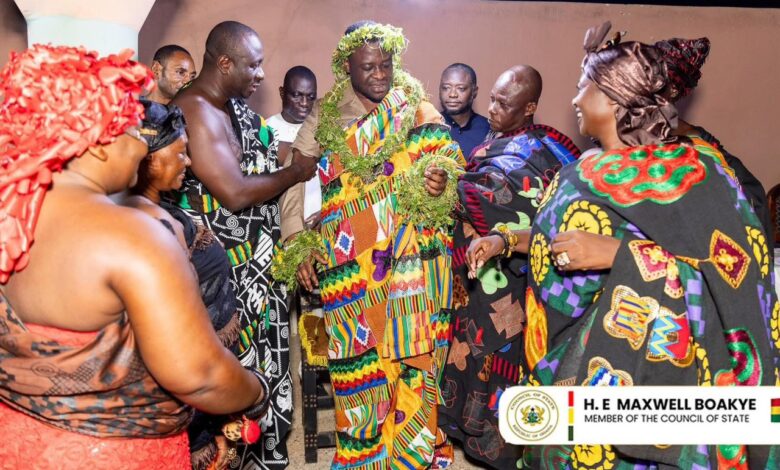
The Western Regional representative on the Council of State, Dr. Maxwell Boakye, has been installed as the Nkabomhene (King of Unity) of the Ahanta Traditional Council during a colorful and symbolic ceremony at Busua in the Western Region.
The event, held at the Ahanta Traditional Council Hall, drew divisional chiefs, queen mothers, elders, and community members, marking a strong display of unity, culture, and solidarity.
In a rare collective decision, the honor was conferred jointly on Dr. Boakye by the Queen Mother and the chiefs of the Council as a sign of their shared commitment to peace, unity, and development within the Ahanta Traditional Area. As part of the traditional rites, he was adorned in rich kente cloth, symbolizing dignity, honor, and his acceptance into the Ahanta community.
Addressing the gathering, the chiefs said they had closely followed Dr. Boakye’s activities across several traditional areas in the region and were impressed by his efforts to promote peace and reconciliation in communities previously affected by divisions and conflicts.
According to the traditional leaders, his engagements with various traditional councils had significantly helped restore calm and strengthen cooperation among local stakeholders.
“Your presence has brought instant unity among members who were previously divided,” the chiefs stated during the ceremony, adding that discussions surrounding his visit had already reinvigorated a commitment to a common development agenda for the Ahanta Traditional Area.
In his acceptance remarks, Dr. Maxwell Boakye expressed gratitude to the Ahanta Traditional Council for the honor and pledged to continue supporting traditional authorities across the Western Region.
He underscored the importance of stronger collaboration between traditional leadership and decentralized governance institutions to promote peace, unity, and sustainable development in local communities.
The installation is expected to deepen the relationship between traditional authorities and governance structures in the Western Region while fostering greater social cohesion within the Ahanta Traditional Area.