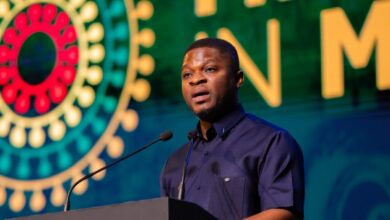
University of Ghana lecturer, Dr. Frederick Ntiamah has defended the government’s management of Ghana’s ongoing power challenges, describing recent interventions as commendable despite lingering outages.
Speaking on Kessben TV’s Punch show, Dr. Ntiamah disclosed that a recent fire outbreak, which occurred over the weekend, affected power supply but engineers have since worked to restore about 80 percent of the system.
He noted that the current administration inherited a difficult energy sector but has managed to turn the situation into what he described as “great fortunes,” particularly through decisive leadership at the Ministry of Energy.
According to him, the National Democratic Congress (NDC) has, within 16 months in office, outperformed the previous New Patriotic Party (NPP) government’s eight-year record in the energy sector.
Dr. Ntiamah attributed the intermittent power outages to excessive load on aging transformers, stressing the urgent need for upgrades and replacements to stabilize supply.
He further argued that the NDC has demonstrated capacity in addressing energy challenges, citing the payment of more than half of a $3.6 billion debt inherited from the previous administration.
Touching on historical context, he explained that prior to 2016, Ghana relied heavily on the Akosombo Dam for power. However, former President John Mahama introduced thermal plants such as AMERI, KARL Power, and Aboadze to diversify energy sources and ensure long-term stability.
Dr. Ntiamah criticized the previous NPP administration, claiming it failed to sustain the gains made in the sector despite inheriting excess power at the time.
He also alleged that former President Mahama had advised his successor not to tamper with the Energy Sector Levy Act (ESLA) to help clear sector debts, but this advice was not followed, leading instead to the collateralization of the levy for a $2.5 billion loan.
The lecturer maintained that Ghana’s current power crisis is the result of years of neglect, emphasizing that recent reforms, including restructuring the energy sector to incorporate green transition policies, are steps in the right direction.
He suggested that the crisis should push policymakers to explore alternative energy sources, including nuclear power, as a more sustainable option.
“We must begin to think beyond traditional solutions. The future may require us to consider atomic energy as a formidable source,” he stated.
Dr. Ntiamah concluded by reiterating the urgent need for investment in infrastructure, particularly the replacement and upgrading of transformers, to ensure a stable and reliable power supply across the country.