Adverse Weather and Lack of Terrain Warning System Cited in August 6 Helicopter Crash — Captain (Rtd) Forjoe
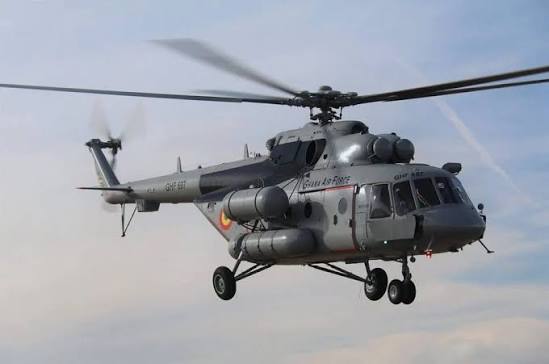
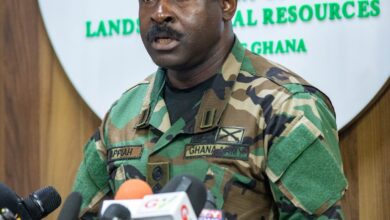
Captain (Rtd) Paul Forjoe, a member of the investigative committee that probed the August 6 military helicopter crash, has revealed that while the aircraft was airworthy, it lacked additional safety enhancements that could have improved pilot situational awareness in challenging weather conditions.
Presenting the findings of the investigation, Captain Forjoe explained that the aircraft deviated from its planned route as the crew attempted to avoid poor weather and cloud formations.
“The dotted blue line represents the planned track,” he said, pointing to a diagram displayed during the briefing. “The purple line is what the aircraft actually flew, and that deviation occurred because the pilots were avoiding clouds and other weather elements.”
He noted that although the helicopter was in good mechanical condition, it was not equipped with a Terrain Awareness and Warning System (TAWS)—a predictive tool that provides early alerts to help pilots avoid controlled flight into terrain.
“The helicopter was airworthy,” Captain Forjoe stated, “but it lacked additional safety enhancements such as the terrain awareness warning system. The TAWS gives pilots a better picture of their environment, helps them make informed decisions, and forewarns them of potential terrain hazards.”
According to the committee’s findings, the aircraft encountered adverse weather conditions, limited visibility, and rising, rugged terrain along its route. These “terrain-induced complicating factors,” Captain Forjoe said, significantly increased the difficulty of the flight, especially in the absence of ground-based navigational aids in the area.
“The additional safety enhancement was required because of the weather phenomenon over that terrain,” he added. “There were no ground-based route aids en route, and the combination of poor weather and rising terrain made the situation even more challenging.”
Captain Forjoe also commended the emergency response teams, describing their actions as swift and commendable despite the difficult conditions at the crash site.
“From everything we gathered, the emergency response was very timely,” he said. “The first responders managed to reach the site in about two hours, which was remarkable given the steep slopes, rain, and slippery conditions. When we ourselves visited the site, it was raining and very difficult to access—we had to use sticks just to climb.”
The committee concluded that while the helicopter was mechanically sound, the absence of modern terrain warning systems, combined with severe weather and challenging topography, contributed to the tragic outcome.
The victims of the 6th August helicopter tragedy include;
Dr. Edward Omane Boamah – Minister for Defence
Dr. Alhaji Ibrahim Murtala Muhammed – Member of Parliament for Tamale Central and Minister for Environment, Science, Technology, and Innovation
Alhaji Muniru Mohammed – Acting Deputy National Security Coordinator
Dr. Samuel Sarpong – Vice Chairman of the National Democratic Congress
Samuel Aboagye – Former Parliamentary Candidate
Sergeant Leader –Peter Bafemi Anala
Flying Officer –Manin Twum-Ampadu
Sergeant -Ernest Addo Mensah