NPP Minority Leader Condemns Abronye DC’s Detention, Calls It “Constitutional Outrage”
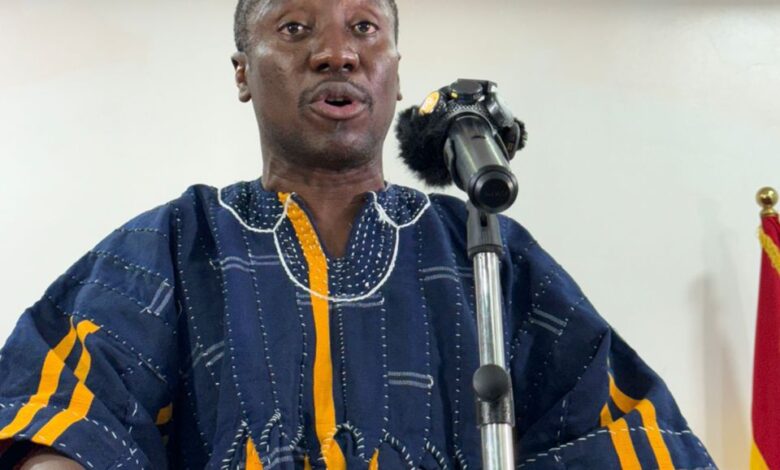
Minority Leader Alexander Kwamena Afenyo-Markin has described the arrest, remand and prosecution of NPP Bono Regional Chairman Kwame Baffoe, popularly known as Abronye DC, as a “profound constitutional wrong” and demanded his immediate release from BNI custody.
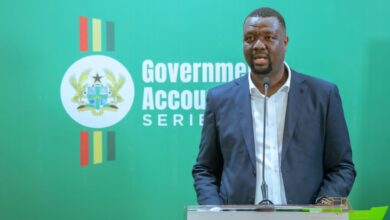
Addressing journalists in Accra on Sunday, Afenyo-Markin said the case represented a deliberate attempt by the Mahama administration to resurrect the “culture of silence” through the back door, using criminal charges to punish political speech that should be handled in civil courts.
“What has been done to Mr. Kwame Baffoe is a profound constitutional wrong. It must be condemned without equivocation, without apology, and without delay,” he said. “The arrest, prosecution and remand of a citizen for words spoken in the public square is not justice. It is persecution.”
Charges “Built on Sand”
Abronye DC was arraigned before Circuit Court 9 in Accra on 13 May 2026 on two counts: offensive conduct conducive to breach of the peace under Section 207(1) of the Criminal Offences Act, and publication of false news under Section 208(1). The charges stem from a social media video in which he criticised a Circuit Court judge’s conduct and impartiality.
Afenyo-Markin argued that neither charge holds up under constitutional scrutiny. He said Section 207(1) requires conduct likely to cause a breach of the peace, a threshold political criticism of a public official does not meet.
“Political criticism of a public official, however sharp, is protected expression under Article 21(1)(a) of the 1992 Constitution,” he stated. On the false news charge, he said the law requires proof that the accused knew the statement was false. “A man expressing a political opinion about judicial conduct is not publishing false news. This prosecution is built on sand. And we will watch it fall.”
Bail Denial and BNI Remand Under Fire
The Minority Leader reserved some of his strongest criticism for the court’s decision to deny bail and remand Abronye to BNI custody. He said the prosecution’s only ground for opposing bail was that Abronye might commit similar offences if released.
“A citizen imprisoned not for what he did, but for what he might say. That is not law. That is censorship from the bench,” Afenyo-Markin said. He called the reasoning “a constitutional disgrace” and a violation of Articles 14 and 19, which guarantee personal liberty and the presumption of innocence.
He also questioned the legality of holding Abronye in BNI custody for four days without a signed and certified remand order from the court registry. “A remand order is not a verbal instruction. It is a formal judicial instrument. Was a Ghanaian citizen delivered into intelligence custody on nothing more than a word of mouth? If so, that detention has no documented lawful foundation whatsoever,” he said.
The BNI, he added, is a state intelligence service meant for national security threats, not a remand prison for misdemeanour charges arising from political criticism.
“Ghost of Criminal Libel” Resurrected
Afenyo-Markin placed the case in historical context, accusing the NDC government of reviving the spirit of the criminal libel law repealed in 2001 under President John Agyekum Kufuor. He said the Mahama administration was “reconstructing the criminal libel regime in practice” by using Sections 207 and 208 of Act 29 to achieve what it could not do openly.
“President Kufuor abolished criminal libel to set Ghana free. President Mahama is rebuilding it, brick by brick, to cage the opposition. That project ends here,” he declared.
He cited past victims of the old criminal libel law under the PNDC and NDC eras, including journalists Tommy Thompson, Mike Adjei, John Kugblenu, and Abdul Malik Kweku Baako, to argue that the current prosecutions were part of a familiar pattern.
A Pattern of Political Prosecutions
The Minority Leader listed several other NPP members recently arrested or prosecuted for public comments, including David Essandoh of Agona West, Baba Amando of Sunyani East, Alfred Ababio Kumi of Adenta, and MP Rev. John Ntim Fordjour. He said the frequency and nature of the arrests showed this was “not an isolated incident” but “state-sponsored political persecution.”
“This is what Dr. Bawumia has rightly described as an unholy collaboration between the Executive, state investigative agencies, and some elements within the judiciary aimed at silencing the NPP. He is right. The pattern is undeniable,” Afenyo-Markin said.
Call for Judicial Intervention and Accountability
Afenyo-Markin urged the High Court to intervene urgently, noting that habeas corpus exists for moments like this. He also called on Parliament’s Constitutional, Legal and Parliamentary Affairs Committee to summon the IGP and BNI Director-General to account for the detention.
He made five demands: immediate release of Abronye DC; a full constitutional challenge to the prosecution; parliamentary scrutiny of the police and BNI’s actions; civil society and media to speak up; and urgent judicial review of the remand process.
“In 1992, the people of Ghana made a solemn covenant with themselves and with history. Never again shall the machinery of the state be turned against the citizen’s right to speak,” he said. “The prosecution of Abronye DC violates that covenant.”
Closing his statement, Afenyo-Markin said the NPP would not be silenced by arrest, bail denial, or BNI detention.
“The freedom to speak, to criticise power and to hold government accountable is not a privilege granted by any administration. It is a constitutional birthright. And it cannot be revoked by any government on earth.”
He concluded: “The culture of silence is not coming back to Ghana. Not now. Not on our watch. Not ever. Free Abronye DC. Immediately and unconditionally.”