GAF to lead nationwide flood clean-up and mitigation exercise
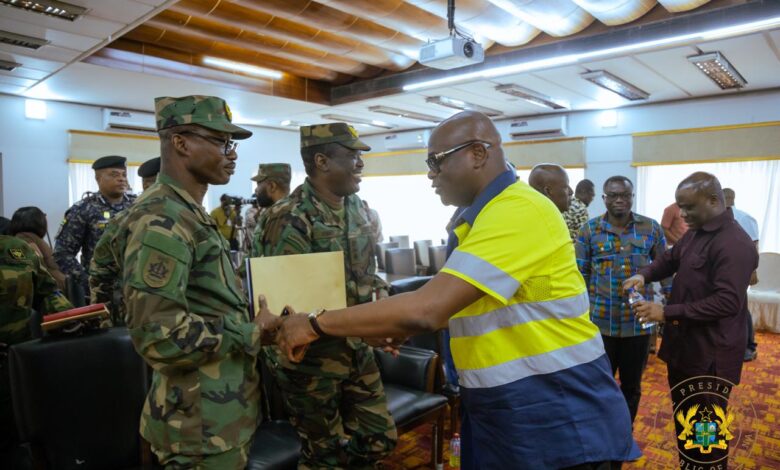
The Ghana Armed Forces (GAF) has been tasked to lead a nationwide flood cleanup and mitigation exercise as part of government’s comprehensive response to the devastating floods caused by the heavy rains of June 28 and 29, 2026.
Speaking at a press conference, the Director General of Joint Operations of the Ghana Armed Forces, Brigadier General Forster Okae-Yeboah, said the exercise forms part of a national post-flood recovery and mitigation programme initiated by President John Dramani Mahama following his inspection of flood-affected communities in the Greater Accra, Volta and Central regions.
He explained that the President’s assessment led to the establishment of a National Post-Flood Mitigation Task Force to coordinate relief, recovery and long-term flood prevention measures.
Brigadier General Okae-Yeboah said the Ghana Armed Forces will lead the operational component of the exercise in collaboration with the National Disaster Management Organization (NADMO), the Ministry of Water Resources, Works and Housing, Metropolitan, Municipal and District Assemblies (MMDAs), the Ghana Police Service, the Ghana National Fire Service, the Ghana Health Service, the Environmental Protection Agency (EPA) and other key stakeholders.
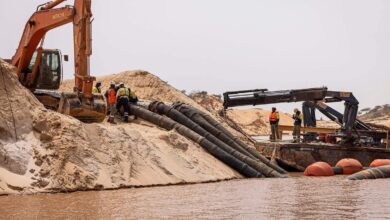
According to him, the nationwide operation will focus on restoring public safety, improving sanitation and preventing disease outbreaks by clearing refuse, silt, fallen trees, abandoned vehicles, collapsed structures and other debris obstructing roads, bridges, drains and waterways.
He disclosed that military engineers and specialised equipment will be deployed to desilt major drains, streams and rivers, while structures illegally erected within waterways or posing immediate danger to public safety may be removed in accordance with the law.
The Director General noted that MMDAs have been directed to organize cleanup exercises within their jurisdictions to complement the military-led operation, while equipment under the District Road Improvement Programme is being mobilized to support the exercise.
He commended private sector organizations for providing heavy equipment, logistics and technical expertise to support the national effort and encouraged more institutions to contribute.
Brigadier General Okae-Yeboah urged residents to cooperate with personnel on the ground, observe traffic diversions where necessary and comply with safety directives throughout the operation.
He also appealed to the public to keep drains free from refuse, avoid indiscriminate dumping of waste and report blocked drains and dangerous structures to the appropriate authorities.
He said the exercise is part of a broader national flood resilience strategy aimed at improving drainage infrastructure, strengthening early warning systems, enforcing planning and environmental regulations and enhancing Ghana’s preparedness for future flooding.
The government has committed GH¢350 million to support emergency relief, recovery and flood mitigation interventions as part of the nationwide response.
Dr. Kwadwo Ohene Sarfoh, Coordinator of the Greater Accra Resilient and Integrated Development (GARID) Project, blamed widespread encroachment on wetlands and natural waterways for the recurring floods in Accra, saying unchecked development has severely disrupted the city’s drainage system.
Speaking during an inspection of flood-prone areas at Tetegu, Dr. Sarfoh explained that large sections of what were once wetlands have been overtaken by residential and commercial developments, forcing floodwaters to change their natural course. He said buildings constructed on waterways have narrowed drainage channels, while in some cases developers have diverted streams through sharp 90-degree turns to reclaim land.
According to him, these human interventions prevent water from flowing freely to its natural outlets, causing floodwaters to back up and inundate communities during heavy rains.
Dr. Sarfoh stressed that the problem cuts across high-income, middle-income and low-income communities, describing it as a reflection of a broader societal disregard for environmental planning regulations. He noted that areas downstream that should have been preserved as floodplains have instead been heavily developed, leaving stormwater with no safe route to drain.
He warned that unless wetlands and waterways are protected from further encroachment and existing drainage channels restored, Accra will continue to experience devastating floods whenever there is intense rainfall.