GoldBod Partners Ghana Armed Forces, Forestry Commission to roll out National Land Reclamation Project
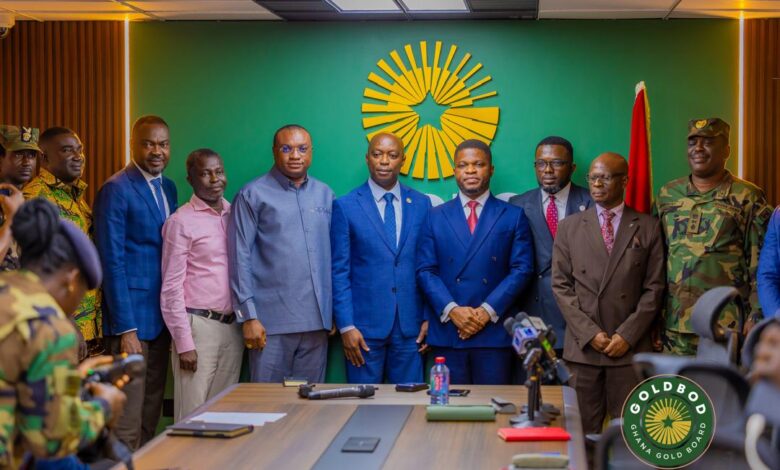
The Ghana Gold Board (GoldBod) has signed a landmark agreement with the Ghana Armed Forces and the Forestry Commission to commence a nationwide Land Reclamation and Rehabilitation as well as Land Rehabilitation and Reforestation Services Agreement respectively.
The project which cost Twenty-Seven Million Nine Hundred Thousand Two Hundred and Fifty-Three Ghana Cedis and Thirty-Eight Pesewas (GH¢27,900,253.38), according to the Ghana Gold Board aims at restoring areas degraded by illegal mining activities.
Under the agreement, GoldBod will fully fund the reclamation initiative, which will be executed in phases across various parts of the country.
The 2 project forms part of GoldBod’s broader commitment to environmental stewardship, responsible resource governance, and sustainable development.
The first phase of the project will focus on restoring fifty (50) hectares of the more than a hundred devasted hectres of the Tano Nimiri Forest Reserve, one of the country’s forest ecosystems that has suffered extensive degradation because of illegal mining activities.
Speaking at the signing ceremony on the initiative, Chief Executive Officer of GoldBod, Sammy Gyamfi, indicated that the decision to begin with the Tano Nimiri Forest Reserve reflects GoldBod’s determination to contribute meaningfully to the restoration of Ghana’s forests and natural environment.
According to him, while gold remains a strategic national asset, its exploitation must not come at the expense of the country’s ecological integrity.
‘’ We are happy to inform you that we are ready to undertake what will become the first major reclamation project GoldBod will be undertaking. We get our gold that we export for the purpose of generating foreign exchange and support the forex accumulation by the Bank of Ghana from both the large-scale sector and the ASM sector. However, due to irresponsible andin some cases illegal mining practices by some of the players in the sectors, we now have a situation where most parts of the country have been devastated by the activities of irresponsible and illegal miners particularly forest reserves.
So, the GoldBod has initiated a nation programme for the reclamation and restoration of degraded mining sites by enegaging the Ghana Army Engineering regiment through the ministry of Defence to undertake reclamation works which includes, land reshaping, grading, combustion, among other civil engineering works within certain designated areas’’. He explained.
The project will leverage the technical expertise and operational capacity of the Ghana Armed Forces, particularly its engineering units, alongside the environmental management and forestry restoration expertise of the Forestry Commission.
The initiative is expected to involve land rehabilitation, afforestation, and ecosystem restoration activities designed to return degraded landscapes to productive ecological use.
Deputy Minister for Defence, Hon. Ernest Brogya Genfi, described the initiative as a crucial intervention that addresses both the prevention of further environmental degradation and the restoration of land already destroyed.
“When you overemphasise prevention, you only stop further degradation. The lands that have already been destroyed still require deliberate efforts to restore them,” he stated, adding that the project could serve as a model for similar reclamation efforts across the country.
On his part, the Chief Executive Officer of the Forestry Commission, Dr. Hugh C.A Brown commended GoldBod for the partnership and emphasized the need to restore degraded sections of the Tano Nimiri Forest Reserve.
He noted that the reclamation of the initial 50 hectares would mark an important step towards restoring ecological balance, protecting biodiversity and preserving critical forest ecosystems.
GoldBod views the project as its direct contribution to addressing the environmental challenges associated with illegal mining and supporting national efforts to protect Ghana’s forests, water bodies, and biodiversity.
The national reclamation programme marks the beginning of what is expected to be a sustained and collaborative effort to restore degraded lands across the country, demonstrating that economic development and environmental sustainability can go hand in hand.