The New Patriotic Party has called for an immediate, independent public inquiry into what it describes as the “Holy Rain” corruption scandal, following a criminal conviction in the United States linked to a power project in Ghana during the first administration of President John Dramani Mahama.
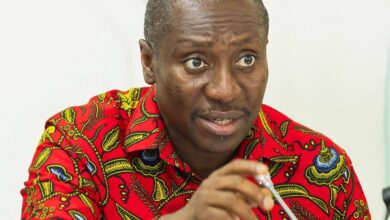
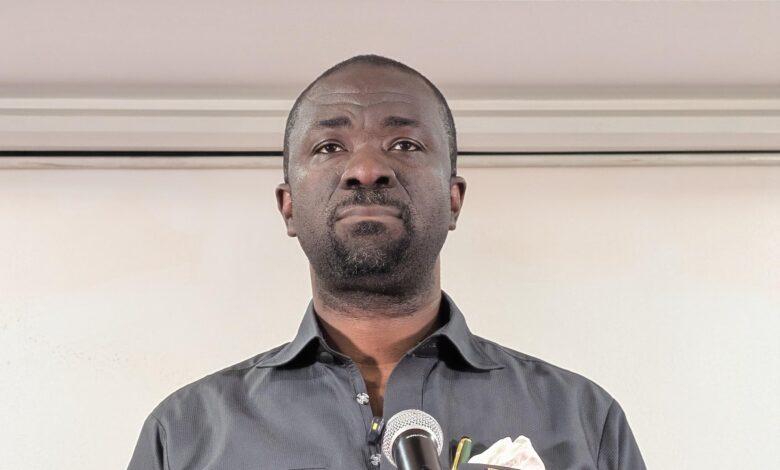
Addressing the media in Accra on Thursday, August 13, 2026, Nana Agyei Baffour Awuah, Member of Parliament for Manhyia South, said evidence presented before a US federal court in Brooklyn raises serious questions about the integrity of Ghana’s public institutions and the approval process for an emergency power agreement at the height of the country’s power crisis.
“A Rain Of Corruption, Not Blessings”
Hon. Awuah said the case centers on efforts by Turkish power producer Aksa Enerji Üretim A.Ş. to secure a deal to build and operate a power plant in Ghana between 2014 and 2016, a period marked by severe power shortages popularly known as DUMSOR.
According to him, court documents tendered during the trial of Asante Kwaku Berko referenced a scheme to make improper payments to government officials and a relative of the then President in order to push the deal through.
One email presented to the jury reportedly referred to a Ghanaian official awaiting payment as waiting for the “holy rain.”
“There was, however, nothing holy about those payments,” Hon. Awuah stated. “If the expression ‘holy rain’ was used to describe money expected by officials involved in the transaction, then what Ghana witnessed was not a rain of blessings but a rain of corruption.”
US Conviction Puts Ghana In The Spotlight
A federal jury in Brooklyn, New York, convicted Asante Kwaku Berko on all counts, including conspiracy to violate the US Foreign Corrupt Practices Act and conspiracy to commit money laundering. He was remanded into custody pending sentencing after a nine-day trial before Judge Diane Gujarati.
Hon. Awuah noted that while the prosecution took place in the US, the underlying transaction concerned Ghana. The project required approvals from the Ministry of Power, Cabinet, the Ghana Grid Company Limited and the Public Utilities Regulatory Commission.
“The issue, therefore, cannot properly be dismissed as merely an American criminal case,” he said. “At its core, this is a matter concerning the integrity of Ghana’s public institutions and the protection of the Ghanaian public interest.”
Allegations Outlined In Court
Citing the US court record, the Manhyia South MP listed categories of persons allegedly connected to the scheme. These included the Minister of Power at the time who signed the Emergency Power Agreement on May 12, 2015, an adviser to the Minister described as “Ghana Official 1” and said to be waiting for the “holy rain,” a senior Ministry of Power official listed as “Ghana Official 2,” and a person described as a “Presidential Relative” associated with a consulting company involved in the deal.
He also referenced a payment ledger introduced as evidence, which reportedly contains entries earmarked for various individuals and institutions. He noted figures including approximately US$120,000 associated with PURC and US$20,000 associated with GRIDCo engineers, as well as a reference to “MoP Girls” who were allegedly allocated funds for “communication and information acquisition” at the Ministry of Power.
Context Of Dumsor And Economic Cost
Hon. Awuah argued that the timing of the alleged payments makes the matter more troubling. The Ministry of Power was established on November 22, 2014, with Dr. Kwabena Donkor as Minister, at a time when Ghana was experiencing prolonged outages.
Citing research by ISSER, he said DUMSOR cost the economy between GH¢320 million and GH¢924 million in 2014 alone, representing 2% to 6% of GDP. A separate study of 885 small and medium manufacturing firms reportedly estimated losses of GH¢250 million, with 285 firms closing and about 5,000 jobs lost.
“While Ghanaian households struggled with prolonged power outages, businesses closed, workers lost their jobs and the economy suffered significant losses, there are allegations that individuals connected to the process were seeking private financial benefits,” he said.
“A Troubling Pattern”
The MP said the “Holy Rain” case is part of a wider pattern where allegations involving Ghana have emerged through foreign proceedings. He referenced past cases including Mabey & Johnson in the UK in 2009, the Airbus Deferred Prosecution Agreement in 2020, and the Embraer 190 aircraft purchase which led to a committee of inquiry under the late President Mills.
He noted that in the Airbus case, the Office of the Special Prosecutor identified “Government Official 1” as President John Mahama and raised conflict of interest concerns.
NPP’s Demands
On behalf of the party, Hon. Awuah made three key demands:
1. Independent Public Inquiry: A publicised, independent inquiry into the Aksa power project and the allegations of improper payments, to establish the truth and recommend reforms.
2. Disclosure Of Identities: The inquiry should reveal the identity of the “Presidential Relative” and explain the role of the “MoP Girls” referenced in the payment records.
3. OSP To Lead Investigation: The NPP expressed lack of confidence in the Attorney-General, citing recent nolle prosequi entries in cases including SSNIT, Saglemi, COCOBOD and UniBank. He called on the Office of the Special Prosecutor to lead the investigation.
“We do not believe that the Attorney-General can command the confidence of the Ghanaian public to independently investigate or prosecute allegations involving officials or politically connected persons of the NDC,” Hon. Awuah stated.
“This Is A Ghanaian Governance Matter”
The MP pre-empted responses that the case is purely American, stressing that the approvals, officials and institutions involved were Ghanaian.
“The Minister involved was a Ghanaian Minister of State appointed by President John Mahama. The institutions whose processes were allegedly compromised were Ghanaian public institutions,” he said.
In conclusion, Hon. Awuah called on Government, Parliament, the OSP, PURC, GRIDCo and the Ministry of Energy to act decisively.
“Ghana cannot continue to be a country where allegations of corruption involving Ghanaian public institutions are uncovered abroad while domestic investigations remain inconclusive,” he said. “Let the evidence speak. Let the facts be established. Let the law take its course.”
The press conference ended with a call for national accountability, with the NPP stressing that public office must be treated as a trust and not an opportunity for private enrichment.