Mahama: Gov’t to complete 30 abandoned E-Blocks this year
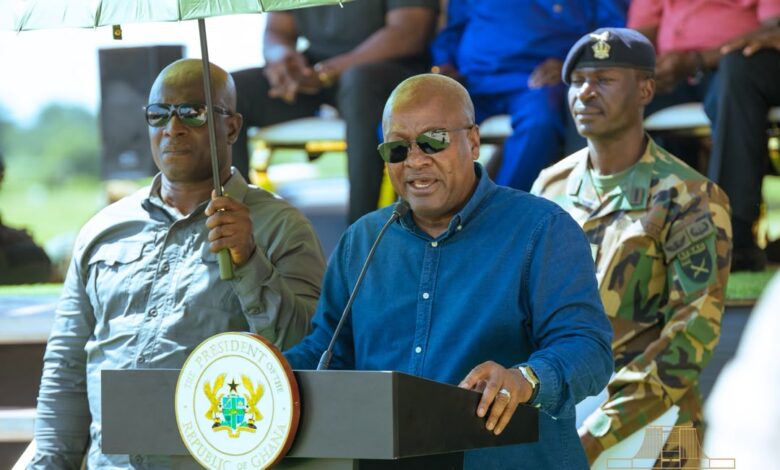
President John Dramani Mahama has announced that the government will complete 30 abandoned E-Block projects across the country this year as part of efforts to expand infrastructure and improve learning conditions in secondary schools.
According to President Mahama, the completion of the projects forms part of the government’s GH¢3 billion STARR-J Project, which seeks to address congestion in secondary schools and ultimately end the double-track system.
He made the announcement at Paga in the Upper East Region during the commissioning of a completed E-Block project as part of his Resetting Ghana Tour.
President Mahama said government made provision in the 2026 budget for the completion of the 30 abandoned E-Blocks, stressing that continuing to leave projects on which public funds had already been spent unfinished would amount to a waste of taxpayers’ money.
“We said in 2024 that any project into which government has sunk money already, if you don’t finish it, it is a waste of the taxpayers’ money,” he said.
The President explained that the Paga E-Block was among the projects selected for completion, noting that students had previously been using portions of the unfinished facility under very difficult conditions.
He said the completed facility would provide students and teachers with a better environment for teaching and learning and contribute to improved academic outcomes.
“The children were using part of the facility in very, very terrible conditions. Today they have a very beautiful, brand-new school, which will improve the learning and outcomes,” President Mahama said.
He further directed the Ghana Education Trust Fund (GETFund) to fast-track the supply of furniture and other equipment needed at the Paga school to enable it to fully utilise the completed facility.
President Mahama said the completion of the 30 E-Blocks was part of government’s broader strategy to ensure that investments in education infrastructure deliver value while expanding access to quality secondary education.
He added that the STARR-J Project would provide the additional infrastructure needed to accommodate growing enrolment, reduce pressure on existing facilities and create the conditions necessary for the eventual abolition of the double-track system in secondary schools.