Ghana Positions Itself As Africa’s Cultural And Culinary Hub At 2026 Afro-Gastro Launch
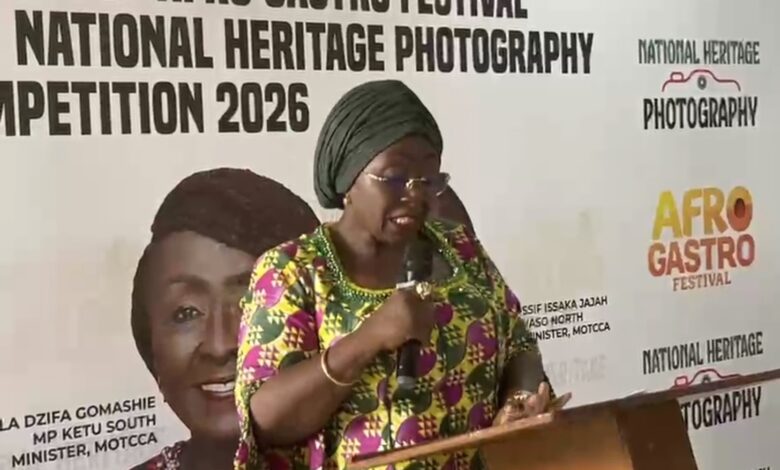
Minister For Tourism, Culture And Creative Arts Abla Dzifa Gomashie has launched the 2026 editions of the African Gastronomy Festival and the National Under-25 Heritage Photo Competition, calling on Ghanaians to protect and promote the country’s identity through food, photography and youth creativity.
Speaking at the launch in Accra, Gomashie said Ghana is ready to use culture and cuisine as tools for tourism growth, economic opportunity and stronger ties across Africa. The two projects, she noted, will give young people and creative professionals space to showcase what makes Ghana unique.
Empowering Young Cultural Storytellers
The National Under-25 Heritage Photo Competition is designed to get young photographers to document Ghana’s heritage before it fades. Gomashie said the aim is to build a new generation of cultural documentarians who can capture festivals, traditions, architecture, landscapes and daily life.
“This competition is about building a generation of young cultural documentarians and ambassadors who will preserve Ghana’s heritage for decades to come,” she said. “We want young people to use their creativity to showcase our festivals, traditions, architecture, landscapes and everyday cultural life. Heritage is not only inherited, it is created, lived and protected by people.”
She praised participants from the first edition and said giving young creatives platforms to contribute is key to national development. Photography, she added, allows young people to tell authentic African stories in their own voice instead of relying on outside narratives.
Food As Tourism And Diplomacy Tool
On Afro-Gastro 2026, the Minister said Ghana intends to position itself as the continent’s culinary hub by putting indigenous food and knowledge at the center of tourism promotion.
“This year’s Afro-Gastro Festival will highlight indigenous ingredients, forgotten recipes, preventive health, culinary tourism and youth-led innovations in the food sector,” she said. “We are bringing together chefs, nutritionists, food historians, entrepreneurs and traditional food practitioners from across Africa because we believe Ghana can become the culinary hub of the continent.”
Gomashie explained that Ghana’s food culture is one of its strongest tourism assets. From jollof and waakye to banku, fufu and local soups, the country’s dishes already attract visitors. Afro-Gastro will go further by spotlighting forgotten ingredients, traditional cooking methods and the link between food and health.
She said the festival will create direct opportunities for chefs, farmers, food processors, artisans and creative entrepreneurs. It will also promote culinary tourism, where visitors travel specifically to experience local food, farms and cooking traditions.
Partnerships For Sustainable Impact
The Minister stressed that protecting African heritage requires teamwork. She called for stronger collaboration between African institutions and global bodies like the African Union and UNESCO.
“We are strengthening collaboration with the African Union and UNESCO because promoting African culture cannot be done alone,” she said. “Sustainable success depends on partnership, teamwork and collective effort. We want institutions, agencies and stakeholders across Africa to join us in preserving our heritage and projecting the creativity and pride of the African people to the world.”
According to her, culture cannot be protected in isolation. Partnerships will help Ghana document heritage better, train young creatives, and market African culture to global audiences.
*Black Star Experience Agenda In Action*
Gomashie said both Afro-Gastro and the photo competition form part of government’s broader Black Star Experience agenda. The agenda uses tourism, arts, fashion, music, dance and food to drive national development and increase Ghana’s visibility worldwide.
The Black Star Experience, she explained, is not just about attracting tourists. It is also about building pride at home and creating jobs for young people in the creative economy. By linking culture to business, government hopes to turn Ghana’s heritage into long-term economic value.
The launch event brought together members of the diplomatic community, tourism operators, creative industry players, cultural institutions and media practitioners. Their presence, Gomashie said, showed growing interest in Ghana’s role as a leader in Africa’s cultural and creative space.
Ghana’s Cultural Moment
With Afro-Gastro 2026 set to gather chefs and food innovators from across the continent, and the photo competition set to uncover new young talents, Ghana is making a clear statement: culture and food are not side issues, they are central to development.
For Gomashie, the message is simple. Ghana’s heritage is rich, its food is distinctive, and its young people are ready to tell those stories. The task now is to protect that heritage, invest in creativity, and use it to build a stronger economy and a stronger image for Africa.
The 2026 Afro-Gastro Festival and National Under-25 Heritage Photo Competition are expected to run later this year, with activities planned in Accra and other regions to bring culture and cuisine closer to communities.