Ministry of Health: Anemia Driving Half of Ghana’s Maternal Deaths as New Action Plan Launched
Ghana recorded 1,000 maternal deaths last year, and nearly half of them were linked to anemia, a senior Ministry of Health official has revealed.
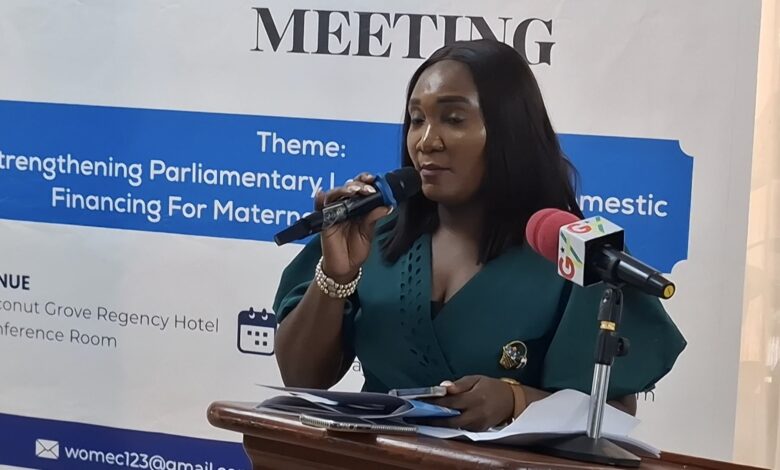
Speaking at the _Breakfast Meeting on Strengthening Investment and Coordination for Maternal & Child Nutrition in Ghana_, Estel Ruth Opoku, Head of Midwifery and Maternal and Newborn Health at the Ministry of Health, said obstetric hemorrhage remains the leading cause of maternal mortality, and it is closely tied to low blood levels in pregnant women.
“This is actually something that is really happening. A lot of deaths and morbidities are coming as a result of hemorrhage bleeding, and you cannot talk about bleeding without talking about anemia,” she said.
Opoku explained that when women arrive at health facilities for delivery with very low hemoglobin levels, they have little reserve to survive blood loss.
“If a woman comes in with a very low Hb at the time of delivery, and you didn’t identify her from the beginning or middle of the pregnancy, she carries that low level to delivery. If she has a hemoglobin of 3, 4, or 5 and bleeds the same amount as a woman with 8 or 9.5, it’s obvious that this woman is not going to survive,” she said.
She noted that many of the deaths occur during surgery or after delivery when women bleed heavily in utero, often without enough blood reserves to withstand it.
New government response underway
Opoku said the Ministry has launched a _Maternal Mortality Action and Response Program_ to tackle the issue head-on. The first stakeholder consultative meeting has already been held, and the program will target anemia, obstetric hemorrhage, and other contributing factors.
“We are very excited that the Ministry has already started something called the MA – Maternal Mortality Action and Response Program. We are also looking forward to ensure that issues with anemia, issues with other contributing factors are also reduced in the country,” she said.
She added that the Ministry is working to strengthen early identification and management of anemia during pregnancy so women do not reach delivery with dangerously low blood levels.
“A lot of things are being done, but they are being done in silos. We are getting support from a few donors, especially on multiple micronutrient supplements, but we need better coordination,” she said.
Opoku represented the Deputy Minister of Health at the meeting, which was organized by Women, Media and Change (WOMEC) under its _Nourish Ghana_ project. The forum brought together parliamentarians, health officials, researchers, and civil society actors to push for stronger investment and coordination on maternal and child nutrition.
“We are very excited, and we look forward to see how these processes are going to give us what we are looking out for,” she said before excusing herself to attend another engagement.