Put Nutrition at the Heart of Government,” Urges Public Health Professor at Ghana Nutrition Forum
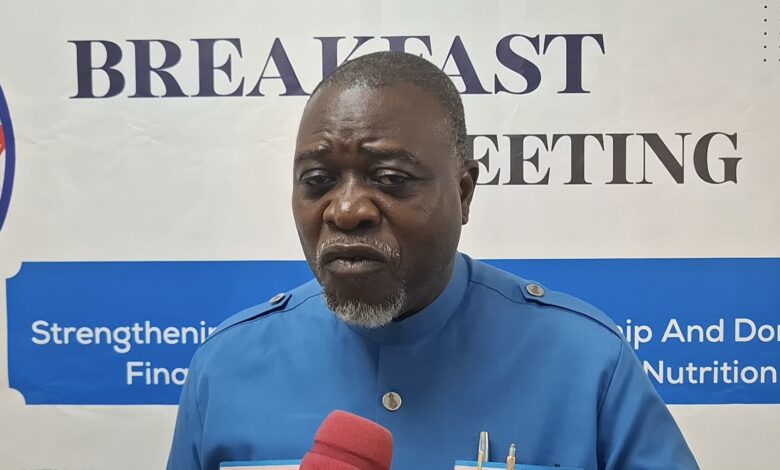
Ghana cannot tackle its growing burden of diabetes, hypertension, and malnutrition without placing nutrition at the center of government policy, says Prof. Francis Zotor, Professor of Public Health Nutrition at the University of Health and Allied Sciences.
Speaking on the sidelines of the _Breakfast Meeting on Strengthening Investment and Coordination for Maternal & Child Nutrition in Ghana_, Prof. Zotor warned that the country faces a “double burden” of undernutrition, overnutrition, and hidden hunger that will keep driving up health costs unless addressed at the source.
A double burden and hidden hunger
“We are talking about malnutrition. We are talking about undernutrition, and we are talking about overnutrition,” Prof. Zotor said.
“Overnutrition is when people have become obese, where people have become bigger because they have been eating junk food. Undernutrition is when people don’t have enough to eat, and so the nutrients the body needs, they are not able to get it. And we have that sitting side by side each other.”
He also highlighted hidden hunger – deficiencies in key micronutrients that are not visible but have serious health consequences.
Prevention over cure
Prof. Zotor, who serves as Vice President for Nutrition at the global level, argued that investing in nutrition upfront would save Ghana billions in treatment costs for diet-related diseases.
“If nutrition sits at the heart of government, then all the money that we are spending on obesity, overweight, and malnutrition issues will have to be addressed, because we are saying there’s money for prevention rather than cure,” he said.
“Look at the cases of people who are having diabetes, the cases who are dying of hypertension, the cases of dialysis. All of this will not be needed if we tackle the fundamental issues of nutrition.”
He said the focus should shift from simply producing food to ensuring that what people eat is actually beneficial. “It’s not just about food, food, food. At the heart of agriculture might be what we are eating. How beneficial is it for us? How do we make positive inroads so that we can live longer?”
Call for a national nutrition council
Prof. Zotor told parliamentarians at the meeting that Ghana needs a cross-sector nutrition council made up of people passionate about the issue to coordinate action and avoid duplication.
“What did the nutrition council do? The nutrition council has people who are cross-cutting, who are passionate about nutrition issues in the country to deal with the problems that are confronting us, so that we don’t spend so much money addressing the nutrition issues,” he said.
A call for collaboration
As a Ghanaian leading nutrition efforts globally, Prof. Zotor said his commitment stems from a desire to solve problems at home and across Africa.
“When you look at strengthening the nutrition agenda in Africa, we are saying that nutrition is cross-cutting. Without nutrition, we cannot make any inroads.”
He ended with a call for scientists, nutritionists, media, and parliamentarians to work together.
“My heart cry is that let us work hand in hand, side by side. It is the white key and the black key that produces music. In the same way, we are calling all of you to come together to address the issues that are of importance for this country and for the populace, so that we can make better inroads.”
The breakfast meeting was organized by Women, Media and Change (WOMEC) under its _Nourish Ghana_ project to advocate for increased financing and coordination for maternal and child nutrition.