Dr Ekua Amoakoh blames system failure as a policy choice over Charles Amissah’s death
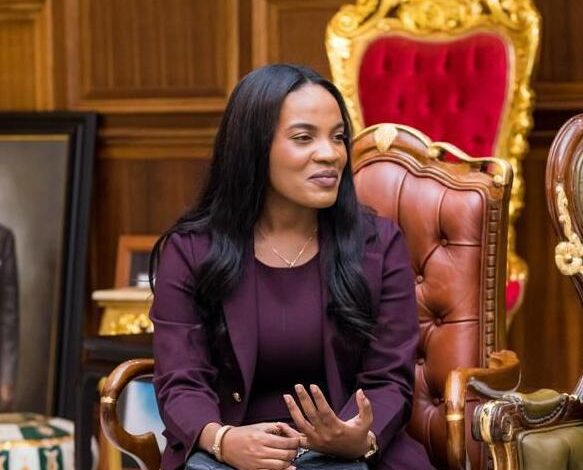
Ekua Amoakoh, Deputy Spokesperson to former Vice President Mahamudu Bawumia, has criticised the country’s healthcare management system following the death of Charles Amissah, describing the incident as a consequence of policy failure rather than an unfortunate accident.
In a Facebook post on Sunday, May 10, 2026, Dr Amoakoh declared that “SYSTEM FAILURE IS NOT AN ACCIDENT; IT IS A POLICY CHOICE,” arguing that the circumstances surrounding the death of the 29 year old engineer expose deep rooted weaknesses within Ghana’s emergency healthcare delivery system.
“The death of Charles Amissah is not just a tragedy; it is a profound indictment of a failing system,” she wrote. According to her, while every loss of life is regrettable, the fact that the incident was avoidable makes the situation far more disturbing.
“While any loss of life is regrettable, the realization that this was entirely avoidable makes it an unconscionable crime of negligence,” she stated. Dr Amoakoh argued that after decades of self-rule, Ghana should have developed a strong and dependable healthcare infrastructure capable of responding effectively to emergency situations.
“As a nation with decades of self-rule, we should be boasting of a robust healthcare infrastructure. Instead, we are witnessing the lethal consequences of system failure,” she added. The Deputy Spokesperson to Dr. Bawumia particularly criticised
“the political culture of abandoning inherited national projects for partisan reasons.”
Referring to findings reportedly contained in an expert report by former Director General of the Ghana Health Service, Agyekum Badu Akosa, and his team, Dr Amoakoh argued that an effective Bed Management Network could have prevented the death of Charles Amissah. “Per the expert report by Prof. Agyekum Badu Akosa and his team, an effective Bed Management Network, would have likely saved Mr. Amissah,” she stated.
According to her, the country previously operated a healthcare system that achieved “nearly 80% national coverage” and contained “over eight years of patient records,” but the initiative was allegedly abandoned due to politics and financial interests. “Yet, due to the toxic culture of ‘canceling inherited projects’ for political optics and ‘chop chop’, that progress was scrapped,” she alleged.
Dr Amoakoh questioned what benefits the healthcare system had derived from discontinuing the project, arguing that lives are being lost while authorities pursue new contracts. “We must ask the Ministry: What has our healthcare system gained from this retrogression? While they seek new contracts, the Ghanaian people are losing their lives,” she wrote.
She also raised concerns about the current state of the National Ambulance Service and the welfare of Emergency Medical Technicians. “What has happened to our EMTs? You inherited over 300 ambulances and a trained workforce of thousands. Today, we see a service run aground,” she stated.
Dr Amoakoh further questioned why Emergency Medical Technicians were no longer receiving Advanced Trauma Life Support training and criticised what she described as attempts to blame frontline health workers for failures created by poor leadership and inadequate logistical support.
“How can a Ministry of Health justify scapegoating frontline staff when the leadership has failed to provide the basic tools for survival?” she asked.
She also referenced findings from the Prof Akosa report which reportedly concluded that administering intravenous fluids in the ambulance during transportation could have prevented the death of Charles Amissah.
According to her, policy failures within the ambulance system have contributed significantly to the current crisis in emergency healthcare delivery. “When the policy direction is Abobolance, then the system is in trouble,” she remarked.
Dr Amoakoh further defended medical doctors and nurses, insisting that frontline health professionals should not be blamed for failures within what she described as a collapsing healthcare system.
“It is cowardly to blame overworked, underpaid Medical Officers for a ‘death trap’ system they didn’t create,” she stated. She argued that many doctors are forced to treat patients under difficult conditions because of inadequate infrastructure and shortages of resources.
“Our doctors are treating patients in corridors. ‘Improvisation’ has become the standard operating procedure due to a lack of resources,” she wrote. According to her, thousands of trained nurses and newly qualified doctors remain unemployed despite the country’s dangerously high patient to doctor ratio in major referral facilities including Korle Bu Teaching Hospital, Police Hospital, and Ridge Hospital.
She also criticised political leaders for failing to appreciate the emotional burden carried by young doctors handling emergency referrals under extremely difficult conditions. “No doctor finds joy in losing a patient. None. No one refers with malice,” she stated.
Dr Amoakoh subsequently called for urgent reforms within the health sector, including the employment of doctors and nurses, the restoration of the national healthcare database, and the reinstatement of the Bed Management System.
“We don’t need ‘chop chop’ contracts; we need functioning hospitals,” she declared. She further questioned the progress made on a proposed national ambulance network database and urged authorities to prioritise policies that protect lives rather than political interests.
Dr Amoakoh extended condolences to the family of Charles Amissah and insisted that citizens must continue demanding accountability and reforms within the healthcare system.
“Our deepest thoughts and prayers are with the family of Charles Amissah. No family should ever have to endure a loss like this. We will not stop demanding a system that values life over politics,” she stated.