South Africa Responds to Ghana’s AU Debate Request Over Alleged Xenophobic Attacks, Calls for Dialogue Over Division
The South African government has formally responded to Ghana’s request to debate what it terms “Xenophobic Attacks in the Republic of South Africa against African Nationals” at the upcoming African Union Mid-Year Coordination Summit in Cairo on 24 June 2026. In a detailed media statement released on 8 May 2026, Pretoria said it preferred direct diplomatic engagement and regional cooperation to what it called a move that risks escalating tensions.
The statement comes after sporadic confrontations between some South Africans and immigrants, including nationals from other African countries, earlier this month. The government said it moved quickly to condemn the incidents and instructed law enforcement to act within the law to protect citizens, residents and visitors, and to arrest anyone who breaks the law.
Ramaphosa invokes Ubuntu and shared history
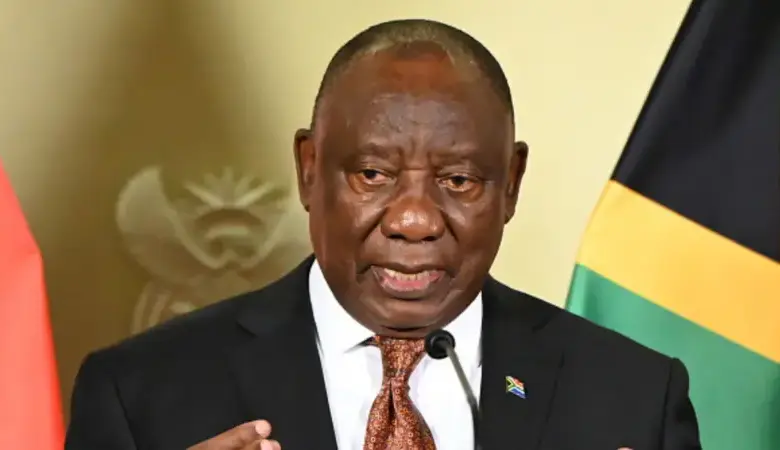
South Africa pointed to remarks made by President Cyril Ramaphosa on Freedom Day, 27 April 2026, as evidence of its stance.
“We did not walk alone into freedom. We were carried by a tide of solidarity from the nations of Africa, among many others,” Ramaphosa said. He recalled how African countries hosted liberation fighters, provided shelter, and spoke for South Africans during apartheid.
“It cannot be, and it must never be, that we trample into the dust the African fellowship that made our freedom possible,” he added, warning against allowing legitimate concerns over illegal migration to turn into prejudice and xenophobia toward fellow Africans.
Minister of International Relations and Cooperation Ronald Lamola has since held intensive talks with several African foreign ministers and ambassadors, including his Ghanaian and Nigerian counterparts. Lamola reassured them that the matter is receiving urgent attention and reaffirmed South Africa’s commitment to protecting the rights of all people in the country under the rule of law.
He also addressed claims circulating on social media that Ghanaian and Nigerian nationals were killed by law enforcement during the recent protests. Lamola said there is currently no credible evidence to support those claims and cautioned against the spread of manipulated footage and divisive narratives online.
Migration and integration at scale
The statement stressed the scale of South Africa’s role as a host country. According to the government, South Africa is home to roughly three million migrants, with about 90 percent coming from other African countries. That makes it the largest host of African immigrants on the continent.
“South Africa has gone to great lengths to welcome and integrate millions of immigrants,” the statement said. Most have integrated into local communities and act as a bridge between South Africa and their home countries.
At the same time, Pretoria acknowledged that migration has intersected with economic anxieties around unemployment and service delivery, contributing to periodic tensions. Many of those involved lack legal immigration status, which complicates law enforcement and public sentiment.
South Africa said it supports regional and continental frameworks on free movement, noting it is one of seven SADC countries to ratify the 2005 SADC Protocol on the Facilitation of Movement of Persons. However, it argued that slow progress on the AU Free Movement Protocol reflects real challenges including economic pressure, governance issues, security concerns, and strain on border systems.
Policy reforms and regional burden-sharing
To address these pressures, South Africa is reviewing its immigration framework. A White Paper on Migration has been developed to align with international best practices. Discussions are also underway on bilateral migration arrangements with regional partners.
The government highlighted several measures it is introducing:
– Economic protection: A points-based visa system designed to ensure migration supports national development, similar in intent to Ghana’s GIPC Act reserving some sectors for citizens.
– Compliance and sovereignty: An Intelligent Population Register to ensure entry is legal, documented and merit-based.
– Shared responsibility: Adoption of a “First Safe Country” principle to promote regional refugee protection without overwhelming a single state.
– Border management: Since April 2023, the Border Management Authority has deported 500,000 people. South Africa is also rebuilding its six busiest land ports of entry through a public-private partnership.
“In our context, non-Nationals are embedded in our society, and we have no refugee camps for asylum-seekers as is the case in other countries, as we promote a humane policy of integration,” the statement noted.
Call for dialogue, not escalation
South Africa said it has consistently urged African partners to uphold diplomatic decorum, mutual respect and transparency, and to avoid steps that could sow division at bilateral, regional and multilateral levels. It welcomed countries that reached out directly for clarity.
While open to continued diplomatic engagement, Pretoria described Ghana’s decision to escalate the matter to the AU as regrettable. It said that if the AU places the issue on the agenda, South Africa will propose adding an item on the push and pull factors of migration, including governance, rule of law and democracy, in line with the AU Constitutive Act.
“South Africa will continue to lead with a Pan-African heart. Our commitment is to solidarity, the rule of law, and the safety of all who reside within our borders. Migration must be managed through cooperation, compassion and continental responsibility,” Lamola said.
The AU Mid-Year Coordination Summit will now decide whether to take up the debate. For now, South Africa is pushing for the matter to be handled through existing bilateral mechanisms, including the Bi-National Commissions with Ghana and Nigeria, with President Ramaphosa expected to continue discussions during this year’s sessions.