“I Was Only His Worker. He Was Not My Friend” …Julius Debrah’s Tribute at Thanksgiving Service Reaffirms Loyalty, Service, and National Duty
By Innocent Samuel Appiah
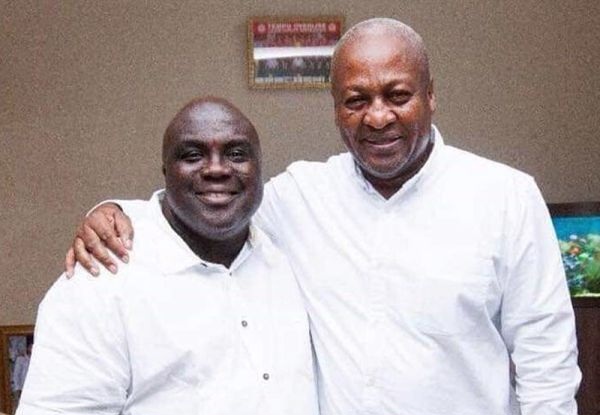
In a rare, deeply personal reflection at the Pentecost International Worship Centre (PIWC), Atomic, Chief of Staff, Dr. Samuel Julius Debrah on Sunday, April 26, 2026, offered Ghanaians a window into what loyalty looks like when it is practiced quietly, consistently, and at great personal cost.
Speaking during a Thanksgiving service held to mark his 60th birthday, Dr. Debrah recounted the nature of his relationship with President John Dramani Mahama, describing it not as friendship nor closeness of spirit, but as a bond built strictly on duty, responsibility, and faithful service.
The tribute, delivered before President Mahama, the Vice President Professor Jane Naana Opoku-Agyemang, Cabinet Ministers, Parliamentarians, the clergy, traditional authorities, diplomatic representatives, and a packed congregation at PIWC, was not meant for drama. It was, by every tone and every emphasis, a statement about how public service should be understood: as a trust to be safeguarded, not a privilege to be flaunted.
A Relationship Built on Work, Not Friendship
From the outset, Dr. Debrah made the central point unmistakable. In his account of how he initially approached his working relationship with President Mahama, the Chief of Staff said he never assumed entitlement to familiarity. “I wasn’t President Mahama’s friend. I was simply his worker,” Dr. Debrah stated to the congregation, underscoring that his position was never rooted in personal bonding, but in service to the Presidency and commitment to the country.
His choice of words carried weight. In political life—where relationships can become entangled with ego, patronage, and expectation—Mr. Debrah’s emphasis stood out as a reminder of what professionalism demands: respect for roles, seriousness about responsibility, and discipline in conduct. In effect, he told the story of how he entered the orbit of power: not as a seeker of influence, but as a man who understood that leadership, especially in government, requires those willing to carry burdens—not those only willing to enjoy comfort.
The Appointment That Deepened Loyalty
Dr. Debrah identified a turning point in their relationship—his ministerial appointment during President Mahama’s first term. He said the surprise of being trusted with a major portfolio intensified his sense of responsibility rather than turning him inward with ambition. “When he appointed me as Minister for Local Government and Rural Development, it came as a shock. I asked myself, ‘Why me?’” he recounted, adding that the trust made him reassess how he should serve.
Instead of seeing the appointment as recognition to be collected, Dr. Debrah described it as confirmation of accountability. He therefore committed himself more firmly to the Presidency’s objectives, stating that, he would serve with his “all” because the President had placed confidence in him. That testimony matters beyond the personal. It speaks to a wider truth about public administration: trust is earned, and where trust exists, duty must respond with excellence. Dr. Debrah’s message was therefore not just gratitude. It was also a declaration of discipline—an affirmation that appointment in government should not be treated as a reward for closeness, but as a responsibility for results.
Protecting the Presidency Through Presence and Prudence
Perhaps the most striking aspect of Dr. Debrah’s speech was his account of how loyalty manifested in action, particularly during presidential travel. He said he took it upon himself to ensure that the President was never exposed to avoidable risk. “Wherever President Mahama traveled, I made it a point to accompany him,” he said. “I often stayed in a room close to or directly opposite his. I never allowed him to stay alone in a hotel or guest room.”
The Chief of Staff explained that such conduct was not a matter of showmanship—it was the practical expression of care: “You don’t leave your boss exposed. Not when you can help it.” In this, Dr. Debrah framed loyalty not as a slogan, nor as a sentiment shouted during celebrations, but as an internal standard—one that turns responsibility into a form of protection.
For many in the audience, it was a powerful reminder of what occurs in governance behind closed doors: those who protect leaders from hazards are often unseen, and yet their efforts determine whether leadership can function effectively.
Gratitude for Opportunities and the Grace Behind Service
While describing his loyalty, Dr. Debrah also made space for thanksgiving. In an emotional moment, he told President Mahama: “Thank you for making me who I am today.” He emphasized that the President shaped his career and provided him opportunities that seemed impossible at the time. Importantly, Dr. Debrah insisted that his rise was not a product of lobbying, personal connections, or political convenience.
“I did not come into this office by friendship. I came by work, by loyalty, and by grace,” he seemed to have said, giving the credit first to God. That combination—work, loyalty, and grace forms a philosophy. It suggests that while political structures matter, character matters just as much. And while institutions create pathways, diligence determines whether one can walk those pathways responsibly. In a society where many view public office through the lens of benefit, Dr. Debrah’s testimony offered a contrasting narrative—one that places service ahead of self.
A Service Attended by Key Stakeholders
The atmosphere at PIWC reflected the seriousness of the occasion. President Mahama attended with the Vice President, while ministers, legislators, clergy, and senior officials filled the auditorium. Senior clerics of the Church of Pentecost officiated, and prayers were offered for the Chief of Staff, the Presidency, and the nation. The worship and choral presentations created a spiritual mood, but the event also served as a public affirmation that leadership and faith can coexist in ways that strengthen governance.
A Call for Servant Leadership
In addition to the Chief of Staff’s testimony, the service also carried messages aimed at shaping public character. The Chairman of t
\he Church of Pentecost, Apostle Eric Nyamekye, commended Dr. Debrah’s humility and urged public office holders to practice servant leadership.
“When men in high office can still say ‘I was only a worker’, it teaches us something about servant leadership,” Apostle Nyamekye said. “Ghana needs more men who will serve without seeking recognition.” That statement directly addressed a challenge facing many democracies: the tendency for public service to become associated with visibility rather than value. Dr. Debrah’s story, as presented at PIWC, became evidence that effective leadership often belongs to individuals who operate with quiet dedication.
Merit, Loyalty, and Governance
Beyond faith and personal narrative, Dr. Debrah’s words also offered a governance perspective. Observers noted that the Chief of Staff effectively reframed the discussion around appointments by emphasizing that opportunities should be earned through competence, character, and loyalty—rather than through friendship or political bargaining.
Commenting on the significance of the testimony, a governance lecturer noted that Dr. Debrah’s remarks carried a powerful message in Ghana’s political culture: one can claim trust only through consistent performance, and credibility must be built through action.
Whether in politics, administration, or institutions, the lesson is clear: when leaders trust employees, employees must respond with integrity and competence. Otherwise, the trust system collapses and governance becomes vulnerable.
Family Sacrifice Behind Public Roles
Dr. Debrah also acknowledged that the journey of service is never solely an individual story. He thanked his wife and children for enduring the realities of high office—absences, pressure, late nights, and the demands of responsibility.
At 60, he said his prayer was for the strength to complete his tenure with distinction.
“I don’t know what tomorrow holds,” he concluded. “But I know who held my yesterday. To God be the glory for how far He has brought me—from a worker to a Chief of Staff, from duty to destiny.”
This final reflection gave the testimony its full meaning. It was not only a celebration of age, but also a celebration of purpose and a confirmation of faith. It showed that leadership, at its best, is formed through disciplined living—built over years of choice.
A Legacy of Quiet Influence
Dr. Debrah is often described as an “engine room” figure—an influential administrator whose strength lies in execution rather than publicity. Yet Sunday’s testimony revealed that his influence is not mysterious. It is rooted in the same values he spoke about: loyalty, prudence, commitment, and the humility to see oneself as a servant.
His tribute to President Mahama was therefore more than personal gratitude. It was a public statement about the kind of relationship government requires between leadership and support staff: one governed by responsibility, not by indulgence.
In the end, Dr. Debrah’s 60th birthday service became something larger than an occasion. It became a national reminder that the effectiveness of leadership depends not only on who holds office, but on who stands behind the office—with courage, competence, and care.
The Chief of Staff’s message— “I was only his worker”—resonates as a call for a new culture in public service: a culture where people are trusted because of merit and protected because of loyalty, and where success is measured by the value added to the nation, not by attention gained.
As the congregation worshiped and the service concluded with “To God Be the Glory,” what remained was a clear impression: Ghana does not only need leaders—Ghana needs workers of integrity, servants of duty, and men of faith who understand that public office is not a platform for self, but a trust for the people.