IERPP demands full disclosure on ‘Publican AI System’ deal
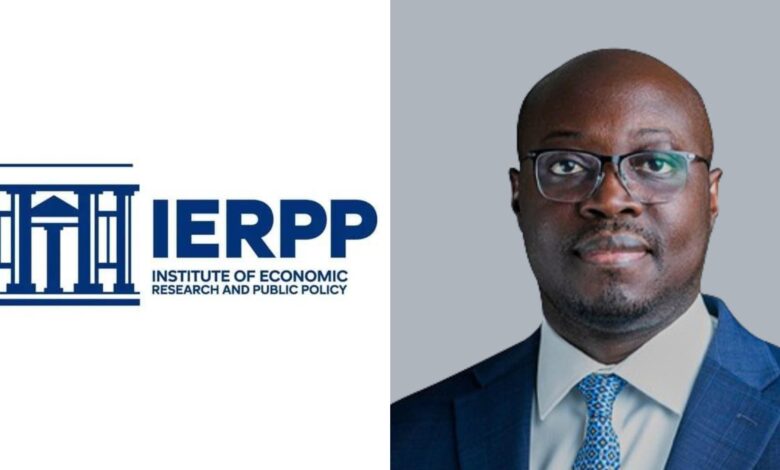
The Institute of Economic Research and Public Policy (IERPP), a nonpartisan think tank advocating evidence-based governance and equitable economic policies, has submitted a formal request to the Ministry of Finance demanding detailed disclosure of the contractual, legal, and operational framework underpinning the controversial Publican AI System currently deployed in Ghana’s customs processes.
The request, signed by the Institute’s Executive Director, Prof. Isaac Boadi, and filed under the Right to Information Act, 2019 (Act 989), seeks to compel government authorities to release comprehensive information on the system’s implementation, particularly its financial arrangements and legal basis.
IERPP argued that the system’s growing role in customs valuation and inspection makes transparency imperative. He noted that the system “has a big impact on trade, collecting taxes, and the national interest,” stressing that public accountability must match its expanding influence.
Contractual concerns
Central to the petition is a demand for full disclosure of the agreement between the Government of Ghana—specifically the Ghana Revenue Authority (GRA) and the Ministry of Finance—and Truedare Investment Limited.
The request calls for “the full terms of the contract… to be made public,” alongside details on “the total value of the contract and how payments will be made (through fees, commissions, or sharing of revenue).” It further seeks clarity on “length of the contract and terms for renewing it,” as well as the procurement method used, including whether the deal was secured through “sole sourcing, competitive tender, etc.”
Additionally, the petition raises questions about “provisions for sharing risk and debts to the State,” suggesting concerns over potential fiscal exposure.
Legal basis
Beyond financial arrangements, the request probes the legal justification for deploying AI in customs valuation. It specifically asks for “the Customs Act of 2015 (Act 891) has specific rules that support the enforcement of AI-based valuation,” and queries the “legal reason for not letting customs officers change values that AI has set.”
The letter also demands clarity on “the legal framework that governs appeals and dispute resolution in the system,” highlighting potential tensions between automated decision-making and established administrative justice principles.
Oversight questions
The operational integrity of the AI system is also under the spotlight. The petitioner is requesting a “detailed methodology used by the AI system” in areas such as customs valuation, risk profiling, and classification decisions.
Crucially, the letter seeks disclosure of “data sources and international benchmarks relied upon” and the “level of human oversight in final decision-making.” It further demands “mechanisms in place to ensure transparency of AI-generated decisions” and asks whether “traders can access or challenge the underlying valuation logic.”
Concerns about accountability are underscored by calls for “audit mechanisms for system accuracy and bias,” pointing to broader global debates on the governance of artificial intelligence in public administration.
Centralisation
The petition also questions the centralisation of dispute resolution processes, asking for “justification for centralising appeals in Accra” and data on “average turnaround time for dispute resolution.”
It further seeks “measures to decentralise or digitise the appeals process,” as well as statistics on “number of disputes filed and resolved since implementation.”
Economic impact
On the economic front, the request demands evidence of the system’s impact on trade and revenue. It calls for government’s assessment of “import costs,” “port clearance time,” and “trade volumes,” including sector-specific effects on “agriculture, automobile, manufacturing.”
The letter also seeks confirmation of “estimated revenue gains attributed to the system since implementation,” along with a “comparison of projected vs actual revenue improvement.”
Importantly, it asks for “evidence supporting claims of reduced undervaluation and fraud,” suggesting that official assertions about the system’s effectiveness require substantiation.
Accountability
Describing the Publican AI System as “a big change in Ghana’s trade and customs policies,” the petitioner emphasised that public trust hinges on transparency.
“Keeping the public’s trust, protecting businesses, and protecting the national interest all depend on making sure that the operation, legal basis, and financial effects are all clear,” the letter stated.
The Ministry of Finance is expected to respond within the statutory timelines outlined under the Right to Information Act.