Bank of Ghana highlights economic gains amid external uncertainty at 129th MPC meeting
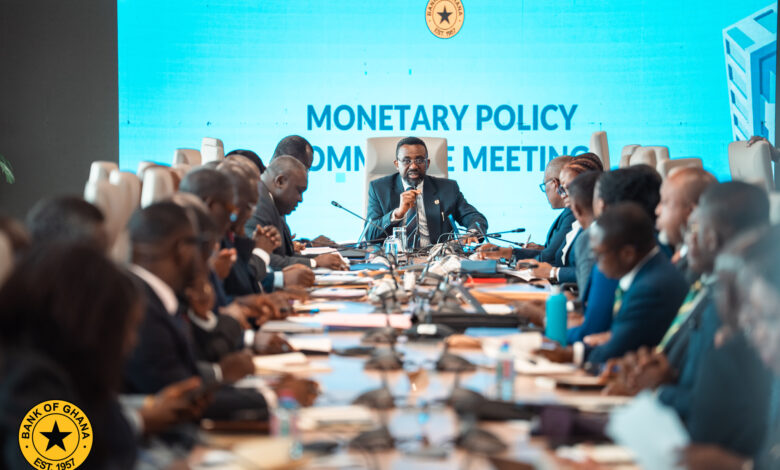
The Bank of Ghana has reported stronger-than-anticipated performance in the domestic economy, even as global uncertainties introduce new risks, according to Governor Dr. Johnson Pandit Asiama. Speaking at the 129th Monetary Policy Committee (MPC) meeting, Dr. Asiama emphasized that the Committee’s deliberations must balance domestic success with the challenges posed by the evolving external environment.

He highlighted that headline inflation declined to 3.3 percent in February, marking the fourteenth consecutive monthly drop and bringing inflation below the Bank’s medium-term target band. Gross international reserves have risen to US$14.5 billion, equivalent to 5.8 months of import cover, while the Composite Index of Economic Activity recorded year-on-year growth of 8.4 percent at the start of 2026. This growth has been supported by stronger bank credit, industrial production, trade activity, and household consumption.
“Taken together, these indicators point to an economy stabilising more rapidly than many had expected,” Dr. Asiama said, stressing that the MPC’s role is not only to celebrate these gains but to ensure their sustainability amid mounting external risks.
The Governor noted that escalating conflict in the Middle East has disrupted energy and shipping channels, increased volatility in global oil markets, and introduced uncertainty into the trajectory of global inflation. For Ghana, rising oil prices present the risk of imported inflation, potentially necessitating policy tightening, even as higher gold prices provide some offset to the trade balance.
Dr. Asiama also drew attention to the Ghana Accelerated National Reserve Accumulation Programme (GANRAP), which aims to increase reserves to 15 months of import cover by 2028. While strengthening external buffers is key to macroeconomic resilience, such initiatives also raise important questions regarding liquidity conditions, the Bank’s balance sheet, and the interaction with monetary policy operations.
He further highlighted the robustness of the banking sector, noting improvements in asset quality and sound profitability, which are critical for the effectiveness of monetary policy in transmitting changes in interest rates to households and businesses.
“The judgment required today is more complex than before,” Dr. Asiama said. “We must respond to domestic success while navigating genuine external uncertainty, ensuring that the progress achieved through disciplined policy is sustained.”
The MPC’s discussions will focus on geopolitical risks, reserve accumulation, and the effectiveness of monetary policy transmission, as the Committee charts a course for maintaining economic stability throughout 2026.