Africa Prosperity Network Marks Ghana @ 69 with a Landmark Integration Webinar, Drawing Nearly 2,000 Participants across Africa and the diaspora
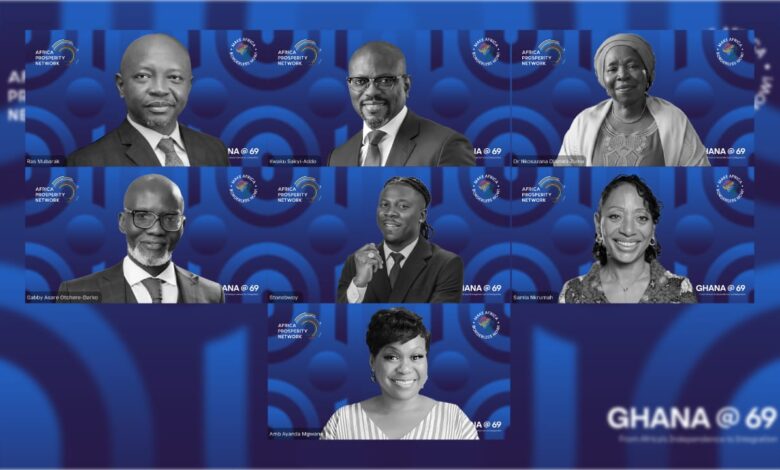
Sixty-nine years ago today, Kwame Nkrumah stood before a jubilant crowd in Accra and declared Ghana free. But in the same breath, he issued a warning that still resonates with uncomfortable force: “The independence of Ghana is meaningless unless it is linked up with the total liberation of Africa.”
Six decades on, that liberation remains unfinished business.
On Friday 6 March 2026, the Africa Prosperity Network (APN) convened Ghana @ 69: From Africa’s Independence to Integration, a high-level webinar that drew nearly 2,000 participants across the continent to confront the most consequential question facing the continent: with 2028 fast approaching, the benchmark year under the Abuja Treaty for completing critical stages of Africa’s economic union, what will the continent actually deliver?
The answer, the speakers made clear, must come now.
The Conversation
Moderated with characteristic sharpness by Kwaku Sakyi-Addo, Executive Director and Board Member of the Africa Prosperity Network, the discussion wasted no time on pleasantries. Sakyi-Addo set the tone immediately:
“There’s a well-known African proverb that says, if you want to go fast, go alone; but if you want to go far, then go together. I believe Africa can go far and fast by going together. Far. Fast. Together.”
Gabby Asare Otchere-Darko, Founder and Executive Chairman of the Africa Prosperity Network, cut to the heart of the matter with the line that stopped the conversation:
Africa is not poor. Africa is fragmented. Until we unite our markets, we will continue to be perceived as poor. But if we come together as one, we can unleash the continent’s true wealth.”
He was equally direct on what the single most important legal step remains: “If we have the protocol for free movement being ratified, then we will have a proper single market.”
Dr Nkosazana Dlamini-Zuma, Advisory Council Chairperson of the Africa Prosperity Network and former Chairperson of the African Union Commission, brought both authority and urgency to the discussion. On the continent’s greatest asset, she was unequivocal:
“The Africa we want is an Africa that understands how it has to be integrated: peaceful, prosperous — but all that will have to be done by Africans themselves. The most precious resource we have is the people. 1.5 billion, 60% young people. That is the most precious resource we must invest in.”And on the timeline: “Building the Africa we want has already started. It is not going to start in 2063. 2063 will be a year of celebration of the Africa we want.”
Ras Mubarak, former Member of Ghana’s Parliament and public policy advocate, offered a vision of what integration could look like in practice: “I would imagine an Africa where you could sit in a train in Algiers and go all the way to Cape Town in South Africa — and this is certainly possible.”
Samia Nkrumah, former Member of Ghana’s Parliament and daughter of the man who started it all, carried both a legacy and a mission into the discussion. On the role of women: “I dare say women have to embrace this task. Because no big change has happened without women embracing and leading it.” And on where change must begin: “The first port of call is education — education about what this unity that our fathers and mothers were talking about in the 1960s means, and the origins of this African unity.”
The webinar also demonstrated that Africa’s integration story is not confined to the political class. Stonebwoy, one of the continent’s finest Afro-Dancehall artists and a speaker at the webinar, made a compelling case for the role of creatives in driving the movement: “It is very important for us, as creatives, to be empowered and tasked with being the voices that amplify our shared connection and help drive the call to make Africa borderless now.”
Beyond the Podium
The discussion was further enriched by a video message from Sarkodie, Ghana’s most decorated rapper, who called on the next generation to build a borderless Africa, a reminder that integration is as much a cultural project as it is a political one.
What Comes Next
Integration is not a matter solely for heads of state and treaty rooms. It is a demand that every African citizen can, and must, make.
Join the Make Africa Borderless Now! Movement and sign the petition at www.makeafricaborderlessnow.com.
Nkrumah said: Unite or perish. The choice is still ours.
About Africa Prosperity Network: Africa Prosperity Network is a not-for-profit organisation registered under the laws of the Republic of Ghana. APN provides a platform for leaders, particularly in business and politics across Africa, to collaborate to achieve sustainable prosperity across the continent. The organisation’s flagship initiative, the Africa Prosperity Dialogues, serves as an annual forum for continental decision-makers to address critical economic development challenges and opportunities.
About Make Africa Borderless Now! Movement Make Africa Borderless Now! is a pan-African movement dedicated to accelerating the free movement of people, goods, and capital across Africa, and to holding governments and institutions accountable to the continent’s integration commitments.