Ghana to host UN high-level reparatory justice event — Mahama calls for historical accountability
Ghana is set to host a high-level special event on reparatory justice later this month at the United Nations, reinforcing global calls for justice for the transatlantic slave trade and racialized chattel enslavement of Africans.
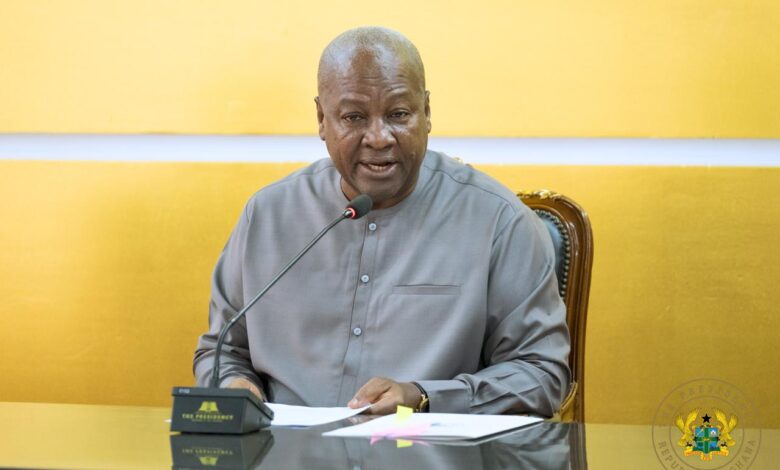
During a state luncheon held in honor of visiting Prime Minister of Saint Kitts and Nevis, Hon. Dr. Terrance Michael Drew, President John Dramani Mahama emphasized that the initiative is not about charity but about historical justice and accountability.
Speaking on the significance of the event, President Mahama said the legacy of slavery continues to shape global inequalities and must be addressed through collective international action.
“The transatlantic and racialized chattel enslavement of Africans constitutes one of the gravest crimes against humanity in history,” President Mahama stated. “Our call is not for charity. It is for justice rooted in truth, accountability, and recognition of the suffering endured by our ancestors.”
According to the President, the upcoming UN event will provide a platform for African and Caribbean nations to shape their own narrative about historical injustices. He stressed the importance of unity between Africa and the Caribbean in advancing reparatory justice discussions.
“It is time for our story to be told by us — grounded in truth, anchored in historical accountability, and driven by the determination to correct the injustices of the past,” he said.
Mahama further urged stronger solidarity between African and Caribbean nations, noting that shared historical experiences should translate into stronger diplomatic and policy collaboration.
“Together, Africa and the Caribbean must speak with one voice, with clarity, unity, and strong moral conviction,” he added.
The Ghanaian government believes that the event will strengthen global dialogue on reparatory justice, development cooperation, and cultural restoration. Officials say the initiative aligns with broader efforts to promote historical recognition and sustainable partnerships between nations affected by the transatlantic slave trade.