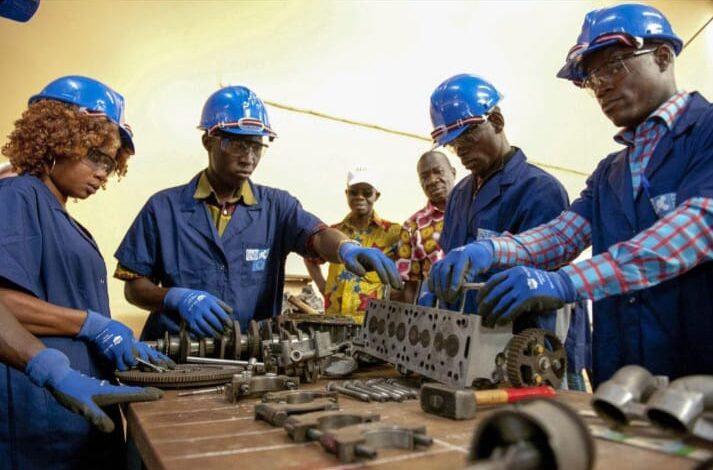
For many young people in Ghana, completing school is not the end of their problems. It is often the start of another difficult journey: finding a job.
Year after year, young people graduate with certificates only to join long queues of job seekers. According to the *Ghana Statistical Service [GSS], Ghana’s unemployment rate stood at 13.0% in the third quarter of 2025. That number should force us to rethink how we prepare young people for work.
In my view, vocational and technical training can be part of the answer. It equips young people with practical skills to earn a living, start businesses, and in some cases, create jobs for others.
Changing The Perception
For too long, vocational training has been seen as the option for students who did not do well academically. That perception must change.
A young person who learns welding, electrical installation, plumbing, fashion design, catering, carpentry or auto mechanics is not a failure. Ghana needs university graduates, but we also need skilled workers. Buildings need electricians, plumbers and carpenters. Vehicles need mechanics. People need tailors and fashion designers. These are not “lesser” jobs. They are essential to national development.
Training Is Not Enough
But training alone is not enough. We must also ask: what happens after the training?
A young tailor may have the skill but no money to buy a sewing machine. A welder may graduate but cannot afford equipment. Without finance, tools, mentorship and work experience, skills cannot translate into livelihoods.
This point was stressed by Dr. Monica Lambon-Quayefio, Associate Professor of Economics at the University of Ghana. Speaking at a webinar on youth employment, she called for a well-resourced system that connects education with employers and support services. She also highlighted the need for internships, apprenticeships and better job-matching to help young people move from school to work.
A certificate alone does not guarantee a job. Young people need practical experience and information about the skills employers actually demand.
Kofi Asare, Executive Director of Africa Education Watch, has also raised concerns about financing for Ghana’s TVET sector. He argues that inadequate funding affects training quality and the ability to deliver industry-relevant skills. He is calling for increased investment, stronger partnerships between training institutions and industry, and better financing for TVET.
What Government And Stakeholders Must Do
The responsibility cannot rest on young people alone. Government and other stakeholders must create the conditions for vocational training to succeed.
Ghana should invest in modern training equipment, qualified instructors, stronger industry partnerships, and affordable start-up support for graduates. Schools must also help students and parents see vocational education as a first-class pathway, not a second choice.
Vocational training will not solve youth unemployment on its own. Ghana also needs economic growth, stronger industries, and more private-sector investment. But practical skills give young people another route to earning a living and contributing to the economy.
Our young people do not only need certificates. They need skills, tools, experience, finance, and opportunities to apply what they have learned.
If we get this right, vocational training can help transform young people from job seekers into job creators — confident to build their own future and Ghana’s future with it.