Ghana, India Target $6 Billion Trade as Ablakwa, New High Commissioner Prioritize Agriculture, ICT and Pharma
Foreign Affairs Minister says jobs for youth and economic transformation are at the core of new partnership
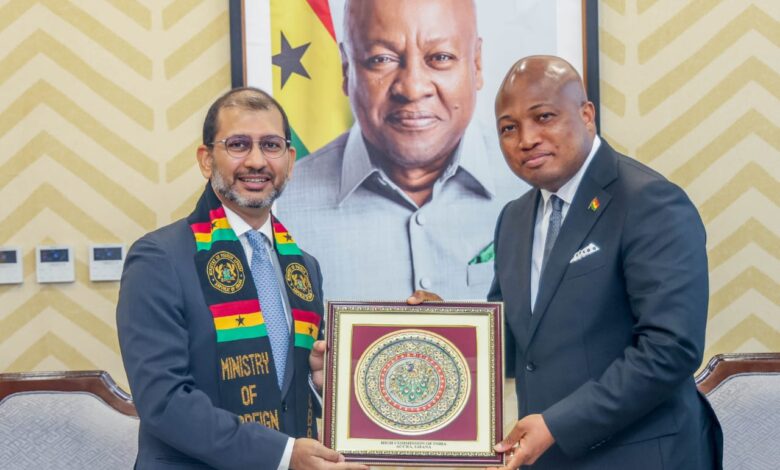
Ghana and India have set an ambitious target to double current bilateral trade to six billion dollars, as both countries seek to deepen economic ties anchored on agriculture, technology and health manufacturing.
The new goal was announced in Accra by Minister for Foreign Affairs, Samuel Okudzeto Ablakwa, during a ceremony to receive Letters of credence from His Excellency Surinder Bhagat*, the new Indian High Commissioner to Ghana.
The $6 billion target represents a major jump and reflects growing confidence in the partnership between Africa’s gateway and one of Asia’s fastest-growing economies.
Trade Target Built on Strong Foundations
Receiving the Indian envoy, Mr. Ablakwa said the decision to aim for $6 billion in trade was “taking into account the strong trade cooperation between the two countries” that already spans decades.
India is currently among Ghana’s top trading partners. Bilateral trade covers areas such as pharmaceuticals, automobiles, rice, machinery, textiles and petroleum products. Indian companies also have a significant footprint in Ghana’s manufacturing, mining services, and retail sectors.
“We are not starting from zero,” Ablakwa noted. “We are building on a relationship of trust, people-to-people ties, and mutual respect. Doubling trade to $6 billion is ambitious, but it is achievable if we focus on value addition and investment.”
He added that achieving the target will require removing bureaucratic bottlenecks, improving trade facilitation at ports, and encouraging more joint ventures between Ghanaian and Indian businesses.
Three Priority Areas: Agriculture, ICT, and Pharmaceuticals*
The Minister outlined agriculture, ICT, and pharmaceutical manufacturing as the three strategic pillars where Ghana and India have agreed to strengthen bilateral relations in the coming years.
1. Agriculture
Mr. Ablakwa said Ghana is keen to tap India’s expertise in agro-processing, irrigation, and food preservation to boost productivity and reduce post-harvest losses. With over 60% of Ghanaians engaged in agriculture, the sector remains critical for job creation and food security.
“We want to move from exporting raw cocoa and cashew to exporting finished, packaged foods made in Ghana,” he said. “Indian technology and investment in processing plants can help us get there faster.”
2. ICT and Digital Economy
The Minister highlighted India’s global strength in software, fintech, and digital public infrastructure as a model Ghana can adapt. He said cooperation will focus on skills training, BPO services, and expanding Ghana’s digital ecosystem to create jobs for the youth.
“Our young people are tech-savvy and entrepreneurial,”* Ablakwa stated. “Partnering with India in ICT will help us build the digital jobs of the future right here in Accra, Kumasi and Takoradi.”
3. Pharmaceutical Manufacturing
With Ghana pushing to become a health hub in West Africa, the Minister said pharmaceutical manufacturing is a top priority. India is known as the “pharmacy of the world,” and Ablakwa believes a partnership can help Ghana produce more essential medicines locally and reduce import dependence.
“The goal is to anchor Ghana’s health security while creating high-skilled jobs,”* he said. *“We want Indian pharmaceutical firms to set up plants here and transfer technology to our people.”
Jobs and Development at the Center
According to the Foreign Minister, the focus on these three areas is deliberate because they directly address Ghana’s development priorities.
“These strategic areas of cooperation will create jobs for the youth and anchor Ghana’s economy on a path of development in Africa,” he said.
Youth unemployment remains one of Ghana’s biggest challenges. By linking Indian investment to agriculture value chains, digital services, and pharma plants, the government hopes to generate thousands of direct and indirect jobs.
Ablakwa also noted that the partnership aligns with the African Continental Free Trade Area. Products made in Ghana with Indian collaboration can be exported duty-free to the rest of Africa, giving both countries a bigger market.
India’s Commitment
In his remarks, High Commissioner Surinder Bhagat* thanked the Government of Ghana for the warm reception and reaffirmed India’s commitment to being a “reliable partner in Ghana’s development journey.”
He said India views Ghana as a key partner in West Africa and is ready to expand cooperation beyond trade into education, culture, and defense. The High Commissioner noted that Indian companies are already exploring new investments in Ghana’s special economic zones.
“The $6 billion trade target is a signal of our shared ambition,” Bhagat said. *“India stands ready to work with Ghana to make it a reality.”
Looking Ahead
The announcement comes as Ghana seeks to diversify its trading partners and attract investment to support its 24-hour economy and industrialization agenda.
With both governments now aligned on specific sectors and a clear dollar target, observers say the next 24 months will be critical. Implementation will depend on signing new MOUs, fast-tracking business visas, and creating incentives for joint ventures.
For now, the message from Accra is clear: Ghana wants more than trade in commodities. It wants technology transfer, factories, and jobs.
“This is about building a partnership that delivers prosperity to our people,” Ablakwa concluded. “With India, we have a friend and a partner who can help us get there.