Ghana must institutionalise government-civil society dialogue-Ibrahim-Tanko Amidu
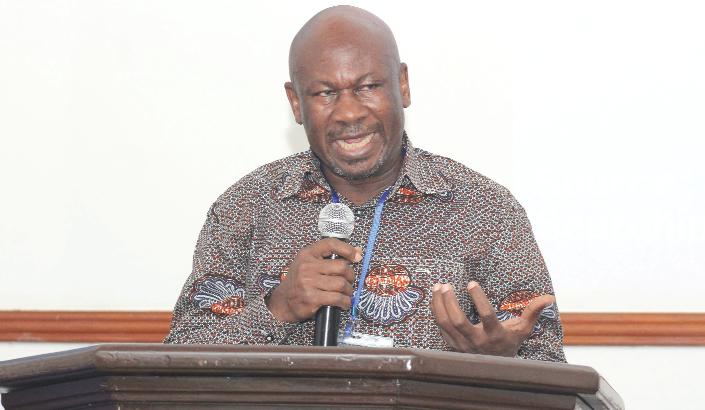
Executive Director of the STAR-Ghana Foundation, Alhaji Ibrahim-Tanko Amidu, has called for the institutionalisation of regular dialogue between government, civil society organisations (CSOs) and other key stakeholders, describing it as essential to strengthening democracy and achieving sustainable national development.
Speaking at the 4th Ghana Civil Society Forum 2026 held at the University of Ghana in Accra, Alhaji Amidu said Ghana must establish permanent mechanisms for constructive engagement at both the national and sub-national levels to ensure that citizens’ voices are reflected in governance and development.
“We should institutionalise inclusive and constructive spaces and mechanisms at both national and sub-national levels for multi-stakeholder dialogues,” he said.
“That we institutionalise spaces that enable government to engage regularly with the various development partners, both at the national and local levels, to enable the kind of constructive dialogue and discussion and collaboration that will lead to sustainable development.”
Addressing participants under the theme, “Reimagining Partnerships for Democratic Consolidation and Inclusive Development,” Alhaji Amidu said Ghana’s democratic achievements, including peaceful elections and constitutional rule, should be complemented by stronger citizen participation beyond the electoral cycle.
He observed that many citizens, particularly young people, feel disconnected from governance processes and continue to have limited opportunities to influence public policy.
Citing the Ghana Statistical Service Governance Wave Report 2025, he noted that only 12 percent of Ghanaians believe the country’s political system provides adequate opportunities for citizen participation.
“The challenge before us, therefore, is not merely how to sustain democracy, but how to make democracy work effectively for all citizens of this country,” he stated.
According to him, neither government nor civil society can independently address the country’s governance and development challenges, stressing that meaningful partnerships are required among government, civil society, the private sector, traditional authorities, development partners and citizens.
He said civil society organisations play a critical role in identifying emerging challenges, mobilising communities, generating evidence for policymaking and creating channels for dialogue between citizens and public institutions.
For this reason, he argued that government should regard collaboration with civil society as a strategic investment rather than an act of patronage.
“Government collaboration with and support for civil society should therefore not be viewed as patronage. Rather, it should be understood as a strategic investment in better governance and more effective development outcomes for Ghanaians,” he said.
Alhaji Amidu also urged government to formally recognise civil society organisations as domestic development partners and include them in national policy discussions alongside traditional development partners.
“I think given the role that civil society is playing, has played, and will play, we should also be recognised as development partners and invited to the table to discuss with government on how to make Ghana more sustainable and more inclusive,” he said.
He further called on government, civil society and the private sector to work together to mobilise domestic resources for development, warning that Ghana could no longer depend heavily on international donor funding.
“It is clear that we cannot rely on external donors to finance our development, no matter how supportive or benign these donors are,” he added.
Alhaji Amidu concluded that institutionalised dialogue, mutual trust and sustained collaboration among all stakeholders would strengthen democratic governance and ensure that development benefits all Ghanaians.