Rent Control lacks authority to regulate our fees – KNUST hostel owners
Private hostel owners operating around the Kwame Nkrumah University of Science and Technology (KNUST) have challenged the legal basis of the Rent Control Department’s ongoing exercise to regulate accommodation fees charged by student hostels.
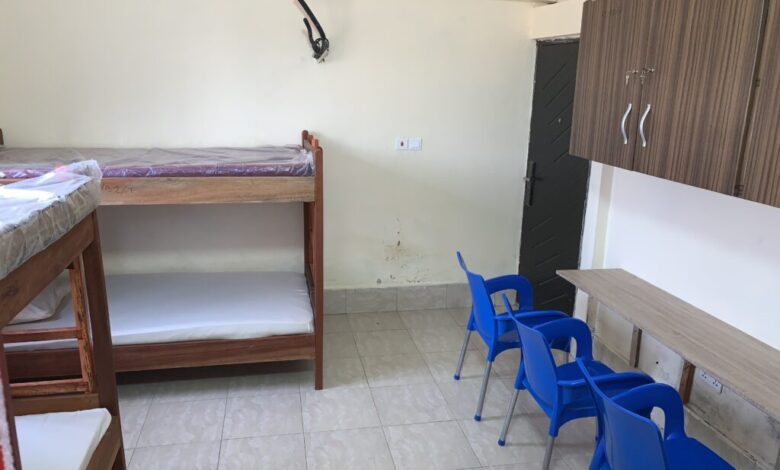
Private hostel owners operating around the Kwame Nkrumah University of Science and Technology (KNUST) have challenged the legal basis of the Rent Control Department’s ongoing exercise to regulate accommodation fees charged by student hostels.
The owners argue that the Rent Act, 1963 (Act 220), and the Rent Control Law, 1989 (PNDCL 138), do not cover purpose-built student hostels, which they say operate under a different regulatory framework.
The Rent Control Department, led by Acting Rent Commissioner Frederick Opoku, has intensified its enforcement campaign targeting private hostel operators around public universities over concerns about high accommodation charges.
The exercise follows concerns raised by students at the National Youth Conference about what they describe as exorbitant hostel fees, with some reporting annual charges ranging between GH₵5,000 and GH₵10,000.
The hostel owners, however, say while they recognise the accommodation challenges confronting students, the approach adopted by the Rent Control Department could undermine private investment in student accommodation.
They argue that forcing hostel operators to reduce their charges or withdraw their services could further limit the already inadequate accommodation options available to students.
President of the KNUST Hostel Owners Association of Ghana, Bishop Dr Akwasi Owusu-Bi, has therefore called on the Rent Control Department to follow due process and clarify its jurisdiction.
“In fact, in the first place, we do not operate under the Rent Commissioner. The Rent Commissioner does not control prices above a certain threshold. They were meant for single-room and chamber and hall apartments; they were not meant for such arrangements.
“We don’t operate under tenancy law; we operate under licensing law, and this is agreed upon by the GTA. If we decide to close our hostels, how are the universities going to operate? We can do that because it is our private property,” he said.
Counsel for the association, Michael Gyang Owusu, also accused the Rent Control Department of acting outside its jurisdiction and called for dialogue with hostel operators to resolve the matter.
He argued that the legal framework governing rent was developed at a time when the current model of purpose-built student accommodation did not exist.
“What is missing in all this is the dialogue. Also, it is clear that in the 1960s when the Rent Act was being passed and all the subsequent LIs and EIs, there was not in contemplation student hostels as they now exist,” he said.
CitiNewsRoom