Ramaphosa Calls for Reparations Rooted in Development as UN Recognizes Transatlantic Slave Trade as ‘Gravest Crime Against Humanity
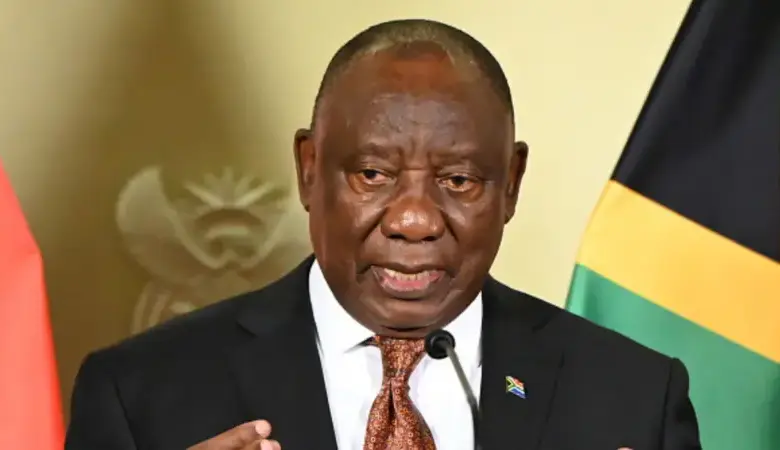
South African President Cyril Ramaphosa has urged the international community to treat reparations for the transatlantic slave trade and colonialism as a matter of development justice, arguing that redress must deliver sustained investment in Africa’s growth.
In a public statement, Ramaphosa welcomed renewed global attention to the issue following a United Nations General Assembly resolution adopted in March 2026. The resolution declared the trafficking of enslaved Africans and the racialized enslavement of Africans as “the gravest crime against humanity.”
“The resolution is anchored in acknowledgement of harm, reparatory justice and restitution,” Ramaphosa said. It calls for looted cultural property to be returned and for compensation and other forms of reparation to be considered.
From Exploitation to Underdevelopment
Ramaphosa argued that the colonial enterprise was driven by profit rather than trade in any conventional sense. He said former colonial powers benefited financially from enslaved African labor and from the display of looted African artifacts in European museums and institutions.
“Enslaved labour from Africa built farms, industries and infrastructure to enrich colonial powers, as the countries from which the slaves were taken remain underdeveloped even today,” he wrote.
Citing historian Walter Rodney, he added: “It was economics that determined that Europe should invest in Africa and control the continent’s raw materials and labour.”
*Linking Reparations to Africa’s Development Goals*
The president said any reparations framework must align with Africa’s developmental priorities. He called for measures that help African countries tackle debt burdens, poverty, inequality, and unemployment.
“Just as the exploitation of Africa and the enslavement of millions of her people made the former colonial powers wealthy, redress must take the form of sustained, direct, material investment in Africa’s development,” he said.
Ramaphosa outlined specific forms such investment could take: increased foreign direct investment, greater market access for African countries affected by slavery, skills and technology transfer, and the return of historical artifacts to their countries of origin.
A Unified, Forward-Looking Approach
South Africa, he said, supports a unified and collaborative African approach to reparations that focuses on concrete, forward-looking measures to address the lingering effects of the slave trade and colonialism.
Drawing on South Africa’s own experience with truth and reconciliation, Ramaphosa said former colonial powers must confront the historical injustice of colonialism with honesty and integrity.
“Beyond that, they must make a clear commitment to tangible measures of redress that support Africa’s growth and development,” he said.
The UN resolution and Ramaphosa’s intervention add momentum to a long-running debate over reparations, which has gained traction in recent years across the African Union, CARICOM, and civil society groups globally. Discussions have centered on financial compensation, debt cancellation, restitution of cultural property, and reparative development programs.
Ramaphosa’s statement frames the issue not as charity, but as corrective justice tied to Africa’s economic future.