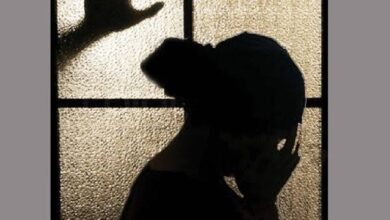
If three masked police officers can allegedly descend on a journalist who was simply fixing his car lights, beat him, push him so violently that part of his nostril is cut after striking a block, and parade him through the streets of Teshie as though he were Ghana’s most wanted criminal, then we have a serious problem in the Ghana Police Service. What kind of policing is this? Who gave these officers the authority to turn a routine swoop into an alleged orgy of violence against citizens? And how many more Ghanaians must suffer humiliation and brutality before the Inspector-General of Police (IGP) confronts the disturbing reality that some personnel may be unfit to wear the uniform? Yesterday, a multiple award-winning journalist allegedly became a victim of this frightening display of police conduct. If the very people paid to protect us become the people we fear, then who exactly is protecting the Ghanaian citizen?
There is growing concern about the conduct of some personnel of the Ghana Police Service whose actions, rather than inspire public confidence, raise serious questions about professionalism, discipline, and respect for the fundamental rights of citizens. The uniform is a symbol of authority, but it must never become a shield for recklessness, intimidation, or the abuse of power.
Yesterday, 22nd October, 2026, a disturbing incident involving a multiple award-winning journalist and three police officers at Teshie brought this troubling reality into sharp focus.
According to the journalist’s account, he was at a mechanic’s shop in Teshie, having his car lights repaired, when a police swoop was underway in the area. Three officers, whose faces were reportedly covered, approached the electricians working on his vehicle and accused them of stealing the very car they were repairing.
Rather than exercise restraint, establish the facts, and conduct a proper inquiry, the officers allegedly resorted to violence, using slabs to assault the two electricians assisting the journalist. As the situation escalated, my friend identified himself, hoping that his explanation would bring some sense of reason to the encounter.
Unfortunately, his account suggests that his identification did little to calm the officers. Instead, they allegedly slapped him repeatedly on the chest and pushed him off his vehicle. In the process, he struck the area around his nostril against a nearby block, sustaining an injury that reportedly severed part of his nostril.
What makes this incident even more disturbing is the allegation that, despite the absence of any apparent provocation, the officers continued to detain him and marched him through the principal streets of Teshie before pushing him into their vehicle. As described in his account, the spectacle was that of a hardened criminal being paraded before the public, rather than a citizen whose circumstances required proper investigation.
Is this how the police are expected to treat the very citizens they are sworn to protect?
A swoop is not a licence to abandon professionalism. Suspicion is not proof of guilt, and the mere presence of a person at a mechanic’s shop does not justify violence or public humiliation. Police officers have the authority to investigate suspected wrongdoing, but that authority must be exercised within the confines of the law.
Every police officer is a civilian in uniform and remains subject to the laws of the Republic of Ghana. The uniform does not confer immunity from accountability, nor does it grant its wearer permission to assault, intimidate, or degrade citizens.
Thankfully, the journalist’s account indicates that some officers later listened to his explanation, rendered an unqualified apology, and escorted him to a superior officer. After hearing the circumstances, the superior reportedly acknowledged the irresponsible conduct of the officers involved and directed the journalist to visit Police Headquarters today to meet the appropriate office.
That intervention is welcome. However, an apology, important as it may be, cannot be the end of the matter. Allegations of this nature warrant a thorough and impartial investigation, and any officer found culpable must face the appropriate disciplinary and legal consequences.
More importantly, the incident raises an uncomfortable question: are the recruitment, training, supervision, and disciplinary systems of the Ghana Police Service adequately addressing misconduct among personnel who display such disregard for citizens’ rights? The Service must be prepared to identify and weed out misconduct wherever it occurs.
The public deserves a fact-based account, not speculation, while the officers concerned must also be afforded a fair process alongside the complainant’s right to justice.
I therefore call on the IGP to ensure that this matter receives urgent and independent attention. The officers involved must be identified, the witnesses and other available evidence examined, and appropriate action taken in accordance with the law.
Police officers must understand that professional responsibility does not end with the enforcement of the law. In fact, it also requires personal discipline, restraint, and respect for human dignity. On duty, their conduct must reflect these principles at all times. It is deeply troubling when citizens begin to fear those entrusted with their protection. Public trust is not built through force, intimidation, or theatrical displays of authority. It is earned through fairness, integrity, accountability, and professionalism.
The posturing of these officers who assaulted the journalist is nothing short of Miscreants. I believe any miscreant cannot be allowed to hide behind the uniform to intimidate innocent citizens. The police must protect the public, not become a source of fear.
The IGP must act. The Ghana Police Service must restore public confidence. And every officer must understand one fundamental truth: nobody is above the law, least of all those sworn to enforce it. Some officers behave as though the uniform makes them untouchable, forgetting that power without conscience invites condemnation, disgrace, and consequences they may never anticipate.