President Mahama unveils vision to transform Ghana’s mineral wealth into industrial power
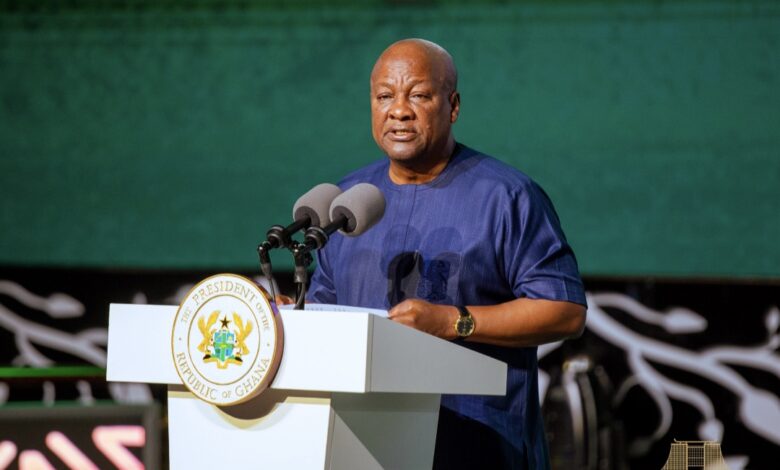
President John Dramani Mahama has outlined a comprehensive plan to transform Ghana’s mineral resources into a driving force for industrialisation, job creation and economic growth, with a target of ending exports of unprocessed mineral ores by 2030.
He said Ghana must move beyond the extraction and export of raw materials to establish domestic processing industries that create more value, develop local expertise and provide sustainable employment for its people.
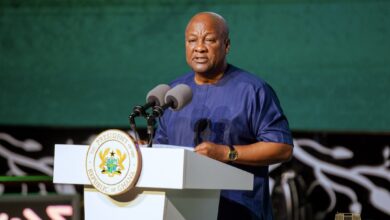
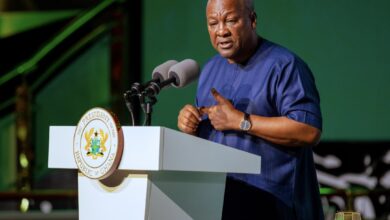
Speaking at the opening of the 2026 Mining in Motion Summit in Accra, President Mahama said the country’s mineral wealth must support its own industrial development rather than primarily supply industries abroad.
For generations, he noted, Ghana had exported manganese and bauxite while importing finished products manufactured from those same minerals, resulting in lost opportunities for skilled employment, technological advancement and industrial growth.
“We have a responsibility to change this path, and the Accra Reset provides a framework for doing so,” he said.
President Mahama explained that his administration’s vision was to strengthen Ghana’s control over its natural resources by promoting responsible extraction, domestic processing and stronger links between mining and manufacturing.
He said the government was pursuing initiatives to connect the country’s bauxite resources to aluminium refining, smelting and manufacturing through the Ghana Integrated Aluminium Development Corporation (GIADEC).
Similarly, the Ghana Integrated Iron and Steel Development Corporation (GIISDEC) was working to link iron ore development to commercial steel production, while the Ghana Gold Board and the country’s gold refining policy were intended to retain more value locally through assaying, refining and related services.
He also highlighted the potential of salt production to support the manufacture of chemicals, including caustic soda for aluminium refining and chlorine for water treatment, reducing Ghana’s dependence on imported industrial chemicals.
President Mahama said the government’s objective was to modernise the Volta Aluminium Company (VALCO), develop domestic aluminium refining capacity and expand the production of steel and processed manganese to serve local industries and regional markets.
He added that Ghana’s 24-hour economy agenda could help coordinate production, logistics and related services to increase industrial output and employment.
“I have set a clear goal that by 2030, raw mineral ores should no longer leave our shores. Our alumina, manganese, iron, lithium and other minerals must support processing and industrial development here at home,” he stated.
To achieve the target, he said the government would pursue a phased prohibition on exports of unprocessed ores, supported by the necessary legal measures, mineral-specific requirements and transparent implementation timetables.
He noted that Ghana had already imposed a ban on the export of iron scrap and non-ferrous metals as part of efforts to retain more resources for domestic industrial use.
The President stressed, however, that legislation alone would not be sufficient to establish competitive processing industries, adding that investors required predictable regulations, efficient approval processes and clear institutional responsibilities.
He said refineries and smelters also needed reliable and competitively priced energy, adequate water supplies, secure access to raw materials and effective road, rail and port infrastructure.
He called for stronger collaboration between universities, technical institutions and industry to develop the engineers, technicians, geologists and managers required to support the country’s industrial transformation.
President Mahama further emphasised the importance of indigenous enterprises in the mining value chain, urging the government and industry to create opportunities for Ghanaian businesses to participate in ownership, management, production and supply services.
He said international partnerships should promote technology transfer and supplier development, while women and young people should have fair access to training, finance and contracts.
The President also called for greater cooperation among African countries to strengthen their bargaining power and develop regional mineral value chains.
He said the African Continental Free Trade Area, the African Mining Vision and Agenda 2063 provided a foundation for coordinated investment, regional infrastructure development and expanded markets for African-manufactured products.
President Mahama maintained that Ghana remained open to foreign investment but insisted that partnerships must deliver tangible benefits beyond the extraction of natural resources.
“Bring your capital, expertise and technology. Partner with us in African enterprise and resources to build competitive industries here in Africa,” he urged investors.
He said the success of the country’s mineral development agenda would ultimately be measured by the number of operating processing facilities established, the expansion of local supplies, the creation of skilled jobs and improvements in the living conditions of Ghanaians.
President Mahama urged participants at the summit to pursue practical partnerships with clear responsibilities, credible financing and measurable targets, expressing the hope that future editions would report tangible progress in domestic processing and industrial development.