Napo For 2028: Why The NPP Must Close Ranks Behind Bawumia’s Running Mate
Article By Professor Dr Dr Otchere Addai-Mensah, Department of Medical Diagnostics, College of Health Sciences, KNUST
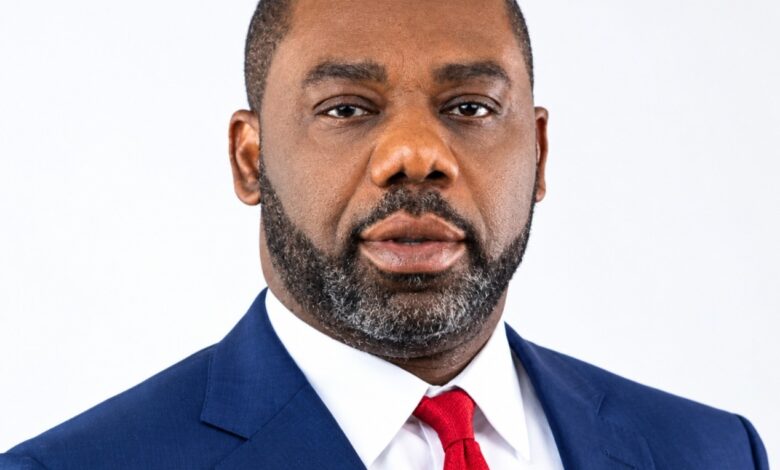
The choice of a running mate is one of the most consequential decisions a political party makes ahead of a presidential election. It is a statement about the kind of leadership the party values, the strengths it seeks to combine and the political strategy it intends to pursue. For the New Patriotic Party (NPP), as it prepares for the 2028 election, the case for Dr. Matthew Opoku Prempeh, popularly known as NAPO, deserves unequivocal support.
Those who genuinely wish the NPP well must look beyond factional preferences, personal reservations and the perennial appetite for change, and rally behind a choice that offers experience, policy depth, political familiarity and an established working relationship with the flagbearer.
The argument is not that NAPO is without flaws. No serious political assessment begins with such an assumption. Rather, it is that his strengths are substantial, relevant and deserving of recognition at a time when the NPP needs strategic clarity, organisational cohesion and a credible pathway back to government.
His record as Minister for Education is particularly instructive. During his tenure, he operated in a policy environment characterised by competing institutional interests, intense stakeholder expectations and difficult negotiations between government and organised labour. His engagement with the University Teachers Association of Ghana (UTAG), among other stakeholders, offered a demonstration of the demands of public leadership beyond the formalities of ministerial office.
Those of us who engaged him in that capacity encountered a politician who could engage with policy substance while navigating the complexities of negotiation. His ability to serve as a fulcrum around which stakeholders with divergent positions could converge, despite their differences, is an important dimension of his leadership experience. In a democratic society, where policy implementation depends on cooperation among institutions and interest groups, this capacity is indispensable.
The ability to negotiate is not a weakness of leadership; it is one of its highest expressions. It requires an understanding of competing interests, an appreciation of institutional constraints and the judgment to distinguish between disagreements that can be reconciled and differences that must be managed. NAPO’s experience in this regard should count significantly in any assessment of his suitability for the vice-presidential role.
His combination of ministerial, parliamentary and political experience also offers a useful complement to Bawumia’s profile. A successful presidential ticket requires more than two prominent personalities. It requires complementary strengths, mutual confidence and the capacity to operate as a coherent political and governing team. Bawumia’s association with economics, digitalisation and policy innovation can be complemented by NAPO’s experience in political engagement, public administration and stakeholder management.
His strong regional identity is complemented by his presently visible national engagement. His Ashanti roots are politically relevant, and must be harnessed towards achieving national coalition. His experience in government and stakeholder relations provides a basis for engaging constituencies across regional, professional and ideological lines.
Although every political candidate may have limitations, the intelligent choice is not necessarily the candidate without perceived weaknesses, but one whose strengths are relevant to the task and whose limitations can be recognised and addressed. Bawumia’s leadership, a disciplined campaign structure and a clear division of responsibilities would be essential to making that complementarity work.
Equally important is the need for the NPP to approach its 2028 preparations with analytical discipline. The defeat of the Bawumia-NAPO ticket in 2024 was a significant political outcome, but it does not automatically establish that changing the running mate is the appropriate response. Elections are shaped by multiple interacting factors, including economic conditions, public perceptions, campaign strategy, party organisation and the broader political environment. A serious party must diagnose its setbacks comprehensively rather than reduce them to the identity of one candidate.
Replacing NAPO simply to create an impression of renewal would be difficult to justify without compelling evidence that an alternative would add greater value. Political change is meaningful only when it addresses an identifiable weakness or advances a clearly defined objective. Otherwise, it risks becoming an exercise in symbolism at the expense of strategic consistency.
The NPP cannot afford to turn the selection of a running mate into an endless contest of personalities, loyalties and internal lobbying. Once a choice has been made through the appropriate party processes, those who seek the party’s success must be prepared to subordinate personal preferences to collective purpose. Internal disagreement has its place in democratic politics; perpetual factional contestation does not serve the interests of a party seeking to regain public confidence.
If the NPP is serious about reclaiming power in 2028, it must combine honest introspection with strategic unity. NAPO’s candidacy should be approached in that spirit: with confidence in his experience, recognition of his strengths and a collective commitment to building a credible national campaign.
The central question is whether his experience, political profile and relationship with Bawumia offer a credible foundation on which the party can build. The case for his selection is compelling, and the party should move beyond needless speculation to the more consequential task of preparing for the election.
Those who wish the NPP well must therefore rally behind Bawumia and NAPO, strengthen the party’s organisation and direct their energies towards winning back public trust, not undermining him. The objective must be larger than individual ambition or internal positioning. It must be the restoration of a united, disciplined and electorally credible political movement.
NAPO’s selection should be a point of consolidation, not another source of division. The time has come for the NPP to close ranks, build purposefully around its leadership and approach 2028 with unity of direction and clarity of purpose.
The Horns of the Altar!!!
Prof. Dr.rer.nat Dr.med Otchere Addai-Mensah
Dept. Of Medical Diagnostics
College of Health Sciences