GoldBod, the IMF Programme Debate, and the Question of “Losses” …A Review of Reported Figures
By Innocent Samuel Appiah
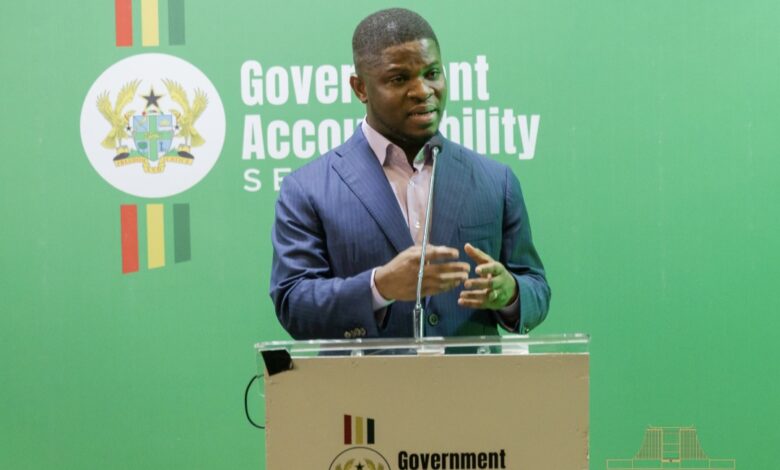
Ghana’s public discussion about the Ghana Gold Board’s (GoldBod’s) operations has intensified alongside the country’s engagement with the International Monetary Fund (IMF) and the stated goal of exiting the programme. In recent commentary, members of the New Patriotic Party (NPP), and for that matter, the minority has argued that GoldBod’s performance includes substantial losses and that discrepancies in reported figures raise concerns.
However, much of the debate hinges on how “losses” are measured, the timeframe covered by different disclosures, and whether programme-level figures are being compared directly with GoldBod’s audited corporate results. When those distinctions are applied, the debate becomes more about accounting classification than about a single, simple failure narrative. It must be emphasized that the Auditor-General’s report on GoldBod never implicated GoldBod, but the minority keep on insisting that the Board has made some losses.
What the Minority is asserting
The Minority’s position, as reflected in public claims, is that the gold-related programme involved significant financial losses and that subsequent disclosures show differences that should be examined.
One example repeatedly cited in this debate is the comparison between a reported US$214 million and a later figure described as US$1.7 billion. The key issue raised by critics is whether these amounts are being presented as though they refer to the same scope, period, and definition of “loss.”
Public discussion has also included allegations that the gold purchase programme should not have remained under the Central Bank-related arrangements and that fees or pricing decisions may require further explanation.
What GoldBod’s audited 2025 accounts show (as cited in the debate)
While the Minority’s claims focus on losses, the public figures discussed from GoldBod’s audited 2025 accounts indicate a more specific operational picture, including about GH¢970.8 million in non-tax revenue, and an operational surplus of roughly GH¢909.7 million
The broader results cited in the same discussion also include a total surplus of about GH¢5.44 billion, with acknowledgment that about GH¢4.55 billion of that surpluses reflects a government grant. That means the overall surplus figure is not purely an outcome of operational trading performance and should be interpreted accordingly.
Why comparisons between “loss” figures can be misleading
Financial results can differ depending on whether the figure is an estimate covering a portion of a year versus an audited full-year result, a measure focused on gross losses versus a net outcome after considering revenue and expense categories, or a programme-level figure linked to a central bank arrangement versus a corporate-level result reported by GoldBod.
When political claims treat different categories as directly equivalent, the comparison can produce conclusions that do not match the accounting structure behind the numbers.
Reserve and Cedi Stability Claims in Parallel
Beyond the corporate books of GoldBod, the broader conversation has also touched on the impact of the gold purchase programme on Ghana’s external reserves and exchange rate stability.
In its own assessments, the IMF acknowledged that the gold purchase programme contributed to building Ghana’s gross international reserves ahead of schedule. That was one of the key objectives when the arrangement was first introduced: to provide an alternative source of forex to support the cedi and reduce pressure on the Bank of Ghana’s dollar reserves. To that extent, the programme delivered a tangible macroeconomic outcome.
At the same time, the IMF flagged structural risks around the design of the programme and the exposure it created for the Central Bank. This is where public debate often gets conflated. The risks noted by the IMF were about programme design and governance, not about whether GoldBod itself was making operational losses. It is instructive that these “loss” allegations have gained the loudest traction at the very moment Ghana has announced a clear roadmap to exit the IMF programme.
The timing raises legitimate questions. The way the narrative is being pushed, it creates the impression that the IMF’s reservations about programme design are being weaponized by the Minority to peddle a simplified and misleading story of “losses” at GoldBod. Rather than engage the technical distinction between programme-level accounting and GoldBod’s audited corporate performance, the debate is being reduced to a political talking point — one that appears to serve both the IMF’s caution and the opposition’s agenda of discrediting a flagship economic initiative.
The truth is more nuanced: a programme can support reserves and stabilize the cedi, while still requiring reforms to its structure. That is not failure. That is how policy evolves.
GoldBod’s Record: Surplus, Transparency, and a Case for Continuity
The current state of the debate ultimately comes down to accounting clarity. When figures are stripped of context and compared across different frameworks, the result is confusion, not insight.
What GoldBod’s audited 2025 accounts show is unambiguous: the Board recorded about GH¢970.8 million in non-tax revenue and an operational surplus of approximately GH¢909.7 million. Even after accounting for the GH¢4.55 billion government grant included in the total surplus of GH¢5.44 billion, the operational performance demonstrates that GoldBod is not a drain on the public purse. It is generating revenue, paying miners promptly, and remitting resources that support the national budget.
More importantly, GoldBod has subjected itself to audit and public disclosure at a time when many state entities do not. The Auditor-General’s report did not implicate GoldBod in financial mismanagement or losses. That fact alone should settle the question of integrity in its corporate operations.
What we are witnessing, therefore, is not evidence of failure, but evidence of a new institution finding its footing and delivering results under scrutiny. GoldBod has helped increase gold purchases for reserves, improved transparency in the gold trade, and created a formal channel that benefits small-scale miners.
As Ghana prepares to exit the IMF programme, institutions like GoldBod represent the kind of homegrown, revenue-generating vehicle the country needs to reduce reliance on external borrowing. To reduce its work to a slogan about “losses” is to ignore the data, ignore the audits, and ignore the national interest.
The record shows progress, not collapse. The task now is to strengthen GoldBod’s governance, not to dismantle it on the basis of misleading comparisons. Ghana’s gold must work for Ghanaians, and GoldBod is proving that it can.