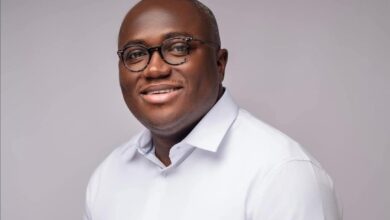
Kofi Tonto Urges Ghana to Invest in Research, Healthcare and Innovation
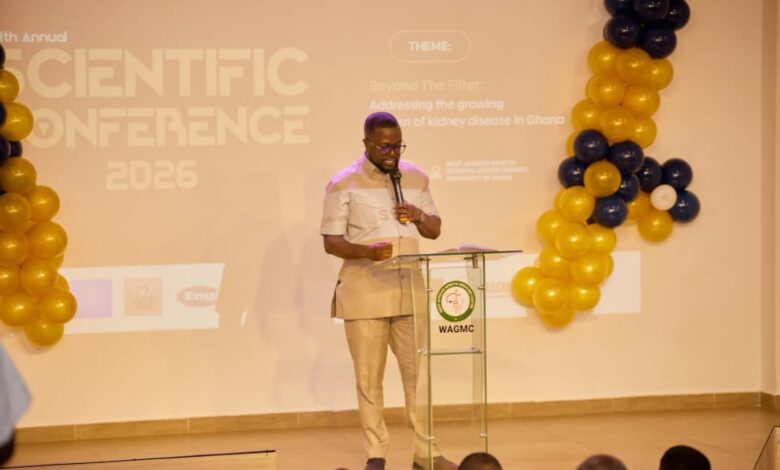
Ghana’s development challenge is not a shortage of talent but the absence of strong, enduring systems capable of turning talent and research into national prosperity, Spokesperson for Employment for NPP’s Policy Committee, Kofi Tonto, has said.
Speaking at the 14th Annual Scientific Conference of UG-MELSSA at the University of Ghana’s WAGMC on August 7, 2026, Tonto argued that Ghana must build institutions and national systems capable of surviving changes in government.
Delivering a keynote address titled “Beyond Politics: Building National Systems That Outlive Governments,” Tonto said political transitions should not interrupt scientific research, healthcare development or national innovation.
“Ghana’s greatest challenge has never been a shortage of talent. Look around this room. The talent is here.”
According to him, Ghana has produced generations of highly skilled professionals, researchers and innovators, but many struggle because the systems needed to identify, finance, develop and commercialise their ideas remain weak.
Tonto said sustainable national development requires more than exceptional individuals.
He called for systems that can continuously identify talent, nurture researchers, provide funding, connect universities with industry and turn scientific discoveries into products and services that benefit the economy.
He warned that Ghana risks losing talented professionals when they encounter institutions that are unable to support their ambitions.
“Politics should never determine whether scientific progress survives,” he said, stressing that governments and ministers will change, but research institutions, healthcare infrastructure and national scientific programmes must endure.
Tonto pointed to South Korea and Israel as examples of countries that made long-term investments in research, innovation and university-industry partnerships across successive political administrations.
His argument was that scientific excellence is not accidental. Countries become innovation leaders when they deliberately create systems that repeatedly produce and commercialise knowledge.
Tonto cited Ghana’s response to the COVID-19 pandemic as evidence that the country already possesses the foundations of internationally competitive scientific systems.
He highlighted the work of scientists at the Noguchi Memorial Institute for Medical Research and the West African Centre for Cell Biology of Infectious Pathogens (WACCBIP) at the University of Ghana.
According to Tonto, Ghanaian scientists successfully sequenced the genome of the virus locally during the pandemic, generating information that contributed to efforts to monitor the spread of the virus.
He also noted that Ghana supported neighbouring countries, including Togo, Benin, Liberia and Sierra Leone, by receiving samples for sequencing when those countries lacked comparable capacity.
For Tonto, the experience demonstrated the value of investing in scientific infrastructure before a crisis occurs.
“That is the proof that this vision is not naive. We have done it before. We can do it again, deliberately, and at scale.”
Turning specifically to the conference theme and kidney disease, Tonto said Ghana must move beyond simply treating patients and focus on building a national innovation ecosystem capable of producing new solutions.
He cited University of Ghana professor Vincent Boima’s assessment that more than five million Ghanaians may be living with chronic kidney disease.
He argued that the scale of the challenge demands a national response involving universities, healthcare institutions, researchers, government and the private sector.
Rather than relying heavily on imported diagnostic technologies, reagents, equipment and treatment protocols, Tonto urged Ghana to develop solutions suited to the country’s own population and healthcare conditions.
He proposed stronger investment in kidney research centres, diagnostic technology, screening tools, genomic research and partnerships between universities and private companies.
He envisioned a Ghana where international researchers seek partnerships with local institutions, patients travel to Accra for specialised medical care, and Ghanaian laboratories develop diagnostic technologies that are adopted across Africa.
He said young Ghanaian scientists should be able to develop innovations locally and take them to international markets without being forced to leave the country in search of opportunities.
The broader objective, he said, should be to create institutions where excellence becomes a predictable outcome of the system rather than an isolated achievement by exceptional individuals.
He criticised the tendency for governments to discontinue or neglect programmes started by their predecessors, arguing that the practice wastes investment, destroys institutional memory and undermines public confidence.
“One administration initiates a programme, the next government neglects it and the one after that starts something entirely new,” he said.
For him, national consensus should extend beyond healthcare to research, education, innovation, industrial development and other areas where long-term investment is essential.
For him, national consensus should extend beyond healthcare to research, education, innovation, industrial development and other areas where long-term investment is essential.
Tonto concluded by challenging researchers and healthcare professionals at the conference to imagine a Ghana that becomes a global centre for medical research and innovation.
He said the country could eventually develop world-class kidney-care expertise, create diagnostic technologies for African populations and export scientific innovations beyond its borders.
He acknowledged that he could not predict where the next major breakthrough in kidney science would emerge.
But he argued that if Ghana builds institutions that reward curiosity, finance research, recognise talent and protect scientific work from political disruption, breakthroughs will become a natural consequence of those systems.
“Not by luck. Not by chance. But because a generation of Ghanaians … decided to build the systems that made their excellence inevitable.”