4 Police officers arrested for allegedly seeking roadside bribe
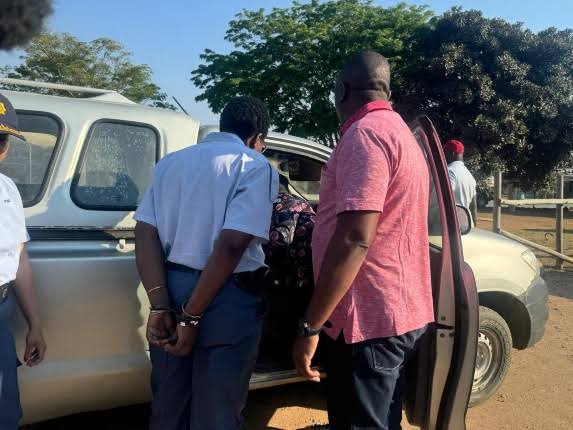
Four Nigerian police officers accused of operating an illegal checkpoint to extort money from motorists reportedly targeted the head of one of the country’s anti-corruption bodies.
Musa Aliyu, Chairman of the Independent Corrupt Practices and Other Related Offences Commission (ICPC), alleged that he was stopped by the officers while driving in Abuja on Saturday and was compelled to withdraw 53,000 naira (about £28 or $38) from an ATM.
Police Commissioner Ahmed Sanusi said the officers had abandoned their assigned duties and established an unauthorised roadblock where they allegedly demanded money from drivers.
The suspects are currently facing an internal police disciplinary process, which could lead to their dismissal. Such cases, however, do not often proceed to court.
Aliyu’s complaint triggered what Commissioner Sanusi described as an “intelligence-driven operation”, resulting in the arrest of the alleged leader of the group and later the other officers involved.
Speaking in an interview with BBC Hausa, Aliyu recounted that the incident began when he was stopped on a busy road. He said one of the officers approached his vehicle, instructed him to open the car, and later requested his driver’s licence.
According to Aliyu, the officer threatened to take him to court for alleged traffic violations, but when he agreed to appear in court, the officer allegedly demanded money instead.
Aliyu said the officer told him that, as a “big man”, he would not want to waste his time in court and claimed that even if the matter went before a judge, he would face a fine of 52,000 naira.
He added that he offered to make a bank transfer but the officer refused, leading him to withdraw the money from an ATM.
The national police leadership has condemned the alleged actions of the officers, warning that abuse of authority will not be tolerated within the service.
Commissioner Sanusi cautioned officers that they must choose between serving as law enforcers or engaging in criminal conduct, saying their actions would ultimately determine where they belong.