Women must lead Ghana’s economic transformation through industrialisation – Prof. Opoku-Agyemang
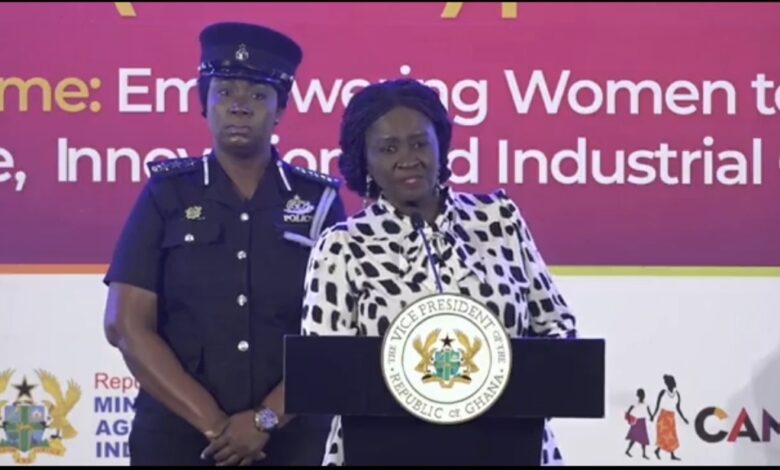
Vice President Professor Jane Naana Opoku-Agyemang has called for women to take a leading role in Ghana’s economic transformation through increased participation in commercial production, agro-processing, manufacturing and industrialisation.
She said empowering women to move beyond small-scale production into larger commercial ventures would be critical to expanding Ghana’s productive capacity, creating jobs and strengthening local industries.
Speaking at the Ghana Women Entrepreneurship Summit 2026, Professor Opoku-Agyemang stressed that women must be placed at the centre of efforts to increase agricultural production, process locally grown products and establish stronger connections between local enterprises and major industries.
“Ghana’s economic transformation depends on increasing production, processing more of what we grow, and building stronger links between local enterprises and larger industries. Women are central to this effort,” she said.
She noted that women should have access to reliable markets for their agricultural produce, while women-owned processing and manufacturing businesses must be given a fair opportunity to compete and expand into larger domestic and international markets.
The Vice President further highlighted the government’s 24-hour economy programme as an opportunity to expand business activities in processing, storage and distribution, enabling entrepreneurs to generate greater value from Ghanaian production.
According to her, the initiative presents opportunities for women to scale up their businesses, establish factories and become major suppliers to industries across various sectors.
“We want women to become commercial producers. We want them to become small processors, to establish factories and women-led businesses to supply major industries and compete in international markets,” she stated.
Professor Opoku-Agyemang emphasised that strengthening women’s participation in the productive sectors would not only improve their economic opportunities but also contribute significantly to Ghana’s industrial development and overall economic growth.