Africa cannot build one market while Africans fear each other
What must an African carry to be accepted in Africa?A passport?A visa work permit?
Or simply fear?
It is a painful question, but one Africa must confront.As disturbing images of African migrants being harassed, intimidated and driven from communities in South Africa continue to circulate across the continent, they provoke more than outrage. They force us to examine a deeper contradiction at the heart of Africa’s integration project.
At a time when African leaders are working to build a borderless continental market, Africans are increasingly being reminded that crossing a border can still come at a cost.
The cost is sometimes suspicion.The cost is sometimes exclusion.And, tragically, the cost is sometimes violence.
For many Africans, these scenes are particularly difficult to reconcile with history.
South Africa occupies a unique place in Africa’s collective memory. During the dark years of apartheid, countries across the continent stood shoulder-to-shoulder with the South African liberation struggle.
Ghana, Nigeria, Tanzania, Zambia and many others offered political support, diplomatic backing, financial contributions and safe havens to those fighting for freedom.The struggle against apartheid was never viewed as South Africa’s struggle alone.
It was Africa’s struggle.Millions of Africans sacrificed because they believed that the freedom of South Africa was inseparable from the freedom of the continent itself.
That is why recurring xenophobic and Afrophobic attacks against fellow Africans continue to generate such profound disappointment.The tragedy is not only that these attacks continue to occur.
The greater tragedy is that they are occurring at precisely the moment when Africa is making its most ambitious push toward continental integration in modern history.
Across the continent, governments are working to implement the African Continental Free Trade Area (AfCFTA), the most significant economic integration project ever undertaken in Africa.
Policymakers are designing interoperable payment systems, digital identity frameworks, cross-border financial infrastructure and digital public platforms intended to connect over 1.4 billion people into a single economic community.
Central banks are collaborating on seamless payment systems.Governments are discussing digital public infrastructure.
Technology leaders are debating digital sovereignty and data governance.Regional blocs are advancing free movement frameworks.
Across Africa, the vision is becoming clearer: a continent that trades together, innovates together and prospers together.
Yet there is a fundamental question we can no longer avoid.How do we build one African market when Africans fear crossing African borders?
How do we create interoperable payment systems if social hostility undermines human mobility?
How do we build a continental digital economy when the people meant to benefit from it feel unwelcome beyond their own borders?How do we pursue economic integration without social integration?
These questions strike at the heart of Africa’s future.For years, Africa’s integration agenda has been built on four interconnected pillars: the movement of goods, the movement of services, the movement of capital and the movement of people.
The first three cannot succeed sustainably without the fourth.A trader cannot benefit from AfCFTA if she is unsafe crossing a border.
A fintech entrepreneur cannot build continental solutions if talent cannot move freely.
An integrated payment system cannot achieve its full potential if Africans themselves become reluctant to live, work and transact across the continent.The dream of “One Africa, One Wallet” cannot be achieved without the deeper principle that underpins it: One Africa, One People.Technology may connect systems.Policy may connect markets.But only trust can connect people.
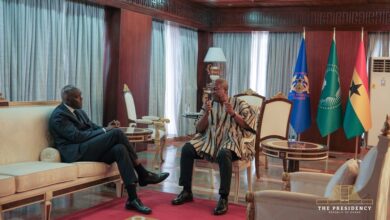
This is why the recent response by President John Dramani Mahama deserves serious attention and commendation.
Faced with growing public anger and understandable frustration, Ghana could easily have chosen a path of confrontation.
It could have amplified tensions through inflammatory rhetoric or encouraged reciprocal actions against South African interests elsewhere on the continent.
Instead, President Mahama and the Government of Ghana chose the path of statesmanship.
By calling for the matter to be formally addressed by the African Union and debated at the highest continental level, Ghana has recognized a fundamental truth: xenophobia in South Africa is not merely a South African issue.It is an African issue.
It affects African mobility.It affects African trade.It affects African investment.It affects African integration.And it ultimately affects Africa’s collective future.
President Mahama’s approach elevates the discussion beyond emotions and bilateral tensions.
It places the issue where it belongs—within the framework of continental governance, continental responsibility and continental solutions.
This is precisely the type of leadership Africa requires.Because while the incidents may occur within the borders of one country, their consequences extend far beyond those borders.
When African migrants are attacked in South Africa, confidence in African integration suffers.When African businesses feel threatened across borders, investor confidence suffers.
When fear replaces trust, the very foundations of Pan-Africanism suffer.
This is also why calls for reprisal attacks elsewhere on the continent must be firmly rejected.Retaliation is not justice.
Attacking South African businesses in Ghana, Nigeria, Kenya or elsewhere will not solve this problem.
Harassing South African citizens living and working across Africa will not strengthen African unity.
Destroying economic opportunities in response to intolerance only multiplies the damage.Africa cannot fight xenophobia with more xenophobia.
The continent must be better than that.At the same time, honesty demands that we acknowledge the underlying factors fueling these tensions.
South Africa faces significant challenges, including high unemployment, deep inequality, pressure on public services and widespread frustration among many citizens who feel excluded from economic opportunity.These concerns are real.
Every sovereign nation has a legitimate right to regulate migration, secure its borders and enforce its laws.
South Africa is no exception.But there must always be a clear distinction between immigration enforcement and mob justice.
There must always be a distinction between protecting national interests and targeting fellow Africans.There must always be a distinction between public policy and public hostility.
Violence, intimidation, ethnic profiling and vigilantism can never become acceptable tools of migration management.
No economic frustration justifies violence.No political grievance justifies intimidation.
No migration challenge justifies attacks on innocent people.Yet focusing solely on South Africa would also miss the larger lesson.
The conditions that fuel xenophobia—economic insecurity, youth unemployment, inequality and social frustration—exist across much of Africa.
That is why this moment requires more than condemnation.It requires reflection.
The African Union should seize this opportunity not only to address recent attacks but also to initiate a broader conversation about labour mobility, migration governance, youth employment, social cohesion and the future of Pan-African citizenship in an integrated Africa.
The continent has reached a defining moment.
We are building digital corridors.We are building trade corridors.We are building transport corridors.
We are building payment corridors.But we must also build trust corridors.
Because the future of Africa will not ultimately be determined by technology platforms, trade agreements or policy declarations.
It will be determined by whether an African can live, work, trade, invest and thrive anywhere on this continent with dignity, safety and opportunity.
That is the true test of AfCFTA.That is the true test of digital sovereignty.
That is the true test of One Africa, One Wallet.And that is the true measure of Pan-Africanism.
The question before us today is therefore much larger than South Africa.
It is whether Africa is prepared to become the Africa it has long promised to be.An Africa where borders do not define opportunity.
An Africa where nationality does not determine dignity.An Africa where economic integration is matched by social integration.An Africa where digital connectivity is matched by human solidarity.
An Africa where Africans do not fear other Africans.Because xenophobia in South Africa is not just a South African problem.
It is an African problem.And if Africa is serious about building one market, one digital economy and one shared future, then it is a problem
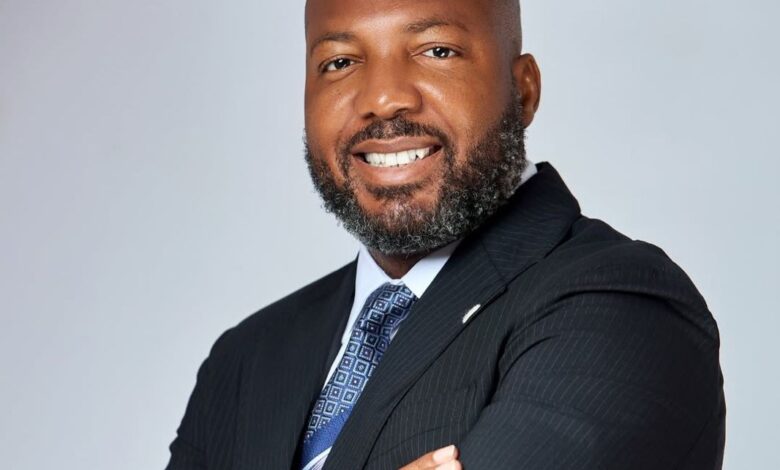
By: George Spencer Quaye
The author the founder and Chief Executive Officer of Mobex Africa. He is a governance and digital transformation strategist, public policy commentator and board-level leader. He writes on leadership, political reform and Africa’s development trajectory.
He’s currently serving as the Chairman of the Governing Board of the Driver and Vehicle Licensing Authority of Ghana