CDM Slams Government Over Weija Paediatric Hospital Delay, Food Glut and Cocoa Crisis
Centre for Democratic Movement says Ghana’s governance failures are hurting children, farmers and the economy
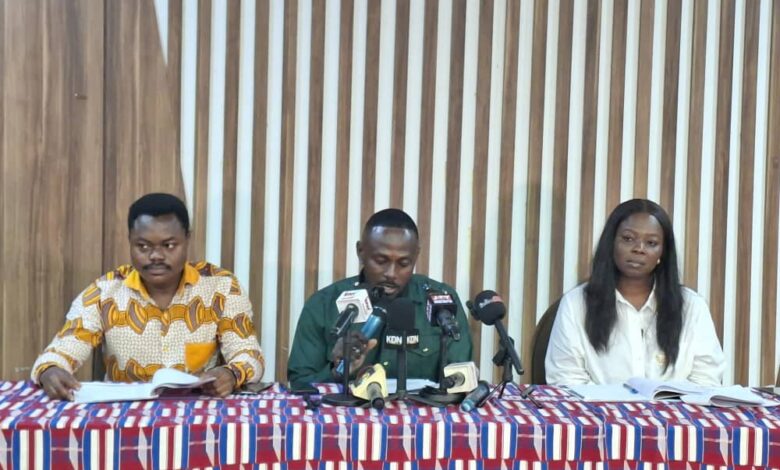
The Centre for Democratic Movement (CDM) has accused government of deepening public mistrust through stalled health projects, a worsening food glut and a deteriorating cocoa sector, warning that institutional inefficiency is now threatening livelihoods across the country.
At a press conference in Accra, the group said three issues in particular expose “a dangerous pattern of institutional inefficiency, weak coordination, delayed governance response, and administrative inertia.”
1. Weija Paediatric Hospital “A Symbol of Governance Failure”
CDM said the completed and equipped Weija Paediatric Hospital remains shut due to procurement disputes, financial disagreements and administrative delays, despite repeated government assurances.
“A completed hospital that remains closed is not infrastructure development; it is administrative paralysis,” the conveners stated.
The group cited allegations of procurement inflation and contractor-government disputes, and called for an independent forensic audit, full disclosure of contract documents, and a public operational roadmap. CDM also demanded a national audit of all Agenda 111 projects, saying reports of delays, under-resourcing and unclear timelines are eroding confidence in the health system.
“Taxpayers deserve transparency. And above all, our children deserve access to healthcare,” the statement said.
2. Food Glut Coexisting with Hunger
CDM described Ghana’s food system as structurally broken, pointing to bumper harvests of maize, rice, tomatoes, yam and beans rotting at farm gates while schools and urban consumers face shortages and high prices.
The group listed affected production zones across Ashanti, Bono, Bono East, Eastern, Northern, Volta, Upper East and Upper West regions. It blamed poor storage, weak market linkages, lack of guaranteed pricing, bad feeder roads and limited agro-processing for post-harvest losses.
“The contradiction reflects a major structural failure within our national food systems,” CDM said. “A country cannot claim food security when farmers are impoverished by abundance.”
The group urged government to launch an emergency produce purchase programme, expand strategic grain reserves, strengthen the National Buffer Stock Company, and link farmers directly to schools, hospitals and other public institutions. It also criticized the government’s 24-hour economy agenda as “rhetoric without the foundational logistics” to absorb surplus produce.
3. Cocoa Sector Under Pressure
CDM warned that declining producer confidence, rising input costs, climate risks and liquidity problems in Licensed Buying Companies are pushing cocoa farmers toward smuggling and abandoning farms.
The group presented a pricing timeline showing producer prices rose from GH₵7,600 per tonne in 2016/2017 to GH₵58,000 in 2025/2026, before a recent cut to GH₵41,392. CDM said the downward adjustment, amid high production costs and galamsey threats, risks undermining Ghana’s top foreign exchange earner.
“Cocoa is Ghana, Ghana is cocoa,” the group said. “The cocoa farmer must never become the forgotten victim of governance inconsistency.”
CDM called for a review of pricing mechanisms, targeted income support for farmers, stronger anti-smuggling enforcement, and investment in local processing and climate adaptation.
Call for Accountability
The group said the three crises share a common cause: “weak institutional coordination, delayed decision-making, governance inefficiency, and inadequate accountability mechanisms.”
CDM urged government to treat the issues with urgency and transparency, stressing that “Ghanaians are not asking for perfection. They are asking for responsiveness, accountability, competence, and leadership.”
“The people of Ghana deserve better. And history will judge all institutions not merely by promises made, but by lives improved,” the conveners concluded.
The Centre for Democratic Movement said it remains non-partisan and is acting out of “constitutional obligation as citizens and democratic advocates to speak truthfully, responsibly, and constructively.”
What do you think: Should government prioritize opening Weija Paediatric Hospital first, or focus on fixing the food distribution system?