Foreign Minister Ablakwa: UN Slave Trade Resolution Demands Justice, Not Generosity, in Push for Reparations and Restitution*
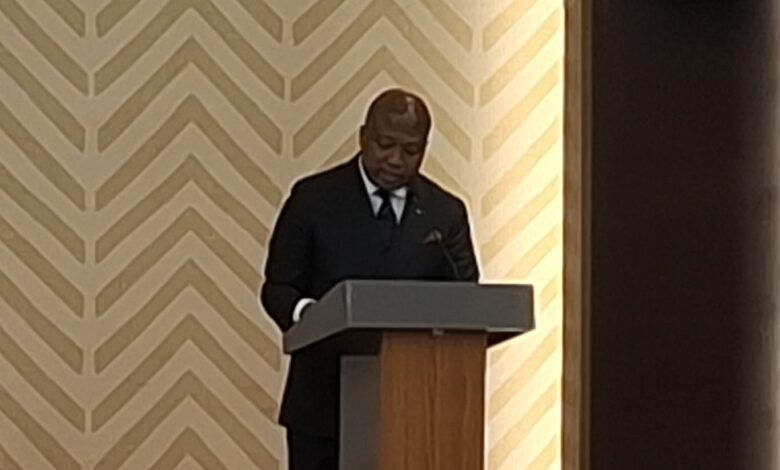
Ghana’s Foreign Minister Samuel Okudzeto Ablakwa says the recent UN resolution on the trafficking of enslaved Africans marks an “irreversible shift” toward accountability, restitution, and reparatory justice, urging countries to embrace “good faith dialogue” rather than division.
Addressing members of the Diplomatic Corps at the Ministry of Foreign Affairs, Ablakwa highlighted what he called a “particularly consequential element” of the resolution: its call for “prompt and unhindered restitution of cultural properties, including artifacts, monuments, manuscripts and archives of historical and spiritual significance to their countries of origin.”
“This recognition reinforces a growing international consensus that cultural restitution is not a matter of generosity, but of justice,” Ablakwa said.
He commended the United States government, noting that Congress had recently passed a similar measure signed into law by President Trump allowing Jews to retrieve artifacts held by Nazis or others. “It is a similar principle, and we commend the Americans for that decision,” he said. “The return of stolen heritage is integral to restoring historical dignity, reclaiming narrative agency and repairing cultural memory.”
Ablakwa said the resolution also anchors reparations discourse in “multilateral consensus,” establishing a shared moral and political foundation for talks on “reparatory justice, systemic reform and historical reckoning.”
“It signals an irreversible shift from denial and minimization toward responsibility, dialogue and constructive engagement,” he stated.
The Foreign Minister stressed Ghana’s readiness to create “meaningful platforms for this good faith dialogue,” adding: “It is our hope that this process will lead to healing, would not promote acrimony or division, but it will bring all of us together.”
He singled out French President Emmanuel Macron for praise, recalling that Macron told President John Mahama during a recent bilateral engagement in Paris that France is willing to engage, even though it abstained from the UN vote.
“President Macron said he does not want this discussion to become a Global South against a Global North discussion, and that we can find common ground,” Ablakwa said. “I think President Macron really captures the spirit, and we commend him and the government of France for that constructive approach after the vote.”
Ablakwa appealed to all nations, regardless of how they voted, to join the dialogue. “We want to encourage everybody, whether you voted for or against, that all hope is not lost. Let us come together… we all agree to the tenets of this resolution,” he said.
The Minister said the resolution “seeks to achieve justice, it seeks to attain restitution, and it aims at demolishing all the pillars and the structures of racism.”
“Following the adoption of this landmark resolution, Ghana has moved deliberately to ensure that this moment does not remain symbolic,” Ablakwa added.
The UN General Assembly adopted the resolution on the trafficking of enslaved Africans earlier this month. Ghana is set to host a High-Level Consultative Conference on next steps.