UNESCO Backs Ghana’s Leadership on Slavery Resolution, Calls for “Triangular of Dignity” to Replace Slave Trade Routes
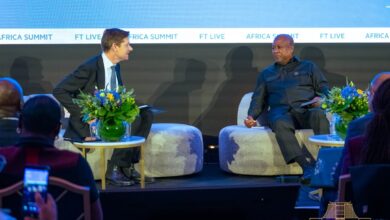
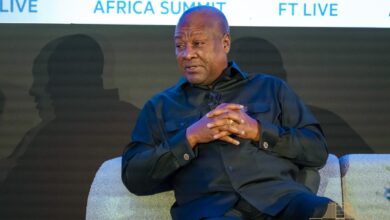
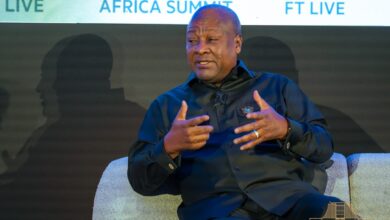
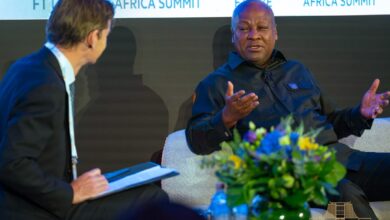
UNESCO has thrown its weight behind President John Dramani Mahama’s leadership on the United Nations resolution addressing the trafficking of enslaved Africans, describing it as “historic” and long overdue.
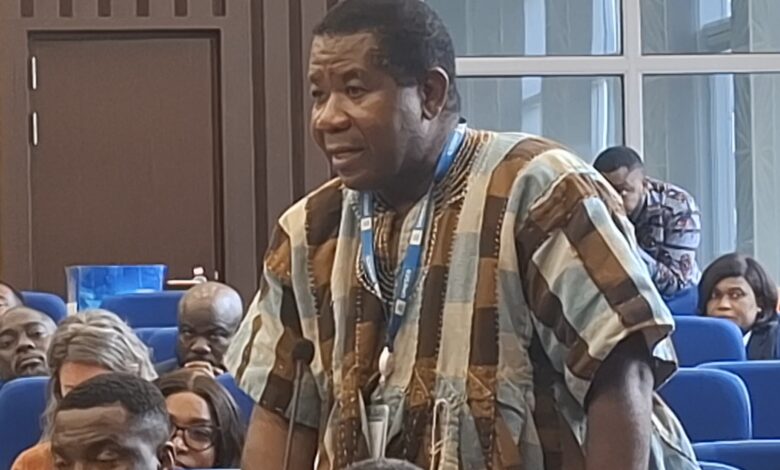
Speaking at a media engagement with Ghana’s Foreign Affairs Minister and members of the Diplomatic Corps ahead of a High-Level Consultative Conference, UNESCO Country Representative Mr. Edmond Moukala said the resolution builds on more than 50 years of work by the UN agency to correct historical distortions and break the silence on slavery.
“Leadership was what we lacked”
Mr. Moukala first commended President Mahama for steering the resolution through the UN General Assembly.
“I want to address our appreciation for the leadership that His Excellency, President John Dramani Mahama, has led in this important historic resolution,” he said. “While UNESCO has been working in this area for over 50 years, what we lacked was the leadership.”
He added: “Personally, myself being an African, one of the things that was haunting me was to see that one child of Africa would rise up and address the matter, and also to bring reconciliation between Africa and the New World, the Caribbean and the African diaspora. It is legitimate that the leadership came from Africa under His Excellency John Dramani Mahama.”
50 years of UNESCO work on African history
Tracing UNESCO’s involvement, Mr. Moukala noted that the agency was created in 1946 after World War II “to build peace in the minds of men and women.”
“It is on that foundation that UNESCO discovered that to build peace, we need to have a mutual understanding of one another. The first information that came out was that the contribution of African descent and the population of African descent worldwide was misrepresented,” he said.
That led to the launch of the _General History of Africa_, written by African experts and validated by all 194 UN member states. “That program helped to restore the dignity and outstanding contribution of Africa in the area of education, sciences, biology, medicine — you name it, in all the sectors.”
Breaking the silence on slavery
From that work, UNESCO discovered that the slave trade “was still being kept silent.” In 1994, it launched the _Slave Route Project_ to break that silence.
“The secondary goal, as the Honorable Minister highlighted, was to identify sites and places of memory worldwide,” Mr. Moukala explained. While many are in the Caribbean, Latin America, North America and Africa, he stressed that “we have also inscribed many sites in Europe.”
“With the statistical evidence from different institutions in Europe, we can trace the ships that left Europe, reached the coast of Africa, and from the coast of Africa into the Caribbean and back into Europe.”
From “triangular shame” to “triangular of dignity”
Mr. Moukala said that evidence creates an opportunity for a new kind of dialogue.
“It will be important to take into account that while it was a forced dialogue, we could now look into it as an opportunity — a reconciliatory journey of dialogue, where all three sides engage,” he said.
“There could be really an opportunity of a journey where the _triangular shame_ will become a _triangular of dignity_, where this generation could really choose to make a difference from what was in the past.”
Link to SDGs and poverty
He tied the legacy of slavery directly to present-day development challenges. The 2001 Durban Conference proclaimed the slave trade and slavery as a crime against humanity. Later, as the UN developed the Sustainable Development Goals, it found that “the population of African descent stricken by severe poverty worldwide has been also identified — that the slave trade remained part of the roots that continue to cause that significant and perpetual poverty.”
That led to the first _International Decade for People of African Descent_, which ended in 2024, and a second phase launched in 2025.
“The United Nations, which all of your members are part of, acknowledge that this matter has to be addressed. Unless it is addressed, we will no longer be able to attain the 2030 development agenda, because we need to address the root cause that is still affecting the population of African descent.”
Cultural legacy from a painful history
Mr. Moukala closed by highlighting the resilience born from that history. “We call it the forced dialogue, but it also gave birth to amazing celebrations — cultural, culinary, religious. Today, many of us will dance to reggae and many other rhythms, but we know it was all birthed from that very painful chapter of human history.”
“So this gives us an opportunity, as we look into the painful parts of the history, there are a lot of opportunities for collaboration and bridging the differences and moving the world forward.”
UNESCO, he said, has “a body of experts that will be available” and 50 years of research to support the upcoming conference. “UNESCO remains engaged under this leadership.”