UN a ‘Toothless Bulldog’ on Global Security — Prof. Agyeman Duah Calls for Urgent Reforms
Story: Maurice Otoo
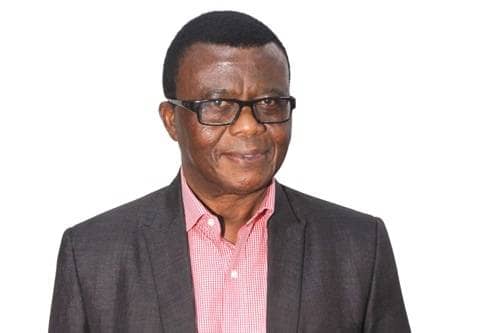
Renowned governance expert and former Special Advisor to the United Nations, Professor Agyeman Duah, has described the United Nations (UN) as a “toothless bulldog” when it comes to maintaining international security, citing structural weaknesses within the Security Council.
According to him, the global body is only as strong as its most powerful members allow it to be.
Speaking on international security concerns via zoom on Kessben Digest , Prof. Duah argued that the UN’s biggest flaw lies in the veto powers granted to five permanent members of the United Nations Security Council — France, Russia, United States, United Kingdom, and China.
He explained that whenever any of these five veto-wielding nations opposes a decision on international security, it effectively nullifies the collective will of the rest of the council and the broader international community.
Prof. Duah referenced the ongoing tensions between Israel and Gaza Strip, noting that the UN has reportedly met more than ten times over the crisis without decisive action.
He claimed that repeated opposition by the United States has stalled efforts to reach binding resolutions, arguing that America’s close ties with Israel have influenced its stance.
He further linked these geopolitical dynamics to rising tensions involving Iran and America.
Although all 196 member states fall under the UN framework, Prof. Duah stressed that the United Nations General Assembly does not have binding authority over international security matters.
Instead, such decisions are reserved for the 15-member Security Council. While countries like Ghana have served on the council as non-permanent members, he noted that they lack veto power and are therefore limited in influence unless aligned with one of the five permanent members.
Prof. Duah said global calls for reforming the Security Council’s composition are long overdue. He pointed to a recent proposal by President John Dramani Mahama, advocating for Africa to secure permanent representation on the council.
He emphasized that the structure of the Security Council , particularly the dominance of the five veto powers, remains the greatest weakness of the UN, not the physical location of its headquarters.
“Until the veto system is addressed and representation is made fairer, the UN will continue to struggle in effectively resolving international security conflicts,” Prof. Duah asserted.