TOR returns to profit after a decade, records GH¢1.24bn in 2025
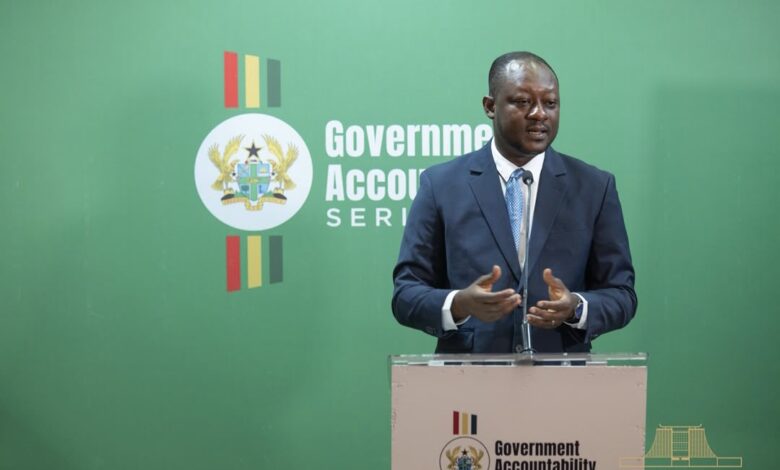
The Tema Oil Refinery (TOR) has returned to profitability for the first time in a decade, recording a profit before tax of GH¢1.24 billion in 2025 following the restoration of its refining operations and improvements in financial management.
Managing Director of TOR, Edmond Kombat, disclosed this at the Government Accountability Series, where he outlined the refinery’s recovery from years of financial difficulties, operational shutdowns and weak corporate governance.
According to him, the refinery’s turnaround reflects efforts under President John Dramani Mahama’s Reset Agenda to restore the facility’s operational capacity, strengthen accountability and position it for long-term commercial sustainability.
“TOR recorded a profit before tax for 2025 of 1.24 billion cedis. It first returned to profit in a decade, according to SIGA,” Mr Kombat said.
He explained that the refinery’s financial position had improved considerably, with its negative equity declining from GH¢7.1 billion in 2024 to GH¢5 billion in 2025.
Mr Kombat attributed the improvement to prudent financial management and improved macroeconomic conditions, alongside measures taken by the new management to strengthen the company’s operations and financial controls.
He said the refinery had also addressed a longstanding accountability gap by auditing its financial statements from 2019 to 2025 and submitting the reports to the State Interests and Governance Authority (SIGA).
The seven audited financial statements were presented at TOR’s 18th Annual General Meeting on June 30, 2026, bringing the refinery’s financial reporting up to date for the first time since the 2018 financial year.
“SIGA commended TOR and confirmed that the submissions brought TOR up to date for the first time since the 2018 account financial year,” he said.
Mr Kombat added that TOR had also ranked second among public institutions in the inaugural Public Financial Management Compliance League Table organised by the Ministry of Finance, a development he said demonstrated the refinery’s renewed commitment to statutory compliance and accountability.
Refining operations restored
Beyond the financial gains, the TOR managing director said the refinery had successfully resumed operations following the completion of turnaround maintenance on its Crude Distillation Unit (CDU).
The maintenance works, which ran from August 1 to October 30, 2025, paved the way for the refinery to resume refining on December 19, 2025, after the National Petroleum Authority inspected the facility and cleared it to operate.
Mr Kombat said the maintenance was funded entirely through TOR’s internally generated funds and executed by the refinery’s own engineers and technicians.
He noted that the company had also recorded no fatalities or disabling injuries during the maintenance exercise and had completed the necessary safety reviews and emergency response exercises.
The refinery has since received about five million barrels of crude oil, with further deliveries scheduled to sustain operations over the coming months.
The consignments include Ghanaian indigenous crude, a development Mr Kombat said supported the government’s ambition to link the upstream, midstream and downstream segments of the petroleum industry.
“Refining Ghanaian crude in Ghana keeps value onshore. It fulfils the value-addition vision of His Excellency the President of the Republic of Ghana,” he said.
Revenue and storage volumes increase
Mr Kombat said TOR’s commercial performance had also improved, with revenue for 2025 increasing by 36 per cent compared with 2024.
Revenue generated between January and September 2026 had increased by more than 60 per cent compared with the corresponding period in 2025, he said, adding that the refinery was on course to potentially double its revenue by the end of the year.
He further reported a significant increase in product storage volumes, which rose from about 400,000 metric tonnes in 2024 to 1.107 million metric tonnes in 2025.
The refinery is targeting 1.35 million metric tonnes in 2026 as it seeks to expand its commercial activities and rebuild confidence among petroleum service providers and other business partners.
According to Mr Kombat, management has also pursued outstanding receivables, reviewed the company’s financial position and engaged KPMG to validate liabilities and claims against the refinery as part of efforts to establish sustainable repayment arrangements with creditors.