TOR recovery boosts employment, creates 1,657 direct jobs
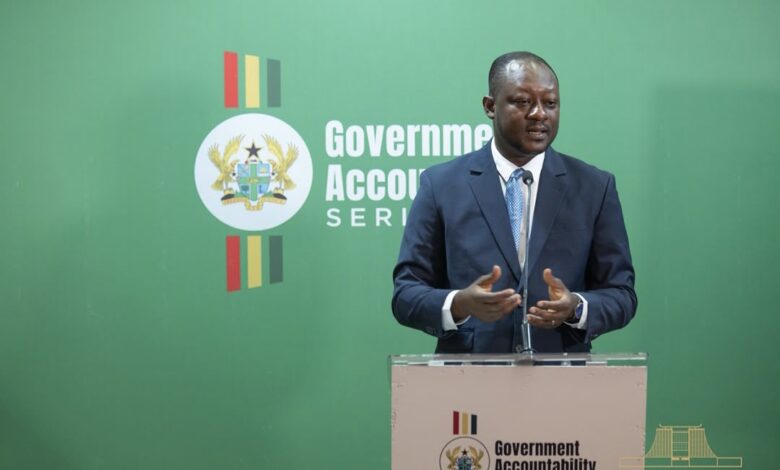
The Tema Oil Refinery (TOR) has generated 1,657 direct jobs and supported an estimated 6,500 indirect jobs following the resumption of its refining operations, Managing Director Edmond Kombat has disclosed.
The employment gains come as the state-owned refinery works to restore its operations after years of shutdowns and operational difficulties, with management citing job creation and increased economic activity among the benefits of the recovery programme.
Speaking at the Government Accountability Series, Mr Kombat said the jobs created comprised permanent employees, temporary workers engaged for maintenance activities and workers employed by local contractors.
“When we did the count, TOR has created about 1,657 permanent and temporary jobs, and these are numbers that can be verified,” he said.
According to him, the direct employment figure includes 415 young engineers recruited into permanent positions, 301 temporary workers engaged for maintenance of the Crude Distillation Unit (CDU), and 287 workers employed for maintenance of the Residue Fluid Catalytic Cracker (RFCC).
An additional 654 people have been employed by 35 local contractors working at the refinery, bringing the total to 1,657 direct jobs.
Mr Kombat said the refinery’s recovery had also supported an estimated 6,500 indirect jobs, particularly among tanker drivers and other workers in the downstream petroleum sector.
“TOR’s recovery has created a number of jobs, and sometimes we wonder where these people would have been if TOR had not come back,” he said.
He said the employment figures highlighted the wider economic benefits of restoring the refinery’s operations, particularly its role in supporting local industry and providing opportunities for young professionals and technical workers.
TOR improves staff welfare
Beyond job creation, Mr Kombat said management had taken steps to improve staff welfare and restore confidence among workers following years of operational challenges.
He disclosed that the refinery had addressed more than 300 outstanding staff promotion petitions and increased salaries by 30 per cent in 2026, following a decade without salary increments.
“This year, we had to negotiate with the unions and make sure that staff salaries went up by 30 per cent,” he said.
He added that resolving the outstanding promotion cases had increased the refinery’s wage bill by 10 per cent, but management had been able to absorb the additional cost.
Mr Kombat explained that staff morale was low when the current management assumed office in 2025, with some employees leaving for opportunities in neighbouring countries and the Middle East.
Management has since engaged the refinery’s four unions, their national executives and the Trades Union Congress to secure workers’ support for the recovery programme.
Refining operations resume
The managing director attributed the employment gains to efforts to restore TOR’s core refining operations under President John Dramani Mahama’s Reset Agenda.
The refinery’s CDU had been out of operation since April 2021, while the RFCC had been shut down since 2019.
However, following turnaround maintenance conducted between August and October 2025, TOR resumed refining operations on December 19, 2025.
Mr Kombat said the maintenance was funded entirely through the refinery’s internally generated funds and carried out by its own engineers and technicians.
He added that TOR had received about five million barrels of crude oil to sustain its operations, with further deliveries scheduled over the following months.
At its nameplate capacity of 45,000 barrels per stream day, TOR can process crude equivalent to approximately 35 per cent of Ghana’s estimated daily petroleum consumption of 128,000 barrels.
Mr Kombat said management would continue to strengthen operations, improve efficiency and restore the refinery’s position as a commercially viable and competitive player in the petroleum industry.
He expressed confidence that the recovery programme would sustain employment opportunities while contributing to Ghana’s energy security and industrial development.