Haruna Iddrisu urges striking teachers to protect school calendar
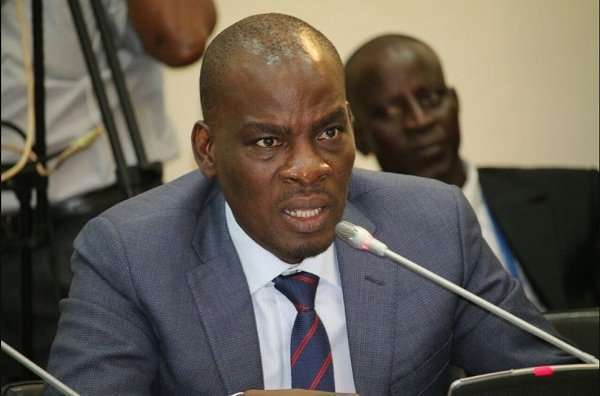
Education Minister Haruna Iddrisu has appealed to striking teacher unions to return to the classroom as he holds discussions with their leadership and key government institutions over their concerns.
The meeting involves the Controller and Accountant-General’s Department (CAGD), the Fair Wages and Salaries Commission (FWSC) and the Ghana Education Service (GES).
Mr Iddrisu urged the unions to consider the impact of the strike on the academic calendar, which has recently been restored to the September-to-July cycle.
He welcomed the leadership of the Ghana National Association of Teachers (GNAT), the National Association of Graduate Teachers (NAGRAT) and the Pre-Tertiary Teachers Association of Ghana (PRETAG), acknowledging the issues raised by the unions.
The Minister, however, appealed to them to help ensure that the academic calendar remains uninterrupted while the government works to address their concerns.
The meeting, currently underway at the Ministry of Education, follows the nationwide strike which began on Friday, September 25, 2026.
The industrial action has reportedly disrupted teaching and learning across the country, with some schools in the Ashanti Region said to have closed due to teacher absenteeism.
The unions are demanding action on three major issues, which they say remain unresolved despite several engagements with the government and a September 24, 2026 deadline.
One of the concerns is the delay in negotiating a new Collective Agreement. The existing agreement expired in June 2026, while negotiations for a replacement are yet to be concluded despite engagements with the Fair Wages and Salaries Commission.
The unions are also demanding the automatic placement of newly promoted teachers on their appropriate salary scales.
According to the unions, two groups of teachers who passed promotion aptitude tests in December 2025 and February 2026 have not been placed on their new salary scales. They say the affected teachers are owed arrears dating back to January 2026, with about 80,000 teachers reportedly affected.
The third issue is the implementation of the Deprived Area Allowance.
The unions have cited Section 17(2) of the 2024 Collective Agreement, which provides for a review of the Deprived Area Report before negotiations on the allowance. They have also referred to a 2024 National Labour Commission ruling and a directive by President John Dramani Mahama for a 20% basic-salary allowance for teachers working in hard-to-reach areas.
Press Secretary and Spokesperson for the Ministry of Education, Hasmin Mohammed, expressed concern over the potential impact of the strike on the academic calendar.
He noted that efforts by the Education Minister and the Director-General of the Ghana Education Service had helped restore the calendar to the September-to-July cycle.
He said the current arrangement had enabled students from kindergarten through to the tertiary level to resume in September.
Mr Mohammed also stressed that the Education Ministry cannot resolve all the issues alone, noting that the Fair Wages and Salaries Commission and the Controller and Accountant-General’s Department play key roles in salary negotiations, placement and payments.
He called for continued engagement between the relevant government institutions and the teacher unions to reach a resolution.
Meanwhile, NAGRAT has accused the government of failing to demonstrate sufficient urgency in addressing the concerns.
NAGRAT President Jacob Anaba said the unions had made sustained efforts to engage the government, but delays by the relevant institutions had raised concerns about the government’s commitment to resolving the issues.
The unions maintain that the strike is a response to prolonged delays and what they describe as the government’s failure to fulfil commitments made to teachers.
By Esther Padmore Amonoo