ICEDEG Africa Calls for Private Collective Enforcement to Protect Consumers
The Iustum Center for Democracy and Governance (ICEDEG Africa) has called for a review of the ECOWAS Regional Competition Framework to provide stronger protection and effective redress for consumers. The Center has also called on national competition authorities and consumer commissions within the ECOWAS sub-region to review their competition and consumer protection laws to provide for Private Collective Enforcement as a complement to the current heavily public-centred redress mechanisms.
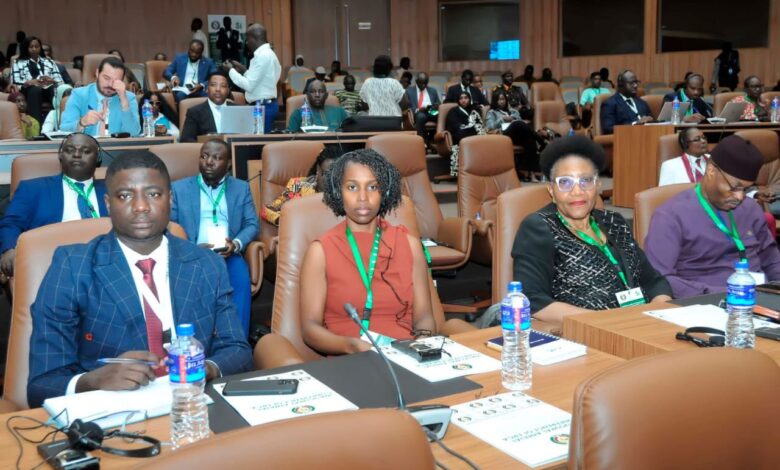
Speaking at the Inaugural Annual Conference of the ECOWAS Regional Competition Authority (ERCA) in Banjul, The Gambia, on the topic, “The Role of Civil Society Organisations (CSOs) in the Enforcement of Consumer Rights under the ECOWAS Regional Competition Framework,” the Chairman of the Advisory Council of ICEDEG Africa, Nana Kwasi Asuman-Frimpong, noted that the overly public-centred approach to addressing consumer harm in West Africa often does not provide direct redress to consumers, undermining effective consumer protection within the sub-region.
He explained that consumers who suffer detriment are often not compensated for the harm suffered due to high levels of market informality, information asymmetry, fragmented and archaic legal regimes, weak access to redress, institutional overlap and increasingly complex digital and cross-border markets.
He stated that consumers often suffer small but widespread harms, yet, individually, the value of their claims may be too low to justify the cost and complexity of litigation, often leading them to abandon their claims altogether.
Comparative Analysis
Mr Asuman-Frimpong explained that, notwithstanding these challenges, enforcement under the ECOWAS Regional Competition Framework and in many Member States remains heavily dependent on public institutions and regulatory authorities.
He noted that public enforcement often focuses on regulatory compliance and sanctions, while consumers who suffer the actual harm may not necessarily receive restitution, compensation, repair, replacement or other forms of direct redress.
He contrasted this with regimes in the United Kingdom, European Union, United States and South Africa, where various forms of private and collective enforcement allow qualified consumer organisations, associations or representative bodies to pursue actions in the collective interests of consumers.
He particularly highlighted the South African model as evidence that legislatively recognised collective consumer redress is not alien to the African legal context.
Private Collective Enforcement
Mr Asuman-Frimpong explained that Private Collective Enforcement (PCE) provides a mechanism through which private actors, alongside state institutions, can aggregate dispersed individual consumer claims into representative actions.
According to him, such a mechanism can help address information asymmetry, low-value individual claims and disproportionate litigation costs, while reducing transaction costs, strengthening deterrence and creating more effective pathways to consumer compensation and redress.
He stressed that the proposal is not intended to substitute existing public enforcement structures, but rather to complement the work of ERCA, national competition authorities, consumer commissions and other state institutions.
He noted that empowering qualified consumer organisations and CSOs could create a credible and coordinated response to systemic consumer harm while opening stronger pathways to restitution, compensation and other forms of redress.
Recommendations
Mr Asuman-Frimpong therefore recommended a review of the ECOWAS Regional Competition Framework and domestic competition and consumer protection laws to give qualified consumer-based CSOs the necessary legal standing to institute structured market complaints before ERCA, domestic courts and Alternative Dispute Resolution forums.
He further called for structured procedures for injunctive relief and representative redress; statutory-backed, cost-effective mechanisms that make collective consumer enforcement financially accessible; and effective information-sharing arrangements between ERCA, Member States, national regulators and qualified CSOs, consistent with applicable data protection laws.
He maintained that strengthening the role of CSOs would not diminish the authority of public regulators but would create a complementary enforcement architecture capable of translating consumer welfare as a policy objective into consumer redress as a practical outcome.