Ghana Targets Rice Self-Sufficiency By 2028 As Gov’t Secures $18.8m AfDB Grant For Reward Project
Ghana has set 2028 as the target year to become fully self-sufficient in rice production, as the government rolls out a major new intervention to boost local production and cut rice imports.
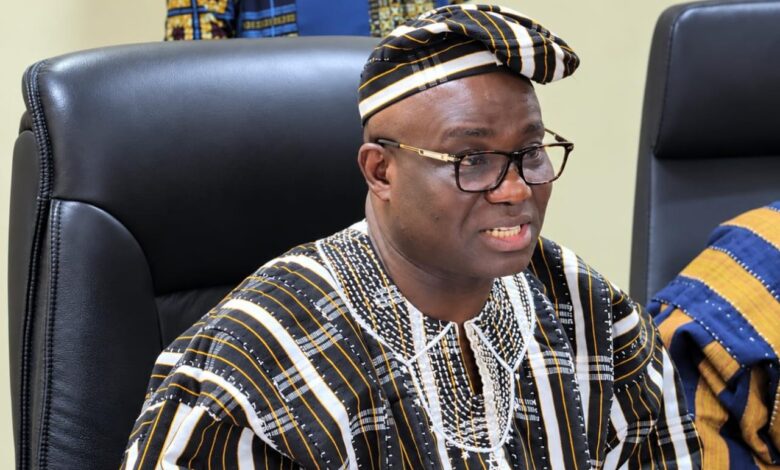
The Minister for Food and Agriculture announced this today at a press briefing on the Regional West Africa Resilient Rice Value Chains Development (REWARD) Project at the MoFA Conference Room in Accra.
The REWARD Project is a US$18.8 million grant from the African Development Bank (AfDB) aimed at fixing the bottlenecks that have held back Ghana’s rice value chain for years.
Speaking to the media, the Minister said rice is now Ghana’s second most consumed cereal after maize, driven by population growth, urbanization and changing tastes. While local production has improved significantly – rising from 650,000 metric tonnes to 900,000 tonnes in 2024 and 960,000 tonnes in 2025 – it still meets only 56% of national demand.
Ghana currently spends between US$320 million and US$500 million annually on rice imports.
“That is money that should be earned by Ghanaian farmers, millers and traders,” the Minister said, adding that government is determined to reverse the trend.
The national target under the Feed Ghana Programme, launched by President John Dramani Mahama in Techiman on 12th April 2025, is to produce *3.31 million metric tonnes of paddy* by 2028 to achieve full self-sufficiency.
What Reward Will Do:
The Minister outlined eight key interventions under the project:
1. Policy and regulatory reforms to make local rice more competitive
2. Development of *3,200 hectares* for rice production in the Northern Savannah Ecological Zone
3. Equipping of selected seed centres and support for seed processors
4. Provision of quality seeds and mechanization to increase yields from 3.5 to 4.5 tonnes per hectare
5. Supply of farm machinery including rotary tillers, seed drills, mini crawler combine harvesters, rice transplanters and boom sprayers
6. Equipping *10 rice processing centres* with modern equipment including mini GEM parboiling vessels
7. Provision of hermetic storage cocoons to reduce post-harvest losses
8. Linking farmers to markets and private sector buyers
The project will directly benefit *over 20,000 smallholder farmers* in Tamale Metropolitan, Mion, Savelugu, East Mamprusi, West Gonja, Bawku West, Wa Municipal, Sissala East and Nandom districts.
The Minister said rice produced under REWARD will be used to supply schools, prisons and other public institutions with quality local rice.
On import policy, he was emphatic:
“Import quotas will be linked to local investment. Importers will soon need verifiable partnerships with local producers before permits are granted. We are not banning imports. We are channeling the value of imports into local production.”
Japan Supports Seed Production
The Minister also announced a separate support package from the Government of Japan – a *¥394 Million (US$2.48 million)* grant under the CARD project for Enhancement of Rice Seeds Production Capacity.
Under the Japanese grant, Ghana will receive 8 combine harvesters, 8 harvester transport trucks, 8 seed transport trucks, 11 seed cleaning machines, transformers and a monitoring vehicle. The equipment is expected to arrive in November 2026 with training for actors along the value chain.
The Ministry, in consultation with AfDB, plans to officially launch the REWARD Project in the first week of November 2026 ahead of the 2027 production season.
“Let us build Ghana’s food systems for a better future,” the Minister said, thanking the AfDB and Government of Japan for their support.