BOST Energies Made GH¢684m Profit – Why Use NPA Bill To Weaken It? – IERPP Questions Government
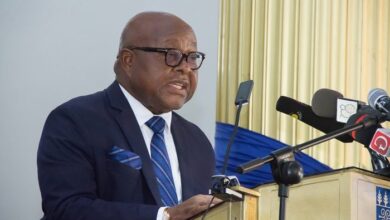
The Institute for Economic Research and Public Policy (IERPP) has raised serious concerns over the National Petroleum Authority Bill, 2026, currently before Parliament, warning that the Bill in its current form risks weakening BOST Energies despite its strong financial turnaround.
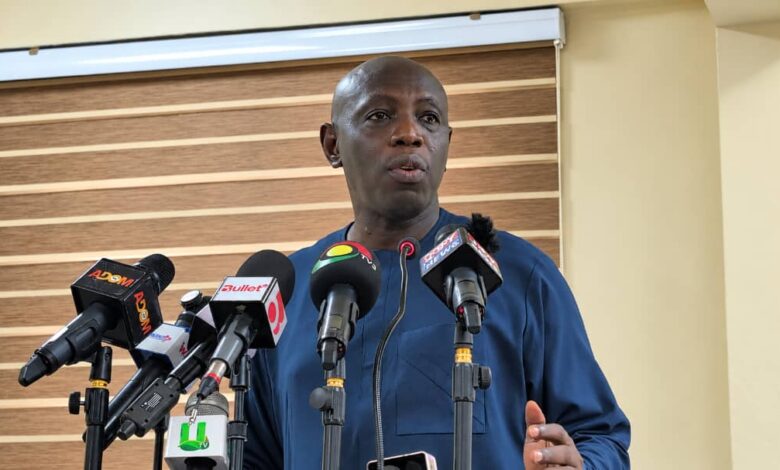
Addressing a press conference at the Ghana International Press Centre on Wednesday, September 16, 2026, Executive Director of IERPP, Prof. Isaac Boadi, said the Institute is not against strong regulation but is worried about provisions that give the NPA and the sector Minister greater control over decisions BOST needs to take independently.
The press conference was on the theme: “BOST Energies MADE GH¢684M PROFIT – WHY IS GOVERNMENT USING THE NPA BILL TO WEAKEN IT?”
BOST’s Strong Financial Performance
Citing the 2025 State Ownership Report, Prof. Boadi said BOST Energies recorded remarkable growth:
– Total revenue increased from GH¢1.33bn in 2024 to GH¢3.84bn in 2025 – 189% growth
– Operating revenue grew from GH¢1.293bn to GH¢3.809bn – 195% growth
– Operating profit rose to GH¢719.97m
– Net profit increased from GH¢398.40m to GH¢683.96m – 72% increase
– Total assets grew to GH¢3.989bn, equity to GH¢1.474bn
– Return on assets: 17.66%, Return on equity: 46.40%
– Interest-cover ratio improved from 7.99x to 23.89x
– Debt-to-assets ratio fell from 1.12 in 2021 to 0.31 in 2025
For the first time in 32 years, BOST paid a 5% dividend of GH¢34.2 million to government from its 2025 profit.
“Ladies and gentlemen, these are not small numbers. We are seeing a state-owned company that has grown its revenues, increased its profits, strengthened its balance sheet, reduced its dependence on debt and improved its ability to meet its obligations,” Prof. Boadi said.
“So why introduce legislation that could undermine this progress? That is the question Parliament and government must answer.”
National Security Role At Risk
IERPP stressed that BOST is not just another state-owned company. It is responsible for Ghana’s strategic fuel reserves and the national network of depots and pipelines.
“If BOST is weakened financially or operationally, the consequences will not stop at BOST’s offices. They could affect fuel availability, fuel security and ultimately the Ghanaian consumer,” the Institute warned.
“Responsibility without authority is unfair. Responsibility without funding is unsustainable.”
The Institute also warned that close to 50% of BOST’s 658 staff could be at risk if the company is weakened, contradicting government’s 24-hour economy agenda which promises job creation.
“The first test of any employment policy is not how many jobs government announces. The first test is how many existing jobs it can protect, sustain and expand.”
Three Key Questions For Government
IERPP posed three questions:
1. How can BOST be responsible for strategic fuel reserves if decisions regarding funding, stock levels, release and replenishment remain subject to other authorities?
2. How can BOST maintain depots and pipelines if charges it needs to levy require regulatory approval without a clear, cost-reflective methodology?
3. How can BOST remain financially sustainable if competing depots are licensed and commercially attractive business is taken away from its network?
“We cannot create a system where private operators capture the most profitable parts of the petroleum logistics chain while BOST is left carrying the expensive national obligations. That would be privatising the benefits while socialising the costs,” Prof. Boadi stated.
*IERPP’s Seven Demands*
The Institute is demanding:
1. Withdrawal and fundamental review of the NPA Bill, 2026 for comprehensive stakeholder consultation.
2. Clear definition and protection of BOST’s mandate, including empowerment to sell directly to Oil Marketing Companies.
3. Strategic fuel reserves should remain under national control with BOST as principal institution.
4. Dedicated funding for strategic reserves and infrastructure, with BOST margin repurposed to support reserves and depot expansion.
5. Fair and cost-reflective tariff mechanism with defined timelines.
6. Prevention of unfair competition – BDCs should not be allowed to establish inland depots in a manner that undermines BOST.
7. NPA must remain an effective regulator, not a market participant.
“Parliament should not pass the NPA Bill, 2026 in its current form. This is precisely the time to strengthen BOST, not weaken it,” Prof. Boadi concluded.
“Protect BOST. Protect Ghana’s strategic fuel reserves. Protect our national petroleum infrastructure. Protect Ghanaian jobs. And ultimately, protect the Ghanaian consumer.”