High Court jails Chairman Wontumi for 20 years over Illegal mining offences
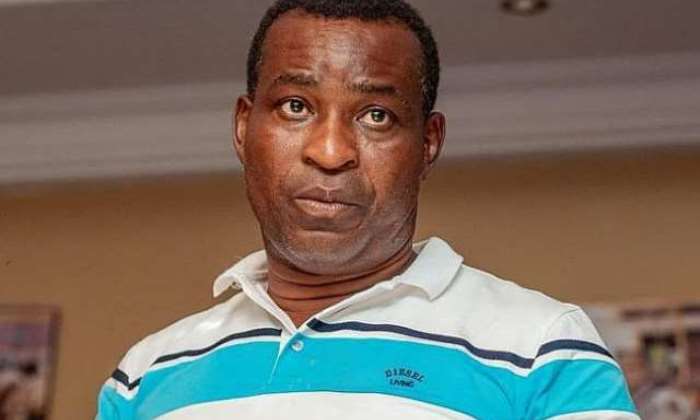
The High Court in Accra has sentenced the Ashanti Regional Chairman of the New Patriotic Party (NPP), Bernard Antwi-Boasiako, popularly known as Chairman Wontumi, to 20 years’ imprisonment on each of two counts following his conviction in the Akonta Mining illegal mining case. The sentences will run concurrently.
In addition to the custodial sentence, the court imposed a fine of 10,000 penalty units on each count against Wontumi. Akonta Mining Limited, which was also convicted on two counts, was fined 15,000 penalty units for each offence.
Delivering judgment, Justice Audrey Kocuvie-Tay found Wontumi guilty on Counts One and Four, while Akonta Mining Limited was convicted on Counts Three and Six. The court held that the prosecution had proven all the essential elements of the offences beyond reasonable doubt.
Before the judgment was delivered, the court dismissed a last-minute application filed by the defence seeking to postpone the ruling and refer constitutional questions to the Supreme Court. The application, submitted on July 16, 2026, argued that constitutional issues raised in the defence’s written address required interpretation by the apex court.
Justice Kocuvie-Tay, however, ruled that Section 99(2)(b) of the Minerals and Mining Act, 2006 (Act 703) was clear and did not conflict with Article 19(11) of the 1992 Constitution. Citing the case of R v. Mainkankan, the judge stated that constitutional referrals are only necessary where there is genuine ambiguity.
Unlawful Assignment of Mineral Rights
On the counts relating to the unlawful assignment of mineral rights without the approval of the Minister responsible for Lands and Natural Resources, the court ruled that the prosecution had established all the required elements of the offence.
According to the court, evidence showed that Akonta Mining held valid mineral rights but permitted another party to exercise those rights without obtaining the mandatory ministerial approval. The Minerals Commission outlined the approval process, while the accused admitted that no such approval had been secured.
The court also rejected the defence’s claim that Henry Okum had only been engaged to reclaim degraded portions of the concession. Justice Kocuvie-Tay held that the evidence demonstrated mining activities were taking place, relying on Okum’s testimony that he was allowed to mine unworked sections of the concession and use the proceeds to fund reclamation.
The judge described Wontumi’s explanation that Okum would later recover his investment through coconut farming as an “afterthought,” concluding that allowing another individual to exercise Akonta Mining’s exclusive mining rights amounted to an unlawful dealing in mineral rights.
Court Lifts Corporate Veil
Although acknowledging that a company is legally distinct from its shareholders, the court ruled that the circumstances justified lifting Akonta Mining’s corporate veil.
Justice Kocuvie-Tay found that the company lacked a functional board of directors and that Wontumi exercised effective control over its mining operations. As a result, the court held him personally liable for offences committed through the company.
Facilitating Unlawful Mining
On the charges of purposefully facilitating unlawful mining activities, the court found that Wontumi and Akonta Mining knowingly allowed Henry Okum to access the concession and carry out mining operations without the approvals required under the Minerals and Mining Act.
The court also relied on evidence that Wontumi introduced Okum to an individual who assisted him in acquiring an excavator for the mining operations. While the defence maintained that the arrangement was solely for land reclamation, the court ruled that the evidence clearly showed mining activities had been authorised.
Defence Arguments Dismissed
The court rejected several legal arguments advanced by the defence, including the contention that the phrase “otherwise deal with” in the Minerals and Mining Act should be interpreted narrowly. It also dismissed claims that the absence of written agreements weakened the prosecution’s case, ruling that informal arrangements could still constitute criminal offences.
Justice Kocuvie-Tay further held that disagreement with Parliament’s legislative choices was not a constitutional issue requiring interpretation by the Supreme Court.
Convictions
The court convicted:
- Bernard Antwi-Boasiako (Chairman Wontumi) on Count One for assigning mineral rights without ministerial approval and Count Four for purposefully facilitating unlawful mining activities.
- Akonta Mining Limited on Count Three for assigning mineral rights without ministerial approval and Count Six for purposefully facilitating unlawful mining activities.
The convictions were secured under the Minerals and Mining Act, 2006 (Act 703), as amended by the Minerals and Mining (Amendment) Act, 2020 (Act 995), which introduced stiffer penalties for illegal mining-related offences.