Sam George Receives DTT Committee Report To Strengthen Ghana’s Broadcasting Future
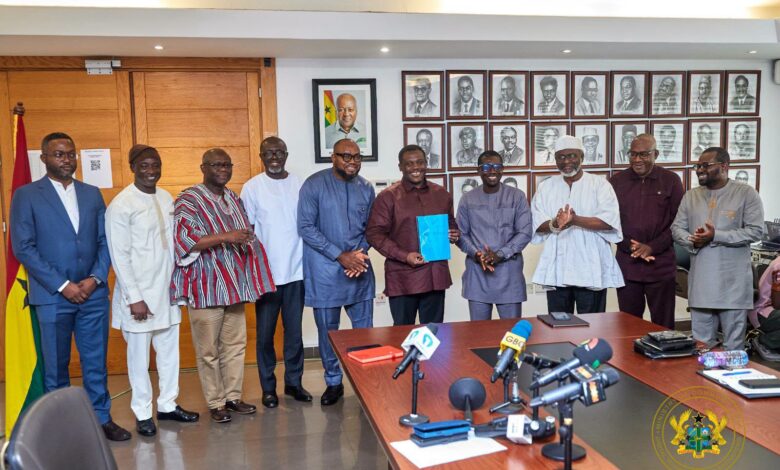
The Minister For Communication, Digital Technology And Innovations, Hon. Samuel Nartey George, on Thursday, July 9, 2026 received the final report of the Digital Terrestrial Television (DTT) Committee.
The submission marks a major milestone in government’s efforts to secure the long-term sustainability, governance, and effectiveness of Ghana’s digital broadcasting platform.
The ceremony signals the beginning of the next phase of reforms aimed at making digital broadcasting more resilient, affordable, and transparent for broadcasters and viewers across the country.
Why The DTT Review Was Necessary
Ghana migrated to digital terrestrial television several years ago as part of the global switch from analogue to digital broadcasting. While the transition expanded access, concerns have emerged in recent years over the operational viability, infrastructure management, governance structures, and affordability* of the DTT platform.
To address these challenges, the Ministry set up the DTT Committee following extensive stakeholder engagements. The Committee was mandated to undertake an *independent review* of the platform and provide evidence-based recommendations to guide future policy decisions.
According to the Ministry, the review focused on three key areas:
1. Operational arrangements – how the platform is run day-to-day
2. Financial sustainability – costs to broadcasters and long-term funding models
3. Governance – oversight, regulation, and management structures
Wide Stakeholder Consultation
Throughout its work, the Committee engaged broadly with institutions across Ghana’s broadcasting ecosystem to ensure an inclusive process.
Key stakeholders consulted included:
– National Communications Authority (NCA)
– Ghana Broadcasting Corporation (GBC)
– Ghana Independent Broadcasters Association (GIBA)
– National Media Commission (NMC)
– K-Net
– Other industry players and technical experts
The Ministry said the wide consultations reflect government’s commitment to collaborative policymaking and to finding solutions that work for both public and private broadcasters.
“An Important Milestone” – Minister Sam George
Receiving the report in Accra, Hon. Samuel Nartey George described the occasion as “an important milestone in our collective efforts to ensure the long-term sustainability, efficiency and effective governance of Ghana’s Digital Terrestrial Television (DTT) platform.”
He commended the Committee for its diligence and for engaging stakeholders in an open and transparent manner.
“This process demonstrates what can be achieved when government and industry stakeholders engage in open, transparent dialogue, mutual respect, and a shared commitment to finding practical solutions to national challenges,” the Minister said.
Mr. George noted that the report does not mark the end, but rather “the beginning of the next phase of the Government’s efforts to strengthen the governance and sustainability of the Digital Terrestrial Television platform.”
He assured stakeholders that the Ministry will carefully study the Committee’s findings and hold further consultations before any implementation decisions are made.
“We owe it to the industry and to Ghanaians to get this right. The recommendations will be reviewed thoroughly to ensure that whatever policy direction we take protects the public interest, supports broadcasters, and guarantees a sustainable platform for the future” he added.
The Minister also expressed appreciation to the Chairperson and members of the Committee, as well as all institutions that contributed expertise and time to the assignment.
What’s In The Report
While the full contents of the report are yet to be made public, the Ministry indicated that it covers critical issues affecting the DTT platform, including:
– Infrastructure management and maintenance to reduce downtime
– Cost structures to make carriage fees more affordable for broadcasters
– Governance models to clarify roles between government, regulators, and operators
– Technology upgrades to improve signal quality and coverage nationwide
– Consumer access to ensure affordable set-top boxes and decoders for households
Industry players have long called for reforms to reduce the financial burden on broadcasters and to improve the reliability of the DTT network, especially in rural areas.
Government’s Commitment To Digital Transformation
The DTT review forms part of a broader government agenda to build resilient, transparent, and sustainable communications infrastructure* in Ghana.
As the country continues its digital transformation journey, the Ministry said it remains focused on policies that support media growth, expand access to information, and create an enabling environment for innovation in broadcasting.
“A strong and sustainable DTT platform is critical to media pluralism, public information dissemination, and the creative economy. We are committed to building a system that serves the public interest and supports the continued growth of the country’s broadcasting sector,” the Ministry stated.
Next Steps
The Ministry will now constitute a technical team to review the recommendations in detail. This will be followed by stakeholder validation workshops* before final policy decisions and an implementation roadmap are announced.
Broadcasters and civil society groups have welcomed the report’s submission, describing it as a step toward addressing long-standing concerns in the digital broadcasting space.
With the report now in government’s hands, attention will turn to how quickly reforms can be rolled out to ensure Ghana’s DTT platform remains competitive, affordable, and fit for the future.