US Embassy Ghana Hosts Screening of “The Paradox of Seabrook Farms,” Links Japanese American History to Global Conversations
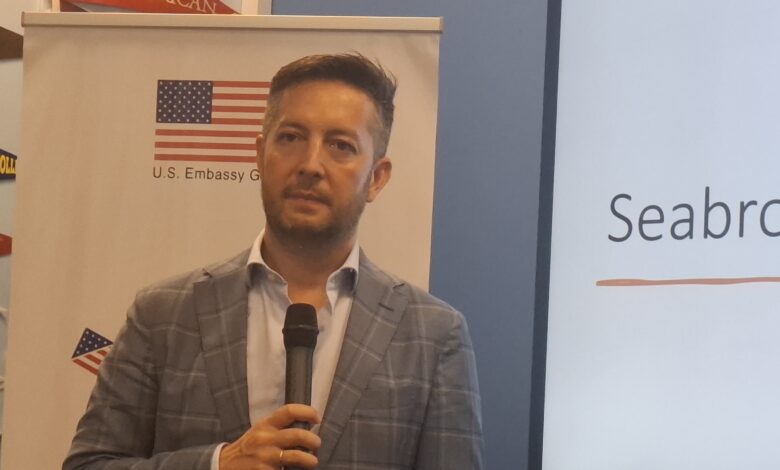
The U.S. Embassy in Ghana brought together students, historians, and cultural enthusiasts in Accra for a screening and discussion of The Paradox of Seabrook Farms, a documentary that explores the story of Japanese Americans resettled in New Jersey during World War II.
Leading the session, Acting Public Affairs Officer Matthew Asada said the film’s themes extend beyond the U.S., offering lessons relevant to Ghana and other countries grappling with history, memory, and national identity.
From internment camps to New Jersey farmland
The documentary focuses on Seabrook Farms, an agricultural enterprise in Seabrook, New Jersey, and the village that grew around it. The town and company were named after the owner, Charles Seabrook.
Asada explained that after Japan’s attack on Pearl Harbor in 1941, about 2,000 Japanese Americans were relocated from internment camps in California to work at Seabrook Farms. Among them were his grandparents.
“My grandmother was born in 1928 in Salinas, California,” Asaba said. “She recounted our family history as part of the oral histories about farmers in Salinas Valley.” He shared photos of himself with her at the Obon Festival in Seabrook, a cultural event that became central to the community.
His grandfather, Mark Asada, born in 1925 in Danube, had joined the ROTC in high school with plans to become a cadet. His education was disrupted by the war. Despite that, Asada said, “throughout it all, he always believed in the United States. He was very much a patriot.”
Asada recalled a slip of paper his grandfather carried until his death: “We are reminded how frail and fragile is the protection guaranteed by our Constitution.”
Why Seabrook matters
To set the scene, Asada walked the audience through the “who, what, when, where, why” of the story. Seabrook is located about an hour from Philadelphia, on New Jersey’s Atlantic seaboard.
“New Jersey is one of our 13 original colonies. It’s right next to Philadelphia — where we had the Declaration of Independence, one of our first capitals for the United States,” he said.
Though New Jersey is known as the “Garden State,” many people assume it is only urban. “You have Philadelphia, which is also an urban center. Go right across the river here, into New Jersey, and it becomes very green, very quickly,” Asada noted. “That’s the village, that’s the farm, that’s the area where my grandparents lived and worked, where my dad was born, where my mom was born. That’s kind of where I come from.”
He added a timely local link: “We’re going to be hearing a lot about Philadelphia next month. Why? World Cup. Croatia is playing there.”
Lessons for remembrance and the way forward
The screening was followed by a discussion on what the film means today, both for the U.S. and for Ghana. Asada framed the Japanese American experience as a test of constitutional protections and national values.
“This is why I think the Japanese American story is so important for the American narrative,” he said. “We come back to our founding documents, our Constitution, our Bill of Rights. What happens when countries make mistakes? How do they apologize for some of those things that come out of that?”
He told the audience: “Themes are not ones that only apply to America, but we can also think about this in other contexts as well.
The session ended with an invitation to reflect on remembrance, accountability, and how societies move forward after historical wrongs.
About the film
The Paradox of Seabrook Farms documents how Japanese Americans, forcibly removed from the West Coast during World War II, rebuilt lives in New Jersey’s agricultural sector. It examines the tension between their contribution to the U.S. war effort and the constitutional violations they endured, while highlighting community, culture, and resilience.
The U.S. Embassy said it plans to host more screenings and discussions that connect American history to global conversations on human rights and civic identity.