Protect citizens’ liberty and respect due process, no citizen should face arbitrary arrest or remand — Lawyer Paul Twum-Barimah to government
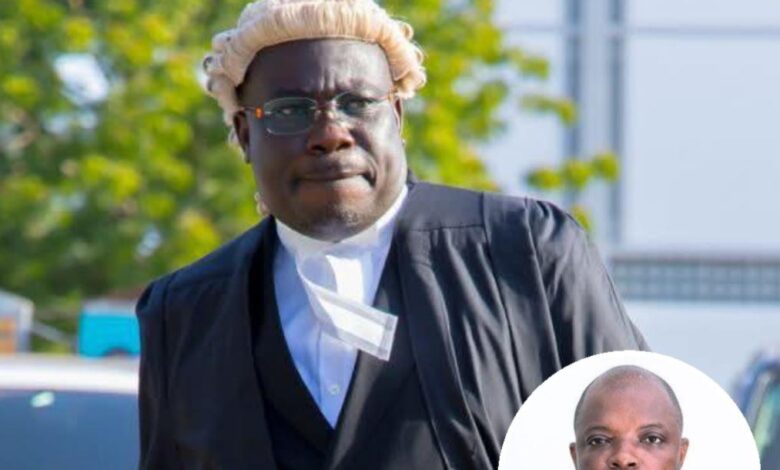
Private legal practitioner and former Member of Parliament for Dormaa East, Paul Apreku Twum Barimah, has called on ruling the National Democratic Congress (NDC) government and state security agencies to strictly uphold the constitutional rights and liberties of citizens, cautioning against arbitrary arrests and actions that undermine the rule of law.
According to him, while security agencies have a constitutional mandate to investigate suspected offences and maintain public order, such powers must be exercised within the confines of the 1992 Constitution to avoid abuse and protect Ghana’s democratic credentials.
His comments follow the remand of the Bono Regional Chairman of the New Patriotic Party (NPP), Kwame Baffoe, popularly known as Abronye DC, over ongoing investigations into alleged misinformation and offensive public statements.
Abronye DC was on Wednesday, May 13, 2026, remanded for two weeks by the court, barely weeks after he had earlier been granted bail in connection with the same matter.
Abronye was initially arrested on Monday, April 13, 2026, as part of investigations into allegations of offensive conduct, false publication, and statements deemed likely to cause fear and panic among the public.
Following his first arrest, he was granted bail pending further investigations. However, investigators subsequently rearrested him as authorities intensified their probe into the allegations.
Reacting to the development, Mr. Twum Barimah stressed that constitutional democracy requires the state to balance national security interests with the fundamental human rights guaranteed under the Constitution.
He referenced Article 14(1) of the 1992 Constitution of Ghana, which guarantees the personal liberty of every individual and provides that no person shall be deprived of his or her liberty except in accordance with procedures permitted by law.
He further pointed to Article 14(2), which states that a person arrested, restricted, or detained must be informed immediately, in a language he or she understands, of the reasons for the arrest, restriction, or detention and of the right to a lawyer of his or her choice.
The legal practitioner also cited Article 19(2)(c) of the Constitution, which guarantees the presumption of innocence, stating that a person charged with a criminal offence shall be presumed innocent until proven guilty or until that person has pleaded guilty.
According to him, law enforcement institutions must therefore avoid conduct that may appear punitive before a court of competent jurisdiction determines the guilt or innocence of an accused person.
Mr. Twum Barimah additionally referred to Article 21(1)(a) of the Constitution, which guarantees freedom of speech and expression, including freedom of the press and other media, although he acknowledged that such freedoms are not absolute and must be exercised responsibly within the limits of the law.
He maintained that any citizen alleged to have breached the law must be processed through lawful and transparent procedures consistent with due process.
“The Constitution does not prevent the police or investigative bodies from carrying out their duties, but it equally imposes a duty on the state to protect the liberty, dignity, and fair trial rights of every citizen,” he argued.
He further noted that Article 296 of the Constitution requires discretionary powers exercised by public authorities to be fair, reasonable, and not arbitrary, insisting that state institutions must always act in a manner that inspires public confidence and preserves the integrity of the justice system.
The former lawmaker urged security agencies to remain professional and impartial in the discharge of their responsibilities, especially in politically sensitive matters, to avoid perceptions of intimidation or selective justice.