UNICEF, Junior Graphic Push Child Literacy as 10 Students Win National Essay Contest
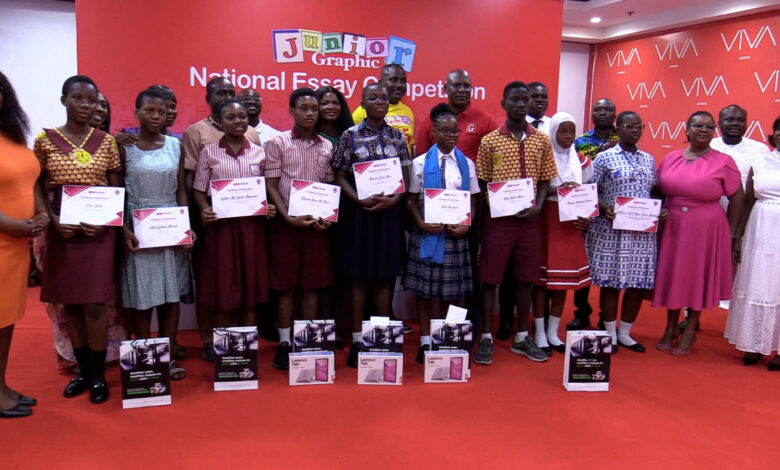
UNICEF Ghana and the Junior Graphic have doubled down on efforts to boost child literacy and youth empowerment through critical thinking and creative writing, crowning 10 winners in the latest National Essay Competition.
Held under the theme “Raising Champions Using Critical Thinking and Imaginative Skills,” the competition drew over 1,000 entries from upper primary and junior high students nationwide.
Editor of Junior Graphic, Hannah Acheampong Amoah, said the paper has backed learners for 25 years through weekly reading, spelling, and writing exercises.
“Reading and writing remain fundamental to education,” Amoah said. “Students without a strong foundation often face challenges as they progress academically.”
As part of the initiative, workshops on grammar, vocabulary, and creativity reached more than 5,000 students across eight regions last year. From the initial entries, 60 finalists were shortlisted and wrote a supervised test at Graphic Communications Group offices to ensure originality. Ten winners emerged from that process.
Amoah congratulated all participants and urged eligible students to join future editions. She also appealed to corporate bodies to support the programme to “help build a strong foundation for future leaders.”
Managing Director of Graphic Communications Group, Ato Afful, praised the winners for their performance in what he called a “highly competitive national contest.” He commended teachers and parents for their role, noting that student achievement reflects collective effort.
Afful also acknowledged partners including UNICEF, the Ministry of Education, Ghana Education Service, and corporate sponsors. He said Graphic, which turns 70 in 2026, remains committed to credible, fact-checked information and warned against misinformation in the digital era.
UNICEF Ghana’s Chief of Advocacy and Communication, Fatima Mohammed Naib, described Junior Graphic as “a beacon for children” that builds reading habits and curiosity.
She said UNICEF views the competition as “more than a contest,” but a tool for empowering children to “aspire, dream, and lead.”
“Education must go beyond memorisation,” Naib said, citing the UN Convention on the Rights of the Child. “Reading, writing, and creativity are key drivers of opportunity and leadership.”
In a first for the programme in Ghana, Naib announced that the competition winner will be named a UNICEF Youth Advocate with a structured work plan to support child advocacy.
She encouraged students to keep telling their own stories. “If they do not, others will tell their stories without doing them justice,” she said.
The Junior Graphic National Essay Competition continues to run annually, targeting students in upper primary and JHS.