Accra Hosts Africa’s 5th Pharmacoepidemiology Conference as Experts Push for Safer Medicines Continent-Wide
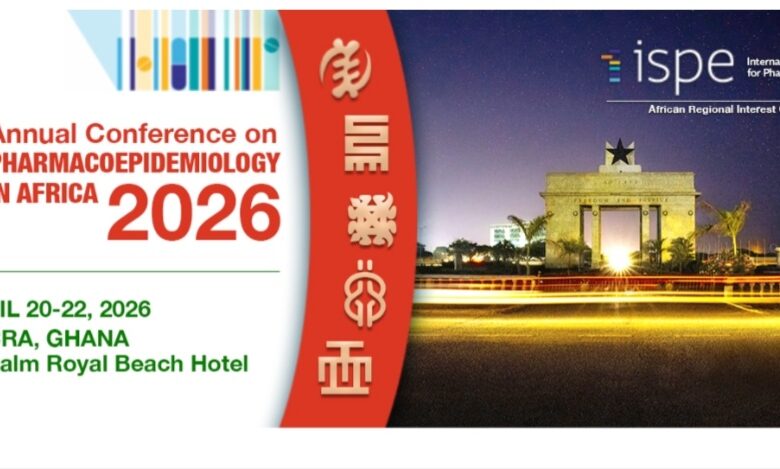
From today until Wednesday, Accra becomes the nerve centre for medicine safety in Africa as over 400 researchers, regulators, clinicians, and industry leaders gather for the 5th Annual Conference of Pharmacoepidemiology in Africa.
The conference, which opened this morning at the Accra International Conference Centre, is the continent’s largest annual meeting dedicated to one question: how do medicines, vaccines, and health technologies actually work once they leave the clinical trial and enter real African lives?
Organised by the Africa Regional Interest Group (AfRIG) of the International Society for Pharmacoepidemiology (ISPE), the three-day event puts the spotlight on homegrown solutions — from tracking side effects in rural clinics to curbing antimicrobial resistance and cutting dangerous prescribing habits.
Why Accra, why now?
Choosing Ghana isn’t accidental. The country has become a regional hub for medicine regulation and safety research, with the FDA Ghana leading several continent-wide pharmacovigilance pilots. Hosting the conference here “signals Ghana’s rising role in shaping pharmaceutical policy,” the Local Host Committee said in a statement, “and deepens collaboration among pharmacy professionals across Africa.”
That collaboration is urgent. Africa bears 25% of the global disease burden but conducts less than 2% of clinical research. Once drugs reach the market, systems to monitor their real-world safety and effectiveness are often underfunded or fragmented. The result: delayed detection of adverse effects, inappropriate antibiotic use, and missed opportunities to tailor treatment to African populations.
“Pharmacoepidemiology is how we close that gap,” explained Prof. Irene Akua, AfRIG Chair, in her welcome remarks. “It’s the science of using population data to understand benefits, risks, and patterns of use. Not in a lab. In our communities.”
What’s on the agenda: From data to decisions
The programme blends science and skills. Day one kicks off with a keynote address on “Data Sovereignty and Medicine Safety in Africa,” followed by plenary sessions on antimicrobial resistance and vaccine safety monitoring.
Over 120 scientific abstracts were accepted. Researchers from 31 countries will present oral and poster sessions on topics ranging from hypertension drug adherence in Lagos to contraceptive safety in Malawi. Hands-on workshops — led by global experts — will train participants on signal detection, real-world data analysis, and regulatory writing.
A deliberate focus this year is on early-career scientists. Dedicated networking breakfasts and “meet the mentor” clinics aim to connect young African researchers with journal editors, funders, and senior ISPE members. “We can’t build African evidence without African scientists leading it,” said Dr. Kwame Owusu, head of the Local Host Committee.
Partnerships on display
The conference underscores a growing public-private model. Sponsors include ISPE, Boehringer Ingelheim, Regeneron, IQVIA, Johnson & Johnson, and Optima Clinical. Collaborators range from Ghana’s Ministry of Health to the University of Ghana, University of Cape Coast, Pharmaceutical Society of Ghana, Pharmacy Council Ghana, and the Medicines Utilisation Research in Africa (MURIA) network.
That mix matters, attendees say, because medicine safety isn’t just a regulatory job. It requires prescribers, dispensers, academics, and manufacturers sharing data and standards.
Beyond the conference hall
For ISPE, which has members in 53 countries, AfRIG’s annual meeting has become the main vehicle for building regional capacity. The goal: move Africa from being a consumer of global safety data to a generator of it.
“Every country has unique genetics, co-morbidities, and prescribing cultures,” noted Dr. Amina Diallo, a pharmacoepidemiologist from Senegal. “If we don’t study our own populations, we’re practising blind.”
The conference runs until 22 April. Sessions are being livestreamed for registered virtual participants, and key communiqués will be published on http://www.afrig2026.com.